
Species
American beaver
Castor canadensis
A semi-aquatic engineer whose dams can turn narrow streams into wetlands used by fish, frogs, birds and countless invertebrates.
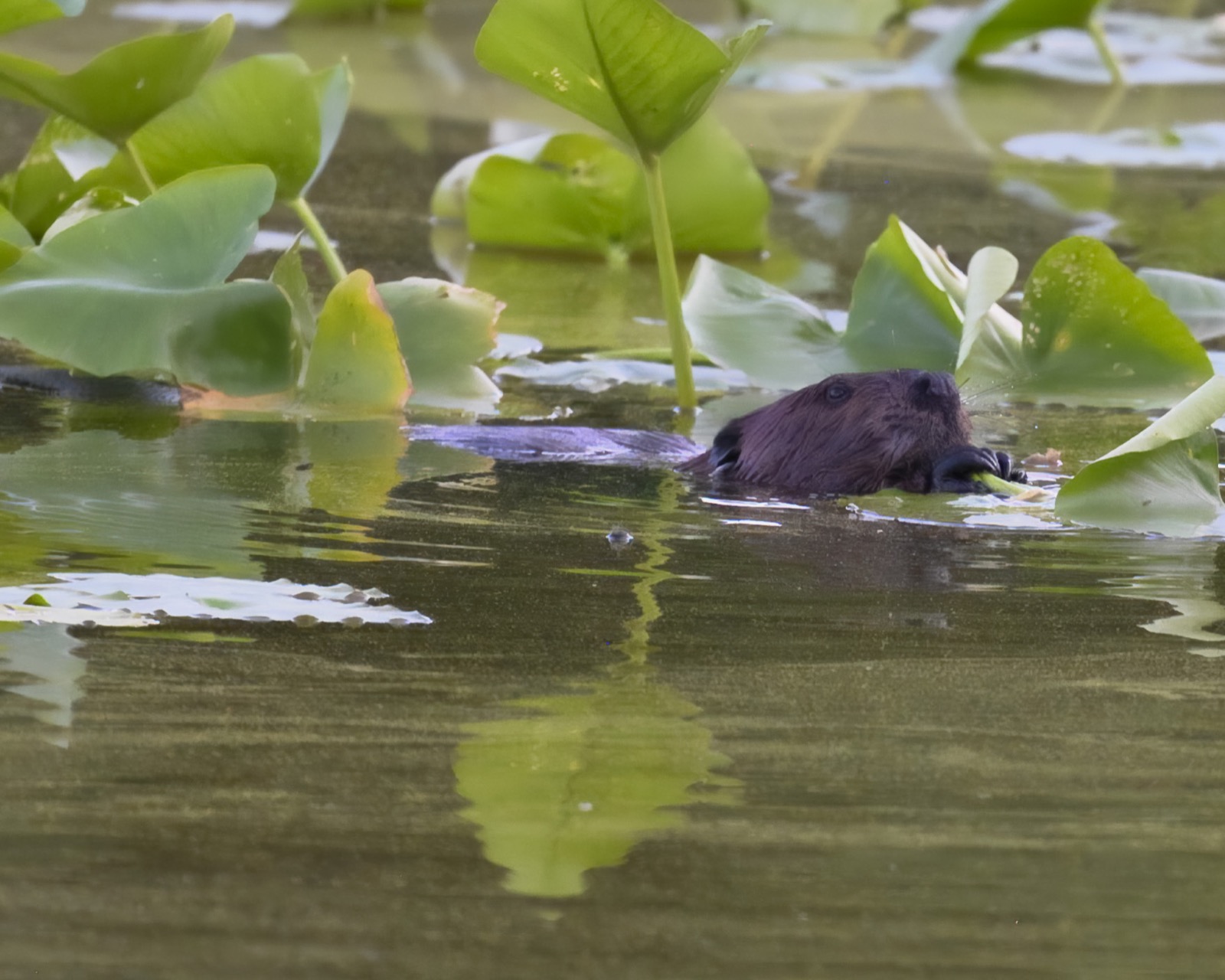
Photo lwolfartist (opens in a new tab), CC BY 2.0 (opens in a new tab)
At a glance
- Occurrence
- Native to North America
- Habitat
- Streams, rivers, ponds, lakes and forested wetlands wherever woody vegetation is available
- Diet
- Bark, twigs and leaves of woody plants plus aquatic vegetation
- Activity
- Mostly nocturnal and crepuscular
- Shelter
- Bank dens or lodges with underwater entrances
- Social pattern
- Family groups usually include an adult pair, current kits and older young
- Rabies vector
- No
Identification
- Key marks
- A large brown rodent with orange incisors, webbed hind feet and a broad flat scaly tail
- Told apart from
- Muskrat, which is much smaller and has a narrow vertically flattened tail
- Where to look
- Streams, rivers, ponds, lakes and forested wetlands wherever woody vegetation is available
Behaviour
It is mostly nocturnal and crepuscular. It uses habitats including streams, rivers, ponds, lakes and forested wetlands wherever woody vegetation is available. It feeds on bark, twigs and leaves of woody plants plus aquatic vegetation.
Beavers fell woody stems with their incisors, carry branches through water and maintain dams where water depth needs to be stabilised. Not every beaver colony builds a large dam; on lakes and big rivers, a bank den may be enough.
By building dams and canals, beavers slow water, trap sediment and create wetland habitat that can persist long after the animals move on.
Why they matter
Beaver dams store water, trap sediment, raise local water tables and create wetlands. Those wetlands can increase habitat for amphibians, fish, waterfowl, insects and wetland plants.
Few mammals alter the physical shape of a landscape as directly. A beaver family can convert a small stream corridor into a patchwork of ponds, channels and wet meadow.
Reproduction and lifecycle
Mating — mainly winter.
Gestation — about 105–107 days.
Kits — usually 1–4 are born furred and with open eyes in late spring.
Family stage — kits nurse for several weeks but begin eating plants early and stay with the family for roughly two years.
Dispersal — two-year-olds commonly leave to seek their own territory.
Living around people
- Protect individual trees with sturdy wire fencing set away from the trunk when chewing is a concern.
- Use properly designed flow devices where a dam raises water against roads or structures; repeated dam destruction often triggers rapid rebuilding.
- Keep dogs away from active lodges and bank dens, especially at night.
- Watch for beavers crossing roads between wetlands during dispersal periods.
Misconceptions
- Beavers eat fish. They are herbivores that eat bark, twigs, leaves and aquatic plants.
- Every dam should be removed because flooding is unnatural. Dam-building is a natural process that creates wetland habitat; conflict depends on where water is being held.
- A tail slap means a beaver is attacking. It is primarily an alarm signal that warns family members before the animal dives.
Seasonal activity
When this species is breeding, and when there are nests on the ground. Mowing during the shaded months is how most nests are found.
| Jan | Feb | Mar | Apr | May | Jun | Jul | Aug | Sep | Oct | Nov | Dec | |
|---|---|---|---|---|---|---|---|---|---|---|---|---|
| Breeding | Jan: no | Feb: no | Mar: no | Apr: no | May: no | Jun: no | Jul: no | Aug: no | Sep: no | Oct: no | Nov: no | Dec: no |
| Active nests | Jan: no | Feb: no | Mar: no | Apr: no | May: no | Jun: no | Jul: no | Aug: no | Sep: no | Oct: no | Nov: no | Dec: no |
| Notes | Active beneath the ice where waters freeze, and in open water farther south; winter mating occurs and woody food remains important. | Mating continues and family groups use lodges or bank dens nightly. | Pregnant females remain active; fresh spring growth begins supplementing bark. | Families feed on expanding leaves and aquatic plants; late pregnancy continues. | Kits are commonly born in late spring and remain close to the lodge or bank den. | Kits begin sampling vegetation while adults maintain dams and canals. | Family groups forage heavily on aquatic and woody plants. | Young grow rapidly; dam and lodge maintenance continues. | Families begin increasing stored woody food where winter conditions warrant it. | Autumn cutting and construction activity can become conspicuous. | Beavers remain active as deciduous leaves fall and bark becomes more important. | Year-round activity continues, mostly at night; winter mating season approaches. |
If you found one
Answer a few questions and you will get a specific answer for what you are looking at.
I found an animal