
Species
North American river otter
Lontra canadensis
A streamlined aquatic mustelid that hunts fish, crayfish and other prey in rivers, swamps and coastal marshes.
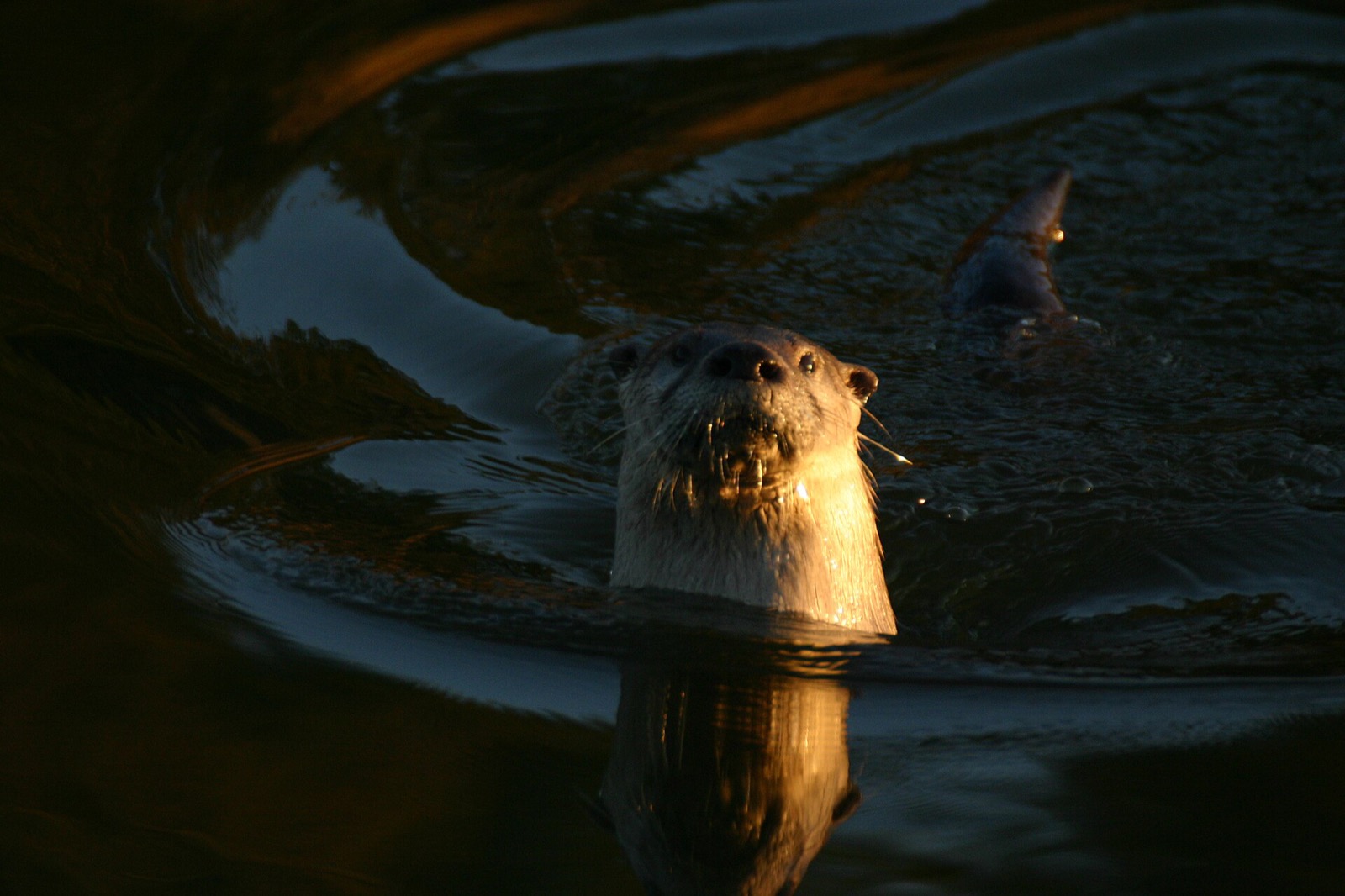
Photo Brian Gratwicke (opens in a new tab), CC BY 2.5 (opens in a new tab)
At a glance
- Occurrence
- Native to North America
- Habitat
- Rivers, streams, lakes, swamps, estuaries and coastal marshes
- Diet
- Fish, crayfish, crabs, frogs and other aquatic animals
- Activity
- Active by day or night, often around dawn and dusk
- Shelter
- Bank dens, abandoned burrows, root cavities and sheltered shoreline sites
- Social pattern
- Females travel with young; other otters may form temporary social groups
- Rabies vector
- No
Identification
- Key marks
- Long muscular body, small ears, webbed feet and a thick tapering tail
- Told apart from
- American mink, which is much smaller, slimmer and less strongly adapted for open-water swimming
- Where to look
- Rivers, streams, lakes, swamps, estuaries and coastal marshes
Behaviour
It is active by day or night, often around dawn and dusk. It uses habitats including rivers, streams, lakes, swamps, estuaries and coastal marshes. It feeds on fish, crayfish, crabs, frogs and other aquatic animals.
River otters swim with undulating body movements and a powerful tail, but they also travel considerable distances over land between waterways. Sliding on mud or snow can be play, travel or both.
Otters use scent-marking sites called latrines that can become information centres where multiple animals leave chemical signals.
Why they matter
Otters are high-level aquatic predators that link fish, crayfish and amphibian populations with the surrounding terrestrial food web. Their presence depends on functioning waterways with enough prey and cover.
An otter can close its ears and nostrils while diving and uses sensitive whiskers to detect movement in murky water.
Reproduction and lifecycle
Mating — can occur through much of the year.
Delayed implantation — the embryo can pause for months, so total time from mating to birth may be about 9–12 months.
Birth — usually 1–3 pups are born in a sheltered den, often in late winter or spring.
Dependency — pups remain with the mother for many months while learning to swim and forage.
Living around people
- Keep dogs from chasing otters into water or cornering them on banks.
- Remove discarded fishing line and hooks from waterways.
- Use covered or secured fish-pond designs where losses are a concern.
- Slow down near wetland road crossings, where otters may travel between drainages.
Misconceptions
- River otters eat only fish. They also take crayfish, frogs and other aquatic prey.
- Sliding means otters are wasting energy for fun. Play can be part of social behaviour and motor practice, and slides can also be efficient travel routes.
- An otter seen on land is lost. Overland travel between waterways is normal.
Related species
- least-weasel
- long-tailed-weasel
- American mink
Seasonal activity
When this species is breeding, and when there are nests on the ground. Mowing during the shaded months is how most nests are found.
| Jan | Feb | Mar | Apr | May | Jun | Jul | Aug | Sep | Oct | Nov | Dec | |
|---|---|---|---|---|---|---|---|---|---|---|---|---|
| Breeding | Jan: no | Feb: no | Mar: no | Apr: no | May: no | Jun: no | Jul: no | Aug: no | Sep: no | Oct: no | Nov: no | Dec: no |
| Active nests | Jan: no | Feb: no | Mar: no | Apr: no | May: no | Jun: no | Jul: no | Aug: no | Sep: no | Oct: no | Nov: no | Dec: no |
| Notes | Active year-round; winter courtship and travelling are common. | Adults continue moving along waterways and some females have young in dens. | Pups may be born or remain den-bound while adults forage nearby. | Young begin exploring den entrances and water edges. | Pups practise swimming and follow the mother more often. | Family groups travel and forage together. | Warm-season activity continues in rivers, swamps and estuaries. | Young improve hunting skills and range more widely. | Juveniles become increasingly independent. | Otters continue year-round travel between waterways. | Cool weather often increases daytime visibility in some areas. | No hibernation; otters remain active through winter. |
If you found one
Answer a few questions and you will get a specific answer for what you are looking at.
I found an animal