
Species
American mink
Neogale vison
A dark, sleek wetland predator that hunts along stream banks, marshes and pond edges.
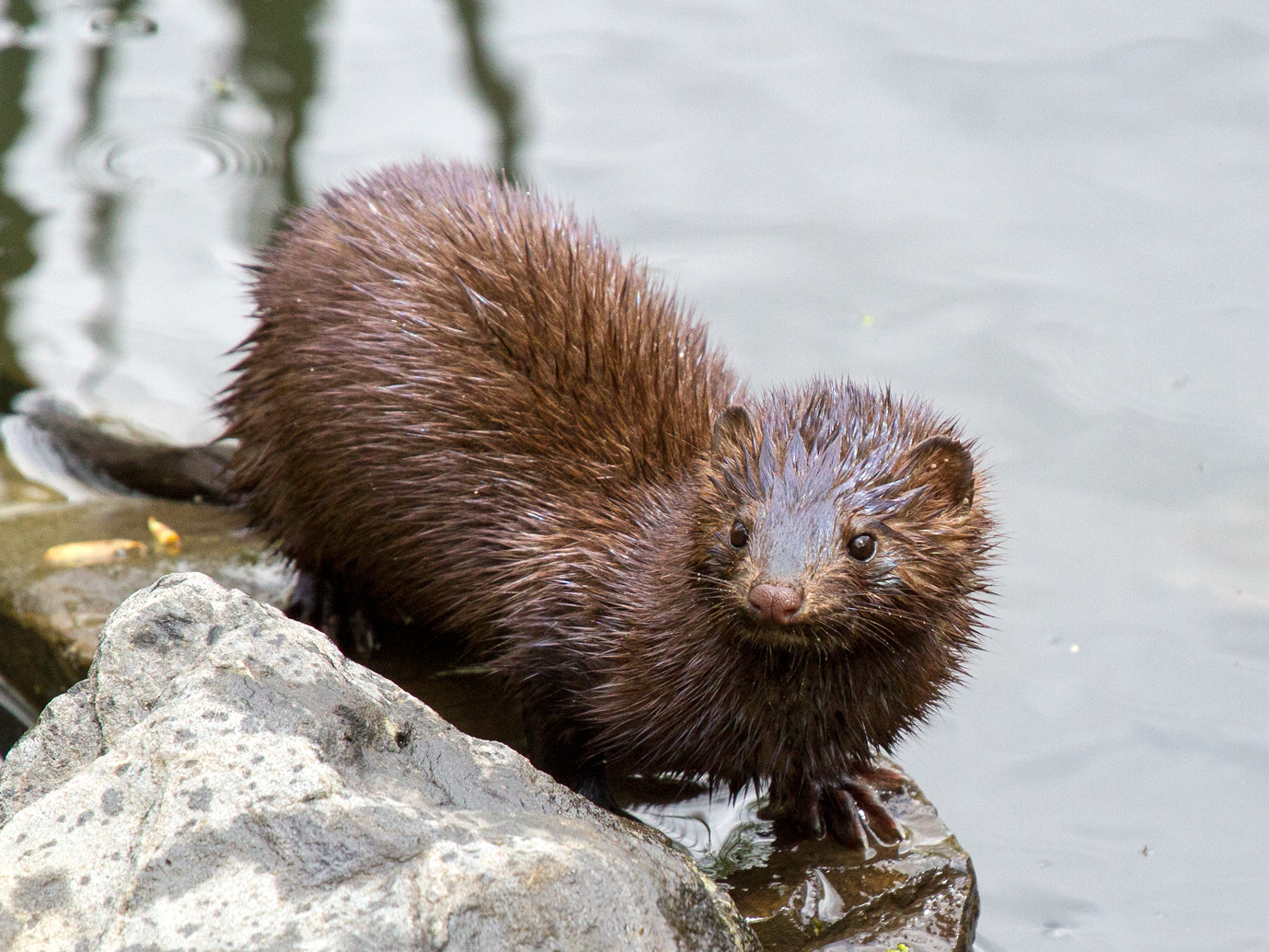
Photo Needsmoreritalin (opens in a new tab), CC BY-SA 3.0 (opens in a new tab)
At a glance
- Occurrence
- Native to North America
- Habitat
- Streams, rivers, wetlands, marshes and wooded shorelines
- Diet
- Crayfish, frogs, fish, mice, rats, birds and other small animals
- Activity
- Mostly nocturnal and crepuscular
- Shelter
- Bank burrows, hollow logs, root cavities and abandoned dens close to water
- Social pattern
- Solitary outside breeding and maternal care
- Rabies vector
- No
Identification
- Key marks
- Long dark-brown body, small rounded ears, white chin patch and a moderately bushy tail
- Told apart from
- North American river otter, which is several times larger with a broader head and thick powerful tail
- Where to look
- Streams, rivers, wetlands, marshes and wooded shorelines
Behaviour
It is mostly nocturnal and crepuscular. It uses habitats including streams, rivers, wetlands, marshes and wooded shorelines. It feeds on crayfish, frogs, fish, mice, rats, birds and other small animals.
Mink patrol shorelines, slipping between water and dense bank cover. They swim and dive well but also hunt extensively on land.
Mink move fluently between land and water, using bank burrows, root tangles and hollow logs as shelter.
Why they matter
Mink connect aquatic and terrestrial food webs by eating crayfish, frogs, fish and rodents along wetland edges.
Their oily, dense fur and streamlined body allow repeated cold-water hunting while remaining agile on land.
Reproduction and lifecycle
Mating — mainly late winter.
Delayed implantation — pregnancy includes a variable delay; total gestation is commonly about 40–75 days.
Kits — usually 3–6 are born in a bank den or other sheltered cavity in spring.
Weaning — roughly 6–10 weeks, with juveniles dispersing later in summer.
Living around people
- Secure poultry with small-mesh fencing and a covered top.
- Remove fishing line and other entangling debris from stream banks.
- Keep dogs from pursuing mink into tight bank cover.
- Avoid outdoor rodenticide because mink can eat poisoned rodents.
Misconceptions
- Mink live only in water. They are semi-aquatic and spend substantial time hunting and travelling on land.
- Every dark animal swimming in a creek is an otter. Mink are much smaller and slimmer with a narrower tail.
- Mink attack people readily. They normally avoid people but can defend themselves if cornered.
Related species
- long-tailed-weasel
- least-weasel
- North American river otter
Seasonal activity
When this species is breeding, and when there are nests on the ground. Mowing during the shaded months is how most nests are found.
| Jan | Feb | Mar | Apr | May | Jun | Jul | Aug | Sep | Oct | Nov | Dec | |
|---|---|---|---|---|---|---|---|---|---|---|---|---|
| Breeding | Jan: no | Feb: no | Mar: no | Apr: no | May: no | Jun: no | Jul: no | Aug: no | Sep: no | Oct: no | Nov: no | Dec: no |
| Active nests | Jan: no | Feb: no | Mar: no | Apr: no | May: no | Jun: no | Jul: no | Aug: no | Sep: no | Oct: no | Nov: no | Dec: no |
| Notes | Active along waterways; winter travel and hunting continue. | Mating season begins or intensifies. | Breeding continues and delayed implantation makes pregnancy length variable. | Pregnant females prepare bank dens. | Kits are commonly born and remain in the den. | Kits grow rapidly and begin eating solid prey. | Young start travelling and hunting with the mother. | Juveniles disperse along waterways. | Adults return to mostly solitary ranges. | Year-round shoreline hunting continues. | Dense winter fur develops as temperatures cool. | No hibernation; mink remain active through winter. |
If you found one
Answer a few questions and you will get a specific answer for what you are looking at.
I found an animal