
Species
Yellow-throated vireo
Vireo flavifrons
A bright yellow-throated vireo with spectacles, singing slow, burry phrases high in open woods.
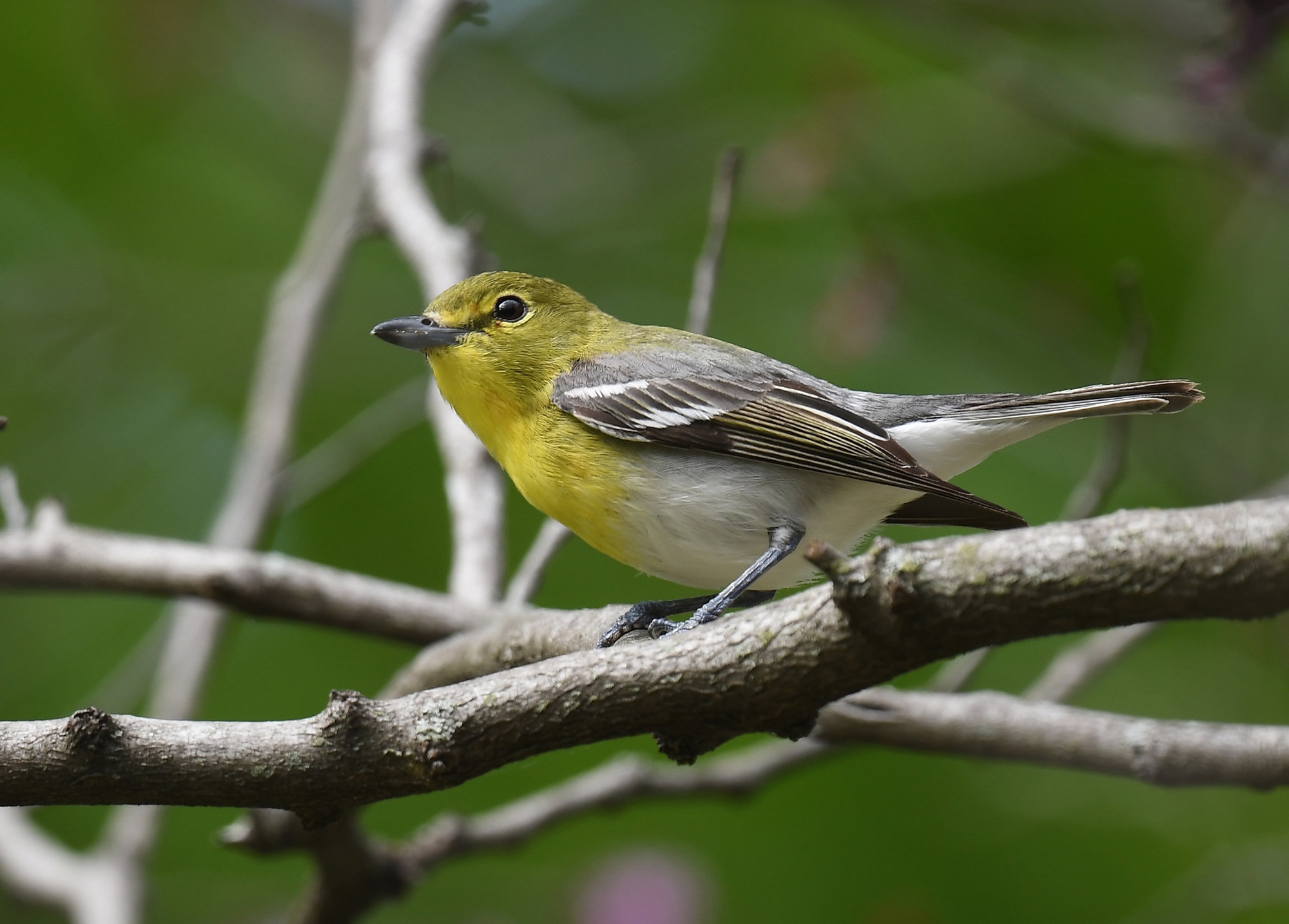
Photo Unknown photographer (opens in a new tab) / iNaturalist, CC0 1.0 (opens in a new tab)
At a glance
- Size
- About 13 to 15 cm long
- Weight
- About 15 to 21 g
- Habitat
- Open deciduous woods, forest edges and river bottoms
- Diet
- Insects
- In Georgia
- A common summer resident, April to September
- Voice
- A slow, burry "three-eight, three-eight"
- Rabies vector
- No
Identification
- Key marks
- Bright yellow throat and breast; yellow spectacles; olive head; grey back; white belly; two white wing bars
- Told apart from
- Pine warbler, which has a thin bill and streaked sides
- Told apart from
- White-eyed vireo, which has a white eye and white throat
- Where to look
- High in tall trees at forest edges
Behaviour
Yellow-throated vireos forage slowly in the tree canopy, searching leaves for caterpillars.
Why they matter
Yellow-throated vireos need tall trees at forest edges and along rivers, and they are sensitive to pesticide use. They eat many leaf-eating caterpillars.
Reproduction and lifecycle
Nest — A hanging cup decorated with lichen in a tree fork
Eggs — Usually four
Incubation — About 13 to 15 days
Chicks — Fed by both parents
Flight — At about 15 to 17 days
Lifespan — Several years
Living around people
- Tall trees along rivers and forest edges are their habitat.
Misconceptions
- Yellow birds are always warblers or finches. This one is a vireo.
Related species
Seasonal activity
When this species is breeding, and when there are nests on the ground. Mowing during the shaded months is how most nests are found.
| Jan | Feb | Mar | Apr | May | Jun | Jul | Aug | Sep | Oct | Nov | Dec | |
|---|---|---|---|---|---|---|---|---|---|---|---|---|
| Breeding | Jan: no | Feb: no | Mar: no | Apr: no | May: no | Jun: no | Jul: no | Aug: no | Sep: no | Oct: no | Nov: no | Dec: no |
| Active nests | Jan: no | Feb: no | Mar: no | Apr: no | May: no | Jun: no | Jul: no | Aug: no | Sep: no | Oct: no | Nov: no | Dec: no |
| Notes | In Central America | In Central America | Arriving late in the month | Arriving | Nesting | Nesting | Young fledging | Present | Leaving | Last birds | In Central America | In Central America |
Where it lives
Recorded in 50 states and provinces. Each one links to the other animals there, and to the rehabilitators licensed for them.
United States
- Alabamabreeding
- Arkansasbreeding
- Connecticutbreeding
- Delawarebreeding
- District of Columbiabreeding
- Floridabreeding
- Georgiabreeding
- Illinoisbreeding
- Indianabreeding
- Iowabreeding
- Kansasbreeding
- Kentuckybreeding
- Louisianabreeding
- Mainebreeding
- Marylandbreeding
- Massachusettsbreeding
- Michiganbreeding
- Minnesotabreeding
- Mississippibreeding
- Missouribreeding
- Nebraskabreeding
- New Hampshirebreeding
- New Jerseybreeding
- New Yorkbreeding
- North Carolinabreeding
- North Dakotabreeding
- Ohiobreeding
- Oklahomabreeding
- Pennsylvaniabreeding
- Rhode Islandbreeding
- South Carolinabreeding
- South Dakotabreeding
- Tennesseebreeding
- Texasbreeding
- Vermontbreeding
- Virginiabreeding
- West Virginiabreeding
- Wisconsinbreeding
If you found one
Answer a few questions and you will get a specific answer for what you are looking at.
I found an animal