
Species
White-eyed vireo
Vireo griseus
A small, olive vireo with a startling white eye, which sings a snappy, varied song from dense thickets.
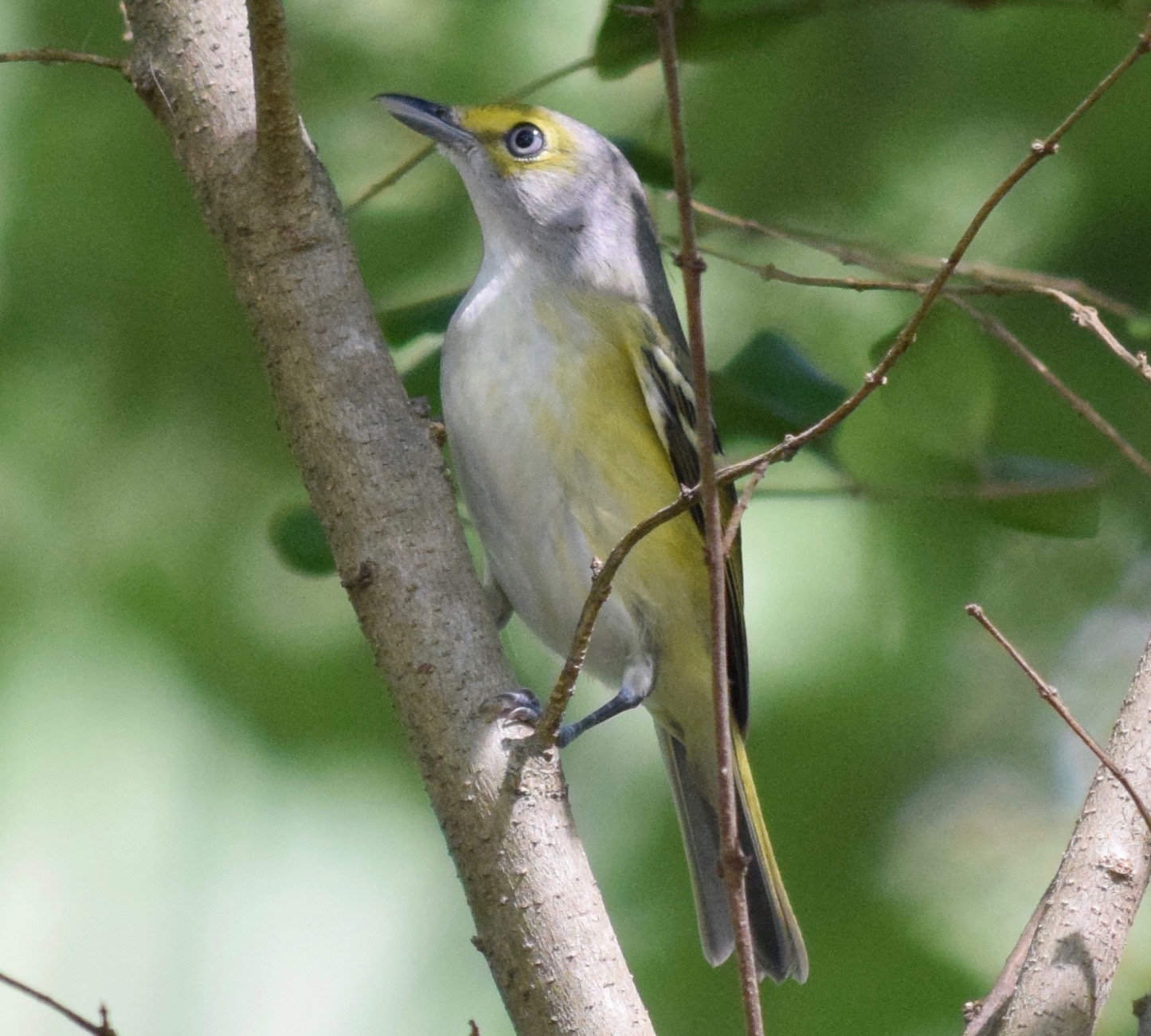
Photo skitterbug (opens in a new tab) / iNaturalist, CC BY 4.0 (opens in a new tab)
At a glance
- Size
- About 11 to 13 cm long
- Weight
- About 10 to 14 g
- Habitat
- Dense shrubs, thickets and woodland edges
- Diet
- Insects and spiders; berries in autumn and winter
- In Georgia
- A common summer resident; some winter in the south and on the coast
- Voice
- A loud, varied song, often "chick-a-per-weeoo-chick"
- Rabies vector
- No
Identification
- Key marks
- Olive-green above; white below with yellow sides; yellow spectacles; white eye in adults; two white wing bars
- Told apart from
- Yellow-throated vireo, which has a bright yellow throat and dark eye
- Where to look
- Dense thickets; listen for the song
Behaviour
White-eyed vireos forage slowly through dense shrubs. They sing emphatically and often include imitations of other birds.
Why they matter
White-eyed vireos eat many caterpillars and other insects in thickets. They depend on shrubby, second-growth habitat that is often cleared, and their song brings life to the tangled edges of fields and woods.
Reproduction and lifecycle
Nest — A hanging cup in the fork of a shrub
Eggs — Usually three or four
Incubation — About 13 to 15 days
Chicks — Fed by both parents
Flight — At about 9 to 11 days
Lifespan — Several years
Living around people
- Brushy field edges and thickets left uncleared give them nest sites.
- Brown-headed cowbirds often lay eggs in their nests.
Misconceptions
- Thickets are wasted land. They are home to white-eyed vireos and many other birds.
Related species
Seasonal activity
When this species is breeding, and when there are nests on the ground. Mowing during the shaded months is how most nests are found.
| Jan | Feb | Mar | Apr | May | Jun | Jul | Aug | Sep | Oct | Nov | Dec | |
|---|---|---|---|---|---|---|---|---|---|---|---|---|
| Breeding | Jan: no | Feb: no | Mar: no | Apr: no | May: no | Jun: no | Jul: no | Aug: no | Sep: no | Oct: no | Nov: no | Dec: no |
| Active nests | Jan: no | Feb: no | Mar: no | Apr: no | May: no | Jun: no | Jul: no | Aug: no | Sep: no | Oct: no | Nov: no | Dec: no |
| Notes | A few wintering in the south | A few present | Arriving | Nesting | Nesting | Chicks | Second broods | Present | Migrants | Leaving | A few wintering | A few wintering |
Where it lives
Recorded in 41 states and provinces. Each one links to the other animals there, and to the rehabilitators licensed for them.
United States
- Alabamabreeding
- Arkansasbreeding
- Connecticutbreeding
- Delawarebreeding
- District of Columbiabreeding
- Florida
- Georgiabreeding
- Illinoisbreeding
- Indianabreeding
- Kansasbreeding
- Kentuckybreeding
- Louisiana
- Marylandbreeding
- Mississippibreeding
- Missouribreeding
- New Jerseybreeding
- New Yorkbreeding
- North Carolinabreeding
- Ohiobreeding
- Oklahomabreeding
- Pennsylvaniabreeding
- Rhode Islandbreeding
- South Carolinabreeding
- Tennesseebreeding
- Texas
- Virginiabreeding
- West Virginiabreeding
If you found one
Answer a few questions and you will get a specific answer for what you are looking at.
I found an animal