
Species
Red-eyed vireo
Vireo olivaceus
A tireless singer of summer woods, repeating short phrases all day long, thousands of times.
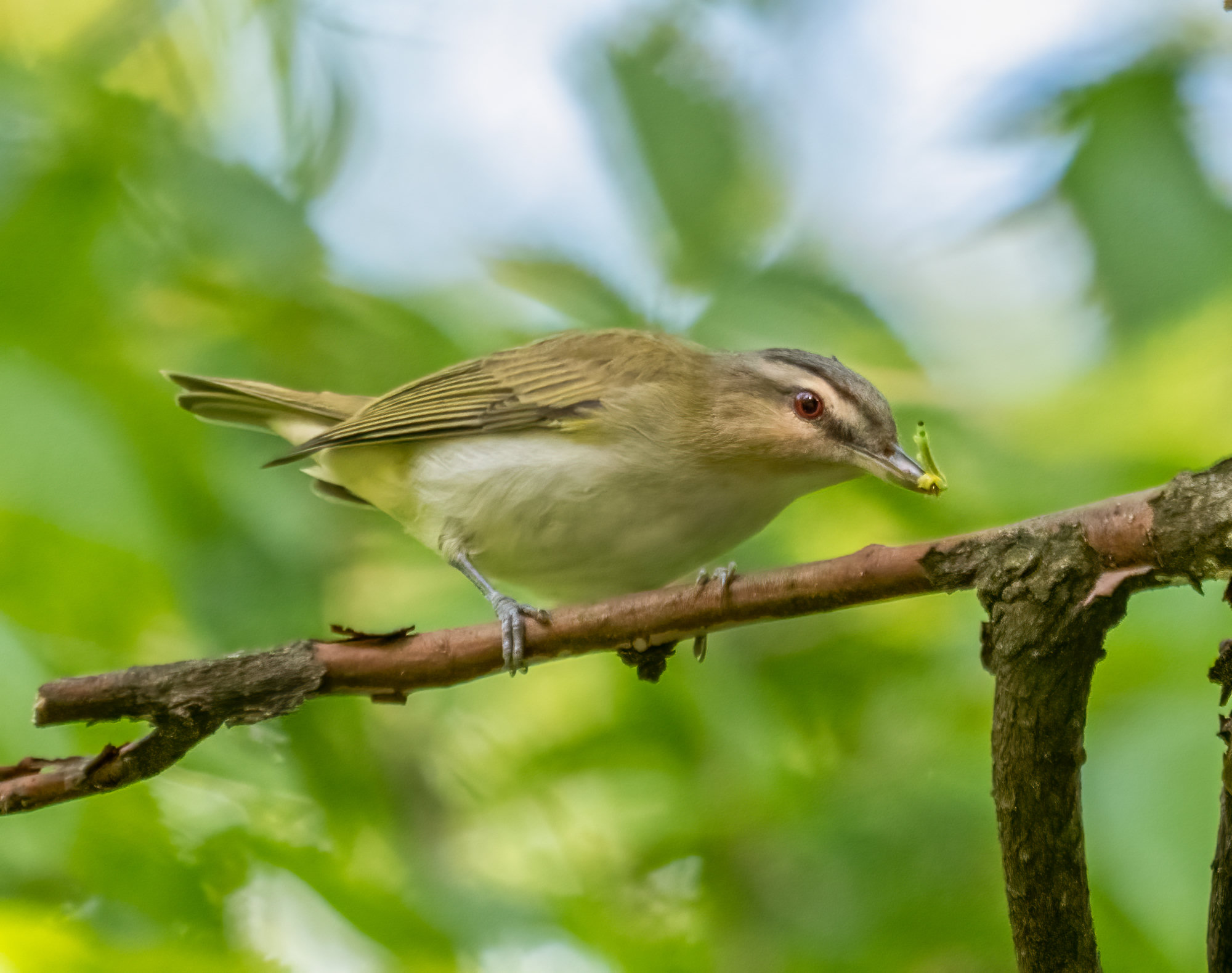
Photo Rhododendrites (opens in a new tab) / Wikimedia Commons, CC BY-SA 4.0 (opens in a new tab)
At a glance
- Size
- About 12 to 13 cm long
- Weight
- About 12 to 26 g
- Habitat
- Deciduous and mixed woods
- Diet
- Caterpillars and other insects; fruit in late summer
- In Georgia
- A common summer resident, April to October
- Voice
- Short, robin-like phrases: "here I am... where are you?"
- Rabies vector
- No
Identification
- Key marks
- Olive-green back; grey cap; white eyebrow edged in black; red eye in adults; white underparts
- Told apart from
- Warbling vireo, which has a plainer face
- Told apart from
- Tennessee warbler, which has a thin bill
- Where to look
- Treetops of leafy woods; listen for the endless song
Behaviour
Red-eyed vireos sing throughout the day, even in the heat of summer. One male was recorded singing over 20,000 songs in a single day.
Why they matter
The red-eyed vireo is one of the most abundant birds of eastern forests and a major predator of caterpillars. It migrates to the Amazon basin each winter, where it switches to eating fruit.
Reproduction and lifecycle
Nest — A hanging cup in a horizontal branch fork
Eggs — Usually three or four
Incubation — About 11 to 14 days
Chicks — Fed by both parents
Flight — At about 10 to 12 days
Lifespan — Wild birds over ten years are recorded
Living around people
- Brown-headed cowbirds often parasitise their nests.
- Migrating vireos strike windows and lit towers.
Misconceptions
- Birds stop singing in summer heat. The red-eyed vireo sings all day.
Related species
Seasonal activity
When this species is breeding, and when there are nests on the ground. Mowing during the shaded months is how most nests are found.
| Jan | Feb | Mar | Apr | May | Jun | Jul | Aug | Sep | Oct | Nov | Dec | |
|---|---|---|---|---|---|---|---|---|---|---|---|---|
| Breeding | Jan: no | Feb: no | Mar: no | Apr: no | May: no | Jun: no | Jul: no | Aug: no | Sep: no | Oct: no | Nov: no | Dec: no |
| Active nests | Jan: no | Feb: no | Mar: no | Apr: no | May: no | Jun: no | Jul: no | Aug: no | Sep: no | Oct: no | Nov: no | Dec: no |
| Notes | In South America | In South America | In South America | Arriving | Nesting | Nesting | Young fledging | Fattening on fruit | Migrating south | Last birds | In South America | In South America |
Where it lives
Recorded in 60 states and provinces. Each one links to the other animals there, and to the rehabilitators licensed for them.
United States
- Alabamabreeding
- Arkansasbreeding
- Coloradobreeding
- Connecticutbreeding
- Delawarebreeding
- District of Columbiabreeding
- Floridabreeding
- Georgiabreeding
- Idahobreeding
- Illinoisbreeding
- Indianabreeding
- Iowabreeding
- Kansasbreeding
- Kentuckybreeding
- Louisianabreeding
- Mainebreeding
- Marylandbreeding
- Massachusettsbreeding
- Michiganbreeding
- Minnesotabreeding
- Mississippibreeding
- Missouribreeding
- Montanabreeding
- Nebraskabreeding
- New Hampshirebreeding
- New Jerseybreeding
- New Yorkbreeding
- North Carolinabreeding
- North Dakotabreeding
- Ohiobreeding
- Oklahomabreeding
- Oregonbreeding
- Pennsylvaniabreeding
- Rhode Islandbreeding
- South Carolinabreeding
- South Dakotabreeding
- Tennesseebreeding
- Texasbreeding
- Vermontbreeding
- Virginiabreeding
- Washingtonbreeding
- West Virginiabreeding
- Wisconsinbreeding
Canada
If you found one
Answer a few questions and you will get a specific answer for what you are looking at.
I found an animal