
Species
Warbling vireo
Vireo gilvus
A plain, pale vireo with a rambling, warbling song, a scarce migrant and rare nester in Georgia.
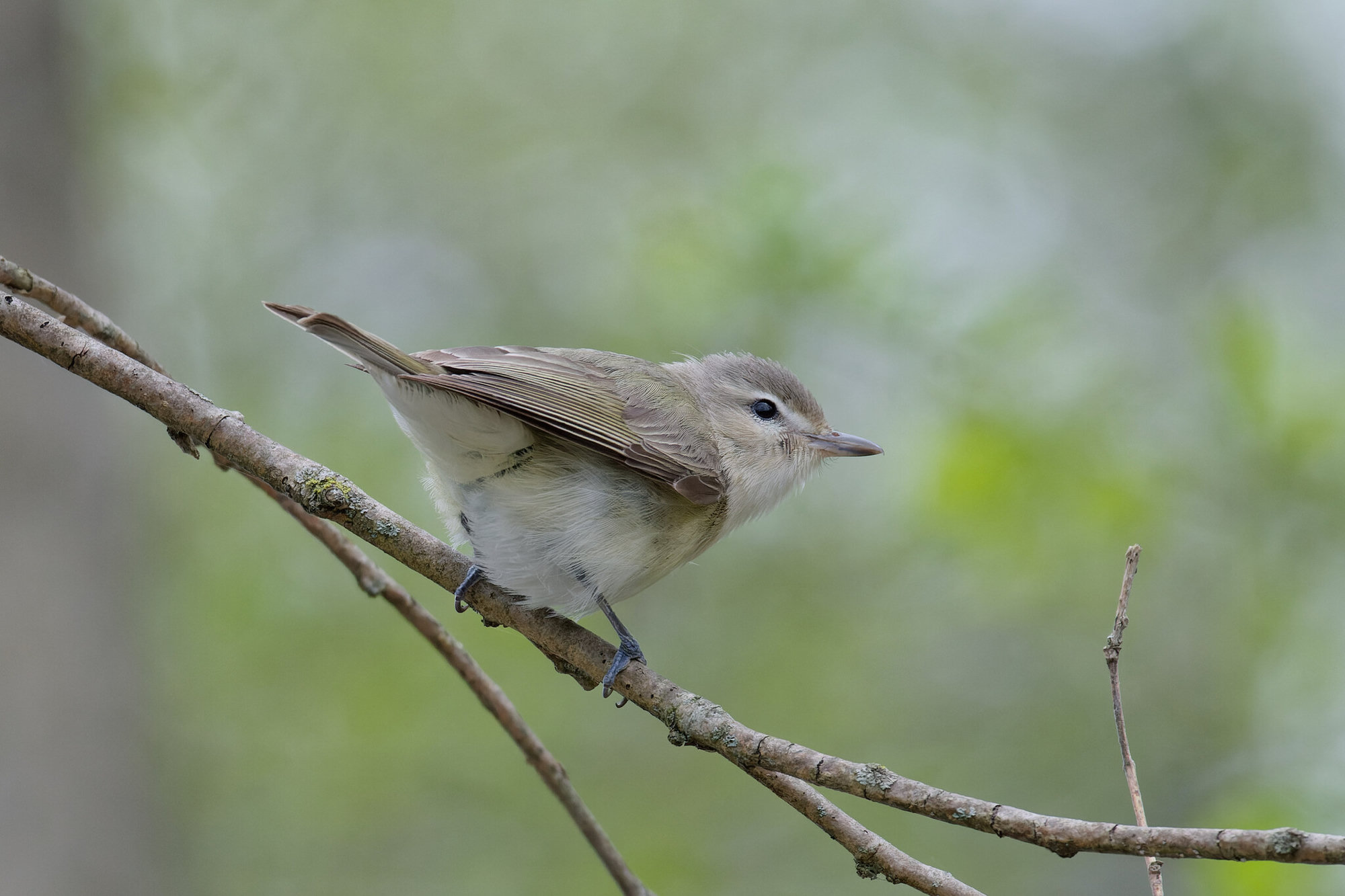
Photo Donald Davesne (opens in a new tab) / iNaturalist, CC BY 4.0 (opens in a new tab)
At a glance
- Size
- About 12 to 14 cm long
- Weight
- About 10 to 16 g
- Habitat
- Tall trees along rivers and in open woods
- Diet
- Insects, especially caterpillars; some fruit
- In Georgia
- A rare migrant; very local as a nesting bird in the north
- Voice
- A long, rambling, warbling song
- Rabies vector
- No
Identification
- Key marks
- Pale grey above; whitish below; faint pale eyebrow; no wing bars
- Told apart from
- Philadelphia vireo, which is yellower on the throat
- Told apart from
- Red-eyed vireo, which has a bold black-edged eyebrow
- Where to look
- Tall trees along rivers during migration
Behaviour
Warbling vireos sing constantly from high in the canopy, even while sitting on the nest.
Why they matter
Warbling vireos are one of the most widespread vireos in North America, though scarce in Georgia. Their persistent singing makes them easy to find where they occur.
Reproduction and lifecycle
Nest — A hanging cup high in a tree fork
Eggs — Usually four
Incubation — About 12 to 14 days
Chicks — Fed by both parents
Flight — At about 12 to 16 days
Lifespan — Several years
Living around people
- Tall streamside trees are their habitat.
Misconceptions
- A bird that sings on its nest gives it away. Warbling vireos do it anyway.
Related species
Seasonal activity
When this species is breeding, and when there are nests on the ground. Mowing during the shaded months is how most nests are found.
| Jan | Feb | Mar | Apr | May | Jun | Jul | Aug | Sep | Oct | Nov | Dec | |
|---|---|---|---|---|---|---|---|---|---|---|---|---|
| Breeding | Jan: no | Feb: no | Mar: no | Apr: no | May: no | Jun: no | Jul: no | Aug: no | Sep: no | Oct: no | Nov: no | Dec: no |
| Active nests | Jan: no | Feb: no | Mar: no | Apr: no | May: no | Jun: no | Jul: no | Aug: no | Sep: no | Oct: no | Nov: no | Dec: no |
| Notes | In Central America | In Central America | In Central America | Migrating north | Migrants | Nesting farther north | Nesting | Migrating south | Migrants | Last migrants | In Central America | In Central America |
Where it lives
Recorded in 82 states and provinces. Each one links to the other animals there, and to the rehabilitators licensed for them.
United States
- Alabamabreeding
- Alaskabreeding
- Arizonabreeding
- Arkansasbreeding
- Californiabreeding
- Coloradobreeding
- Connecticutbreeding
- Delawarebreeding
- District of Columbiabreeding
- Georgiapassing through
- Idahobreeding
- Illinoisbreeding
- Indianabreeding
- Iowabreeding
- Kansasbreeding
- Kentuckybreeding
- Louisianabreeding
- Mainebreeding
- Marylandbreeding
- Massachusettsbreeding
- Michiganbreeding
- Minnesotabreeding
- Mississippibreeding
- Missouribreeding
- Montanabreeding
- Nebraskabreeding
- Nevadabreeding
- New Hampshirebreeding
- New Jerseybreeding
- New Mexicobreeding
- New Yorkbreeding
- North Carolinabreeding
- North Dakotabreeding
- Ohiobreeding
- Oklahomabreeding
- Oregonbreeding
- Pennsylvaniabreeding
- Rhode Islandbreeding
- South Dakotabreeding
- Tennesseebreeding
- Texasbreeding
- Utahbreeding
- Vermontbreeding
- Virginiabreeding
- Washingtonbreeding
- West Virginiabreeding
- Wisconsinbreeding
- Wyomingbreeding
Canada
Mexico
- Aguascalientespassing through
- Baja Californiabreeding
- Baja California Sur
- Chiapasin winter
- Chihuahuabreeding
- Colimain winter
- Durangoin winter
- Guanajuatoin winter
- Guerreroin winter
- Hidalgoin winter
- Jaliscoin winter
- Mexico Cityin winter
- Michoacanin winter
- Morelosin winter
- Nayaritin winter
- Nuevo Leonin winter
- Oaxacain winter
- Pueblain winter
- Queretaroin winter
- San Luis Potosipassing through
- Sinaloa
- Sonorain winter
- State of Mexicoin winter
- Tamaulipaspassing through
- Veracruzin winter
If you found one
Answer a few questions and you will get a specific answer for what you are looking at.
I found an animal