
Species
Worm-eating warbler
Helmitheros vermivorum
A plain, buff warbler with bold head stripes that probes dead leaves for caterpillars on steep wooded slopes.
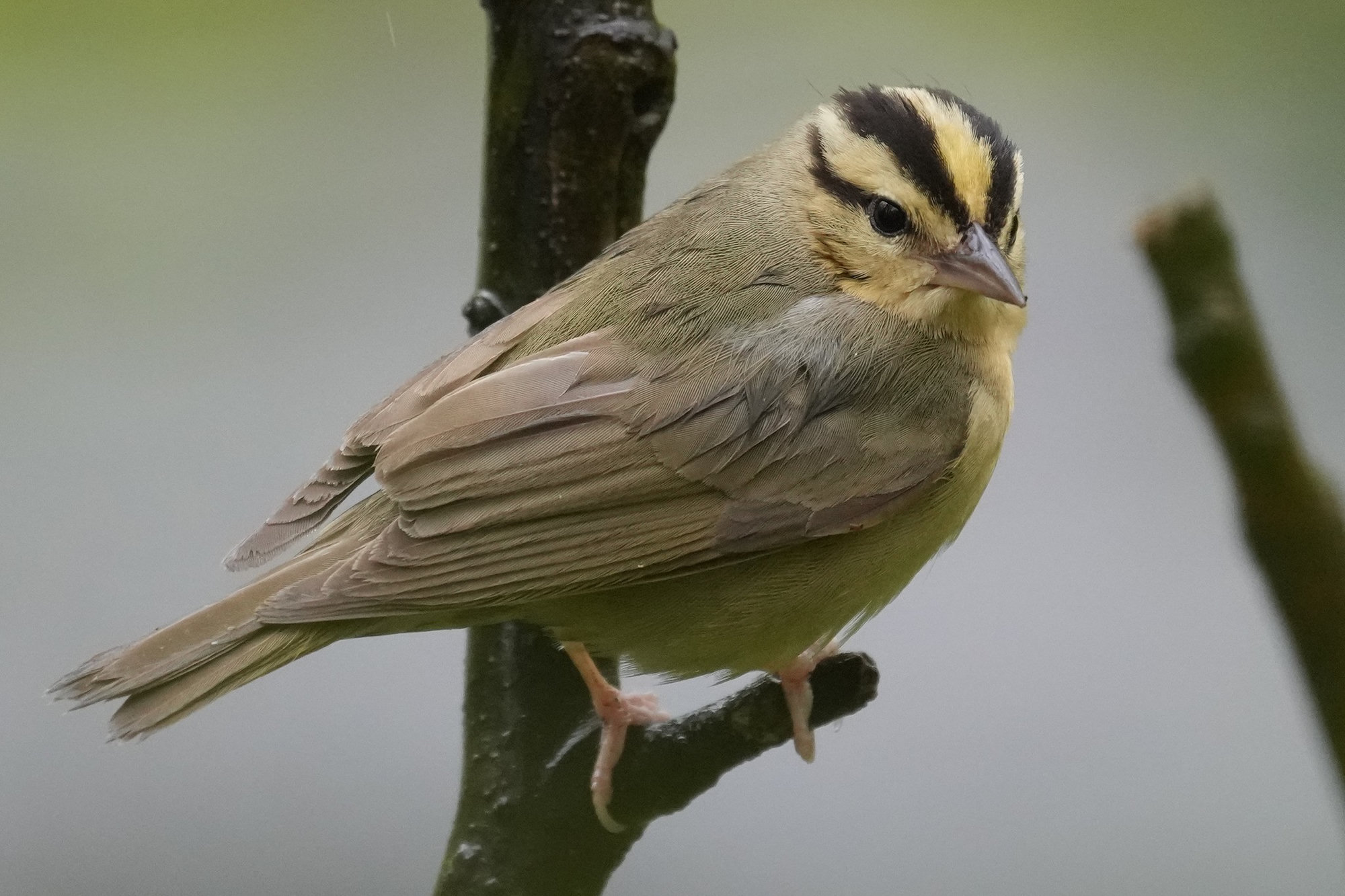
Photo carbenoid (opens in a new tab) / iNaturalist, CC BY 4.0 (opens in a new tab)
At a glance
- Size
- About 11 to 13 cm long
- Weight
- About 12 to 16 g
- Habitat
- Deciduous forests on steep hillsides and ravines
- Diet
- Caterpillars and insects, often from clusters of dead leaves
- In Georgia
- A summer resident in the north; a migrant elsewhere
- Voice
- A dry, insect-like trill
- Rabies vector
- No
Identification
- Key marks
- Plain olive back; buff head with bold black stripes; buff underparts
- Told apart from
- Swainson's warbler, which has a rusty cap and no black stripes
- Where to look
- Wooded slopes with dense understorey
Behaviour
Worm-eating warblers specialise in probing hanging clusters of dead leaves for caterpillars and spiders.
Why they matter
Despite the name, they rarely eat worms; they eat caterpillars, which in older usage were called worms. They need large, steep forested slopes.
Reproduction and lifecycle
Nest — A cup on the ground, hidden in leaves on a slope
Eggs — Usually four or five
Incubation — About 13 days
Chicks — Fed by both parents
Lifespan — Several years
Living around people
- Large forested slopes protect them.
Misconceptions
- Worm-eating warblers eat earthworms. They eat caterpillars.
Related species
Seasonal activity
When this species is breeding, and when there are nests on the ground. Mowing during the shaded months is how most nests are found.
| Jan | Feb | Mar | Apr | May | Jun | Jul | Aug | Sep | Oct | Nov | Dec | |
|---|---|---|---|---|---|---|---|---|---|---|---|---|
| Breeding | Jan: no | Feb: no | Mar: no | Apr: no | May: no | Jun: no | Jul: no | Aug: no | Sep: no | Oct: no | Nov: no | Dec: no |
| Active nests | Jan: no | Feb: no | Mar: no | Apr: no | May: no | Jun: no | Jul: no | Aug: no | Sep: no | Oct: no | Nov: no | Dec: no |
| Notes | In Central America | In Central America | In Central America | Arriving | Nesting | Nesting | Young fledging | Present | Migrating | Last migrants | In Central America | In Central America |
Where it lives
Recorded in 37 states and provinces. Each one links to the other animals there, and to the rehabilitators licensed for them.
United States
- Alabamabreeding
- Arkansasbreeding
- Connecticutbreeding
- Delawarebreeding
- District of Columbiapassing through
- Floridapassing through
- Georgiabreeding
- Illinoisbreeding
- Indianabreeding
- Iowabreeding
- Kentuckybreeding
- Louisianabreeding
- Marylandbreeding
- Massachusettsbreeding
- Michiganbreeding
- Mississippibreeding
- Missouribreeding
- New Jerseybreeding
- New Yorkbreeding
- North Carolinabreeding
- Ohiobreeding
- Oklahomabreeding
- Pennsylvaniabreeding
- Rhode Islandbreeding
- South Carolinabreeding
- Tennesseebreeding
- Texaspassing through
- Virginiabreeding
- West Virginiabreeding
Canada
If you found one
Answer a few questions and you will get a specific answer for what you are looking at.
I found an animal