
Species
Swainson's warbler
Limnothlypis swainsonii
A secretive, brown warbler of canebrakes and swamp thickets with a loud, ringing song.
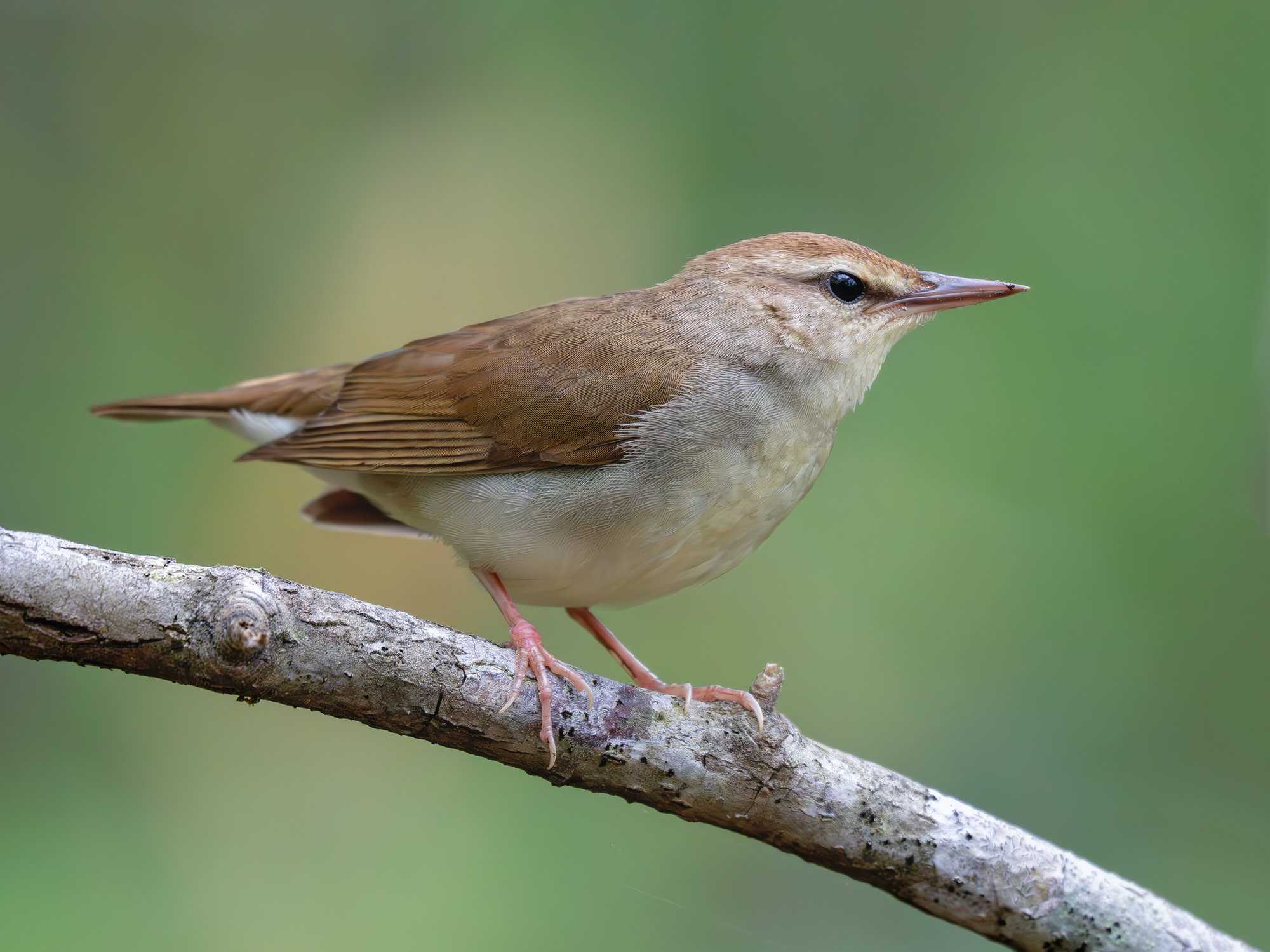
Photo Karen Szafrajda (opens in a new tab) / iNaturalist, CC BY 4.0 (opens in a new tab)
At a glance
- Size
- About 13 to 15 cm long
- Weight
- About 14 to 20 g
- Habitat
- Canebrakes, dense swamp thickets and rhododendron in the mountains
- Diet
- Insects from leaf litter
- In Georgia
- An uncommon summer resident
- Voice
- Loud, clear whistles descending at the end
- Rabies vector
- No
Identification
- Key marks
- Plain brown; rusty cap; whitish eyebrow; unmarked underparts
- Told apart from
- Worm-eating warbler, which has bold black head stripes
- Where to look
- Dense thickets in swamps and mountain rhododendron
Behaviour
Swainson's warblers walk on the ground in dense cover, flipping leaves for insects.
Why they matter
Swainson's warblers depend on canebrakes and dense thickets, which have largely disappeared. They are one of the least-known warblers in North America.
Reproduction and lifecycle
Nest — A bulky cup in dense shrubs or cane
Eggs — Usually three
Incubation — About 13 to 15 days
Chicks — Fed by the female
Lifespan — Several years
Living around people
- Dense thickets and canebrakes left uncleared support them.
Misconceptions
- Brown birds are not warblers. Swainson's warbler is brown and plain.
Related species
Seasonal activity
When this species is breeding, and when there are nests on the ground. Mowing during the shaded months is how most nests are found.
| Jan | Feb | Mar | Apr | May | Jun | Jul | Aug | Sep | Oct | Nov | Dec | |
|---|---|---|---|---|---|---|---|---|---|---|---|---|
| Breeding | Jan: no | Feb: no | Mar: no | Apr: no | May: no | Jun: no | Jul: no | Aug: no | Sep: no | Oct: no | Nov: no | Dec: no |
| Active nests | Jan: no | Feb: no | Mar: no | Apr: no | May: no | Jun: no | Jul: no | Aug: no | Sep: no | Oct: no | Nov: no | Dec: no |
| Notes | In the Caribbean and Central America | In the tropics | In the tropics | Arriving | Nesting | Nesting | Young fledging | Present | Leaving | Last birds | In the tropics | In the tropics |
Where it lives
Recorded in 23 states and provinces. Each one links to the other animals there, and to the rehabilitators licensed for them.
United States
- Alabamabreeding
- Arkansasbreeding
- Floridabreeding
- Georgiabreeding
- Kentuckybreeding
- Louisianabreeding
- Minnesotapassing through
- Mississippibreeding
- Missouribreeding
- New Jerseybreeding
- North Carolinabreeding
- Oklahomabreeding
- Pennsylvaniabreeding
- South Carolinabreeding
- Tennesseebreeding
- Texasbreeding
- Virginiabreeding
- West Virginiabreeding
If you found one
Answer a few questions and you will get a specific answer for what you are looking at.
I found an animal