
Species
Winter wren
Troglodytes hiemalis
A tiny, dark, stub-tailed wren of woodland tangles, with one of the longest, most complex songs of any bird.
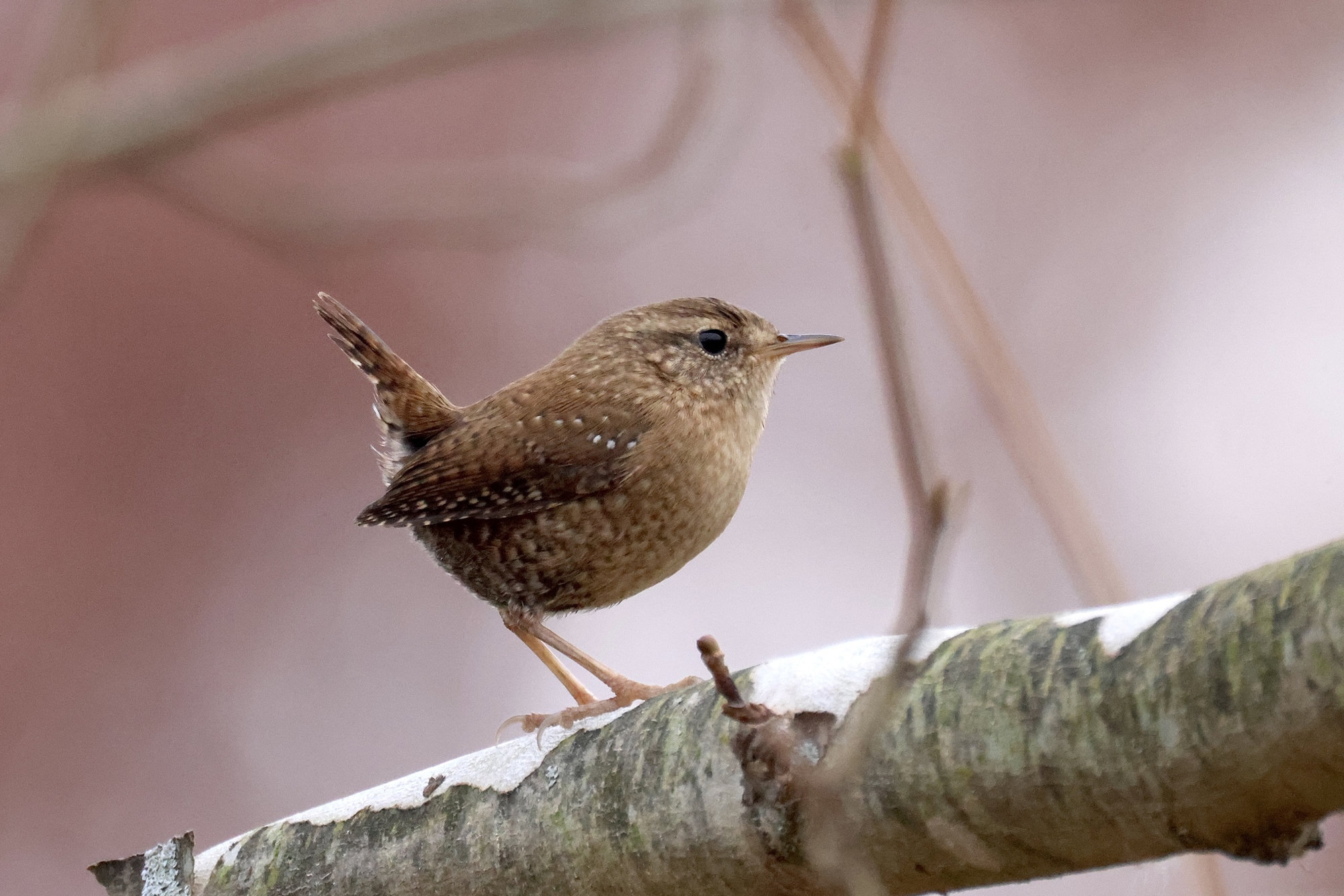
Photo Unknown photographer (opens in a new tab) / iNaturalist, CC0 1.0 (opens in a new tab)
At a glance
- Size
- About 8 to 12 cm long
- Weight
- About 8 to 12 g
- Habitat
- Damp woods with fallen logs and tangles
- Diet
- Insects and spiders
- In Georgia
- An uncommon winter visitor
- Voice
- A long, rapid, tinkling song
- Rabies vector
- No
Identification
- Key marks
- Tiny; dark brown; stubby tail held upright; barred flanks
- Told apart from
- House wren, which is paler with a longer tail
- Where to look
- Brush piles and fallen logs in damp woods in winter
Behaviour
Winter wrens creep through brush and fallen logs like mice. In spring, their song can contain over 100 notes in a few seconds.
Why they matter
Winter wrens depend on damp woods with fallen logs and dense tangles. They are a sign of healthy forest floors with plenty of cover.
Reproduction and lifecycle
Nest — A ball of moss in a root tangle or crevice
Eggs — Usually five or six
Incubation — About 14 to 17 days
Chicks — Fed by both parents
Flight — At about 19 days
Lifespan — A few years
Living around people
- Brush piles and fallen logs in gardens provide winter cover.
Misconceptions
- Tidy gardens are best for birds. Winter wrens need untidy tangles.
Related species
Seasonal activity
When this species is breeding, and when there are nests on the ground. Mowing during the shaded months is how most nests are found.
| Jan | Feb | Mar | Apr | May | Jun | Jul | Aug | Sep | Oct | Nov | Dec | |
|---|---|---|---|---|---|---|---|---|---|---|---|---|
| Breeding | Jan: no | Feb: no | Mar: no | Apr: no | May: no | Jun: no | Jul: no | Aug: no | Sep: no | Oct: no | Nov: no | Dec: no |
| Active nests | Jan: no | Feb: no | Mar: no | Apr: no | May: no | Jun: no | Jul: no | Aug: no | Sep: no | Oct: no | Nov: no | Dec: no |
| Notes | Wintering | Wintering | Leaving | Nesting in the north | Nesting | Chicks | Young fledging | Present in the north | Migrating | Arriving | Wintering | Wintering |
Where it lives
Recorded in 51 states and provinces. Each one links to the other animals there, and to the rehabilitators licensed for them.
United States
- Alabamain winter
- Arkansasin winter
- Coloradoin winter
- Connecticut
- Delawarein winter
- District of Columbiain winter
- Georgiain winter
- Illinoisin winter
- Indianain winter
- Iowain winter
- Kansasin winter
- Kentuckyin winter
- Louisianain winter
- Mainebreeding
- Marylandin winter
- Massachusetts
- Michigan
- Minnesotabreeding
- Mississippiin winter
- Missouriin winter
- Nebraskain winter
- New Hampshirebreeding
- New Jerseyin winter
- New Mexicoin winter
- New York
- North Carolinain winter
- North Dakotapassing through
- Ohioin winter
- Oklahomain winter
- Pennsylvaniain winter
- Rhode Islandin winter
- South Carolinain winter
- South Dakotain winter
- Tennesseein winter
- Texasin winter
- Vermontbreeding
- Virginiain winter
- West Virginia
- Wisconsin
Canada
Mexico
If you found one
Answer a few questions and you will get a specific answer for what you are looking at.
I found an animal