
Species
House wren
Troglodytes aedon
A small, brown, bubbly-voiced wren that nests in almost any cavity, from nest boxes to old boots.
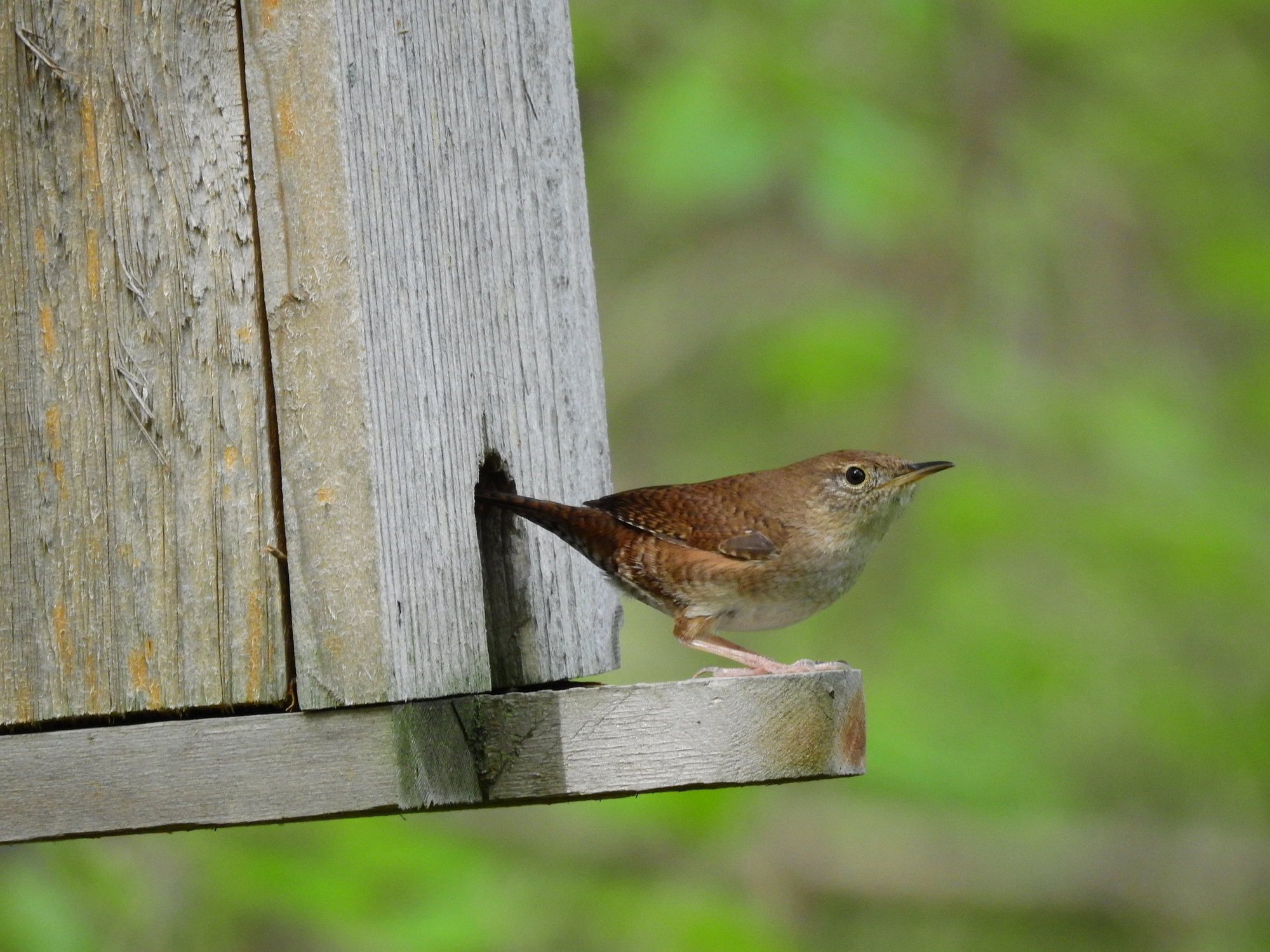
Photo Unknown photographer (opens in a new tab) / iNaturalist, CC0 1.0 (opens in a new tab)
At a glance
- Size
- About 11 to 13 cm long
- Weight
- About 10 to 12 g
- Habitat
- Yards, parks, woodland edges and thickets
- Diet
- Insects and spiders
- In Georgia
- A summer resident in the north; a winter visitor in the south
- Voice
- A loud, bubbling, cascading song
- Rabies vector
- No
Identification
- Key marks
- Plain brown; faint eyebrow; barred wings and tail; tail often cocked
- Told apart from
- Carolina wren, which is rusty with a bold white eyebrow
- Told apart from
- Winter wren, which is smaller and darker with a stubby tail
- Where to look
- Brushy yards and edges
Behaviour
House wrens nest in any cavity, including nest boxes, flowerpots and old clothing. Males fill several cavities with sticks and the female chooses one.
Why they matter
House wrens eat many insects and spiders. They are among the most widespread songbirds in the Americas, from Canada to Tierra del Fuego.
Reproduction and lifecycle
Nest — Sticks in a cavity, lined with soft material
Eggs — Usually five to eight
Incubation — About 12 to 15 days
Chicks — Fed by both parents
Flight — At about 15 to 17 days
Lifespan — A few years
Living around people
- Nest boxes placed near shrubs attract them.
Misconceptions
- Wrens are too small to be territorial. House wrens defend territories fiercely, even removing other birds' eggs.
Related species
Seasonal activity
When this species is breeding, and when there are nests on the ground. Mowing during the shaded months is how most nests are found.
| Jan | Feb | Mar | Apr | May | Jun | Jul | Aug | Sep | Oct | Nov | Dec | |
|---|---|---|---|---|---|---|---|---|---|---|---|---|
| Breeding | Jan: no | Feb: no | Mar: no | Apr: no | May: no | Jun: no | Jul: no | Aug: no | Sep: no | Oct: no | Nov: no | Dec: no |
| Active nests | Jan: no | Feb: no | Mar: no | Apr: no | May: no | Jun: no | Jul: no | Aug: no | Sep: no | Oct: no | Nov: no | Dec: no |
| Notes | Wintering in the south | Wintering | Arriving in the north | Nesting in the north | Nesting | Chicks | Second broods | Present | Migrating | Arriving in the south | Wintering | Wintering |
Where it lives
Recorded in 84 states and provinces. Each one links to the other animals there, and to the rehabilitators licensed for them.
United States
- Alabamain winter
- Arizona
- Arkansas
- California
- Coloradobreeding
- Connecticutbreeding
- Delawarebreeding
- District of Columbiabreeding
- Floridain winter
- Georgia
- Idahobreeding
- Illinoisbreeding
- Indianabreeding
- Iowabreeding
- Kansasbreeding
- Kentuckybreeding
- Louisianain winter
- Mainebreeding
- Marylandbreeding
- Massachusettsbreeding
- Michiganbreeding
- Minnesotabreeding
- Mississippiin winter
- Missouribreeding
- Montanabreeding
- Nebraskabreeding
- Nevadabreeding
- New Hampshirebreeding
- New Jerseybreeding
- New Mexicobreeding
- New Yorkbreeding
- North Carolina
- North Dakotabreeding
- Ohiobreeding
- Oklahomabreeding
- Oregonbreeding
- Pennsylvaniabreeding
- Rhode Islandbreeding
- South Carolinain winter
- South Dakotabreeding
- Tennesseebreeding
- Texasin winter
- Utahbreeding
- Vermontbreeding
- Virginiabreeding
- Washingtonbreeding
- West Virginiabreeding
- Wisconsinbreeding
- Wyomingbreeding
Canada
Mexico
- Aguascalientesin winter
- Baja California
- Baja California Surin winter
- Chihuahua
- Coahuila
- Colima
- Durango
- Guanajuatoin winter
- Guerreroin winter
- Hidalgoin winter
- Jalisco
- Mexico City
- Michoacan
- Morelos
- Nayarit
- Nuevo Leonin winter
- Oaxaca
- Puebla
- Queretaro
- San Luis Potosiin winter
- Sinaloa
- Sonorain winter
- State of Mexico
- Tamaulipasin winter
- Tlaxcala
- Veracruz
- Zacatecasin winter
If you found one
Answer a few questions and you will get a specific answer for what you are looking at.
I found an animal