
Species
West Indian manatee
Trichechus manatus
A gentle, slow-moving marine herbivore that visits Georgia's coast and rivers in the warm months.
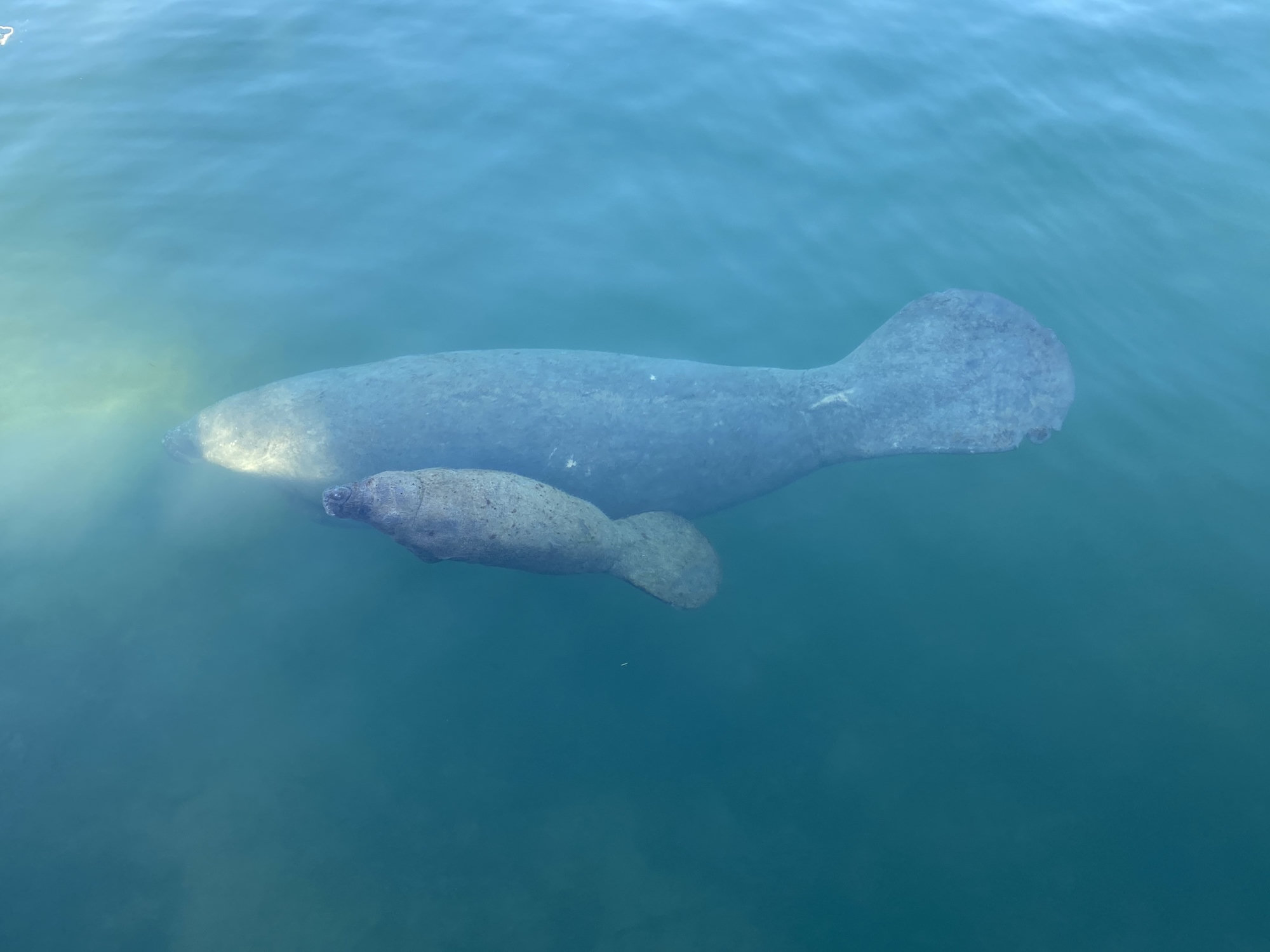
Photo nebrooks (opens in a new tab) / iNaturalist, CC BY 4.0 (opens in a new tab)
At a glance
- Size
- Adults about 2.7 to 3.5 m long
- Weight
- Often about 400 to 550 kg; large individuals weigh more
- Habitat
- Shallow coastal waters, estuaries, rivers and springs
- Diet
- Seagrasses, marsh grasses and other water plants
- Active
- Day and night, resting and feeding in cycles
- Breathing
- Surfaces every few minutes when active, and can rest underwater for up to about 20 minutes
- Status
- Listed as threatened in the United States
- Rabies vector
- No
Identification
- Key marks
- Large, grey, wrinkled, rounded body; flat, paddle-shaped tail; two front flippers; whiskered, bristly snout
- Signs
- A large, round "footprint" of smooth water on the surface as it moves below; a snout breaking the surface to breathe
- Told apart from
- Dolphins, which have a dorsal fin, a pointed beak and horizontal tail flukes
- Where to look
- Georgia's tidal rivers, marinas and coastal waters from spring to autumn
Behaviour
Manatees are slow, gentle grazers that spend much of the day feeding on seagrasses and other water plants, eating a large share of their body weight each day. They rest on the bottom or just below the surface between feeding bouts.
They cannot tolerate cold water. In winter, Florida manatees gather at warm springs and other warm-water sites, and in Georgia they are seen mostly from about April to October, returning to Florida as the water cools.
Why they matter
Manatees graze seagrass beds, trimming them the way a lawnmower trims grass, and move nutrients through coastal waters. They have no natural predators in Georgia waters; almost every threat to them comes from people.
They are also a conservation story that is still being written: numbers rose after decades of protection, but boat strikes, cold stress and the loss of seagrass continue to kill many each year.
Reproduction and lifecycle
Mating — can occur year-round; several males may follow a female in a "mating herd"
Gestation — about 12 to 13 months
Birth — a single calf, rarely twins
Nursing — calves stay with their mother for one to two years
Calving interval — usually every two to five years
Maturity — at about five years old
Lifespan — can exceed 50 years
Living around people
- Watch for manatees when boating in shallow water, and slow down in manatee zones; boat strikes are a leading cause of death.
- Look but do not touch, feed or give water to manatees; feeding or watering them is illegal under federal law and teaches them to approach boats and docks.
- Discard fishing line and hooks properly; entanglement injures manatees.
- A manatee that is stranded, injured or tangled needs trained responders; keep people and dogs back and do not try to push it into the water.
Misconceptions
- Manatees are slow, so boats can easily avoid them. Manatees cannot get out of the way of fast boats, and many carry propeller scars.
- Giving a manatee fresh water from a hose helps it. It teaches manatees to seek people and marinas, where they are more likely to be hurt.
- Manatees live only in Florida. They visit Georgia's coast every warm season.
Related species
Seasonal activity
When this species is breeding, and when there are nests on the ground. Mowing during the shaded months is how most nests are found.
| Jan | Feb | Mar | Apr | May | Jun | Jul | Aug | Sep | Oct | Nov | Dec | |
|---|---|---|---|---|---|---|---|---|---|---|---|---|
| Breeding | Jan: no | Feb: no | Mar: no | Apr: no | May: no | Jun: no | Jul: no | Aug: no | Sep: no | Oct: no | Nov: no | Dec: no |
| Active nests | Jan: no | Feb: no | Mar: no | Apr: no | May: no | Jun: no | Jul: no | Aug: no | Sep: no | Oct: no | Nov: no | Dec: no |
| Notes | In warm-water refuges in Florida | In warm-water refuges | Moving north as water warms | First manatees arrive in Georgia's coastal waters | Present along the coast and in tidal rivers | Present; mating herds may form | Present in Georgia waters | Present | Present | Moving south as water cools | Returning to Florida | In warm-water refuges |
Where it lives
Recorded in 14 states and provinces. Each one links to the other animals there, and to the rehabilitators licensed for them.
If you found one
Answer a few questions and you will get a specific answer for what you are looking at.
I found an animal