
Species
North Atlantic right whale
Eubalaena glacialis
One of the rarest whales on Earth, which gives birth off the coast of Georgia each winter.
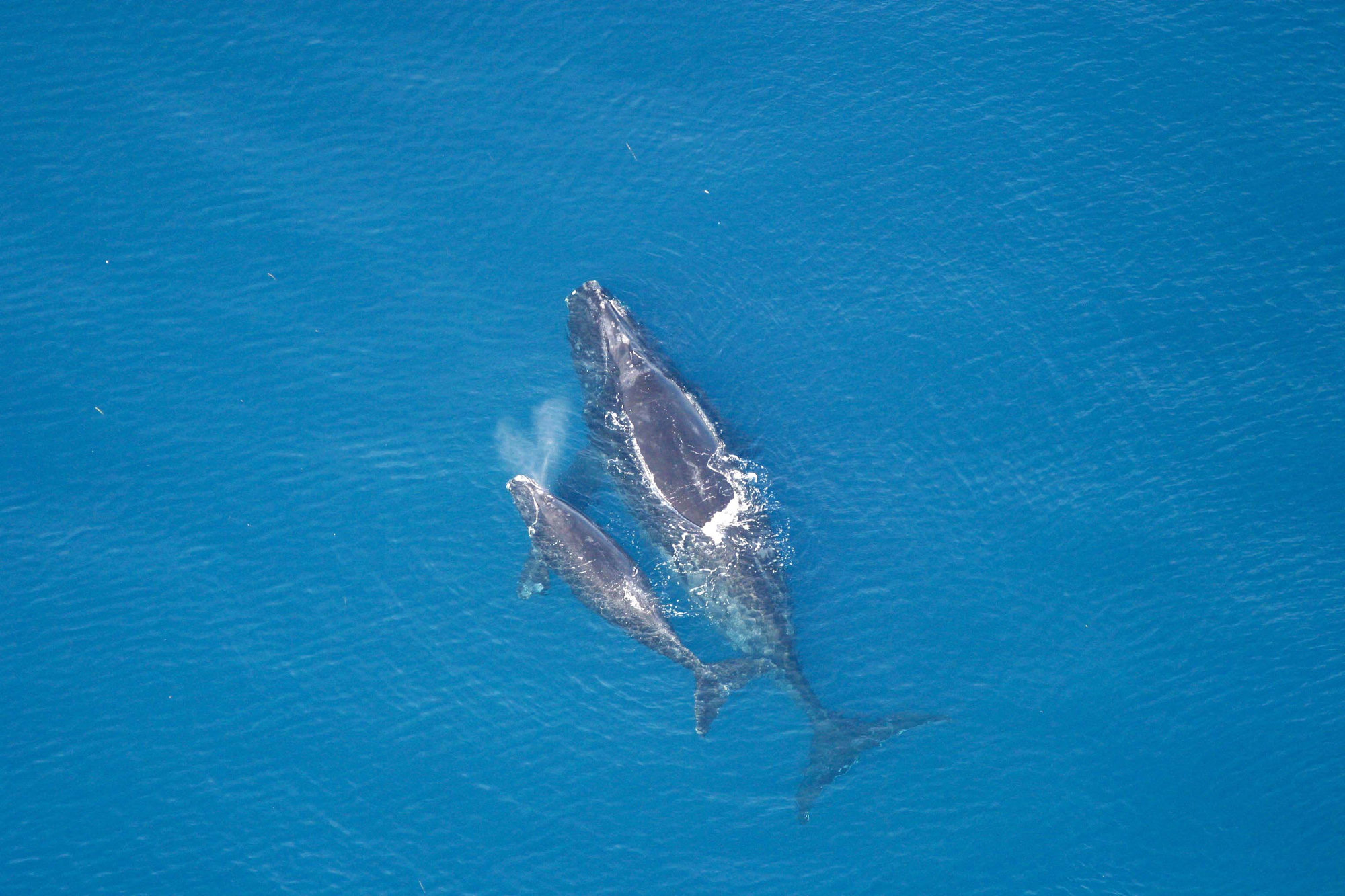
Photo NOAA Photo Library (opens in a new tab) / Wikimedia Commons, Public domain (opens in a new tab)
At a glance
- Size
- Adults about 13 to 16 m long
- Weight
- Up to about 70 tonnes
- Habitat
- Coastal and continental shelf waters of the western North Atlantic
- Diet
- Tiny crustaceans called copepods, strained from the water
- Georgia
- Calving grounds off Georgia and northeast Florida, from about December to April
- Status
- Endangered; fewer than 400 remain
- State marine mammal
- Georgia's official state marine mammal
- Rabies vector
- No
Identification
- Key marks
- Very large and dark, with no dorsal fin; a broad back; a huge, arched mouth; rough, pale patches called callosities on the head
- Blow
- A V-shaped spout, seen from behind or in front
- Told apart from
- Humpback whales, which have a small dorsal fin and long white flippers
- Told apart from
- Dolphins, which are far smaller with a dorsal fin
- Where to look
- Seen from the air and from boats well off the coast in winter; sometimes close to shore
Behaviour
North Atlantic right whales feed in the cold waters off New England and Canada in spring, summer and autumn, straining huge numbers of copepods through their long baleen plates. Pregnant females travel south each winter to the warm, shallow waters off Georgia and northeast Florida, the only known calving grounds, to give birth.
Each whale can be identified by the unique pattern of callosities on its head, and scientists know many of the living whales individually.
Why they matter
Right whales were named by whalers because they were the "right" whale to hunt: slow, close to shore, and floating when killed. Centuries of whaling brought them close to extinction.
Today almost every known death is caused by people, through collisions with ships and entanglement in fishing gear. Their survival depends on changes to how people use the ocean, and Georgia's coast, where their calves are born, is central to that.
Reproduction and lifecycle
Mating — thought to take place mostly in winter
Gestation — about one year
Birth — a single calf, about 4 to 5 m long, born off Georgia or northeast Florida
Nursing — about a year
Calving interval — now often seven to ten years, far longer than historically
Maturity — females at about ten years old
Lifespan — can exceed 70 years
Living around people
- Federal law prohibits approaching within 500 yards of a right whale, by boat, aircraft or drone.
- Boats should slow down in areas where right whales are present; collisions are a leading cause of death.
- Fishing gear that is lost or left in the water can entangle whales; retrieve lost line where it is safe to do so and dispose of it properly.
- A right whale seen close to shore is best watched from land.
Misconceptions
- Whales only live far out at sea. Right whales give birth close to Georgia's coast.
- Whaling is what threatens them now. Today it is ship strikes and fishing-gear entanglement.
- A species this big is safe from extinction. Fewer than 400 remain.
Related species
Seasonal activity
When this species is breeding, and when there are nests on the ground. Mowing during the shaded months is how most nests are found.
| Jan | Feb | Mar | Apr | May | Jun | Jul | Aug | Sep | Oct | Nov | Dec | |
|---|---|---|---|---|---|---|---|---|---|---|---|---|
| Breeding | Jan: no | Feb: no | Mar: no | Apr: no | May: no | Jun: no | Jul: no | Aug: no | Sep: no | Oct: no | Nov: no | Dec: no |
| Active nests | Jan: no | Feb: no | Mar: no | Apr: no | May: no | Jun: no | Jul: no | Aug: no | Sep: no | Oct: no | Nov: no | Dec: no |
| Notes | Mothers and newborn calves in Georgia and northeast Florida waters | Calving continues | Mothers and calves begin moving north | Last mothers and calves leave the southeast | Feeding off New England | Feeding in northern waters | Feeding in the Gulf of St Lawrence and Gulf of Maine | Feeding in northern waters | Feeding in northern waters | Some whales begin moving south | Pregnant females travel toward the southeast | First mothers and calves appear off Georgia |
Where it lives
Recorded in 18 states and provinces. Each one links to the other animals there, and to the rehabilitators licensed for them.
United States
If you found one
Answer a few questions and you will get a specific answer for what you are looking at.
I found an animal