
Species
Virginia rail
Rallus limicola
A small, rusty rail with a long bill that winters secretively in Georgia's marshes.
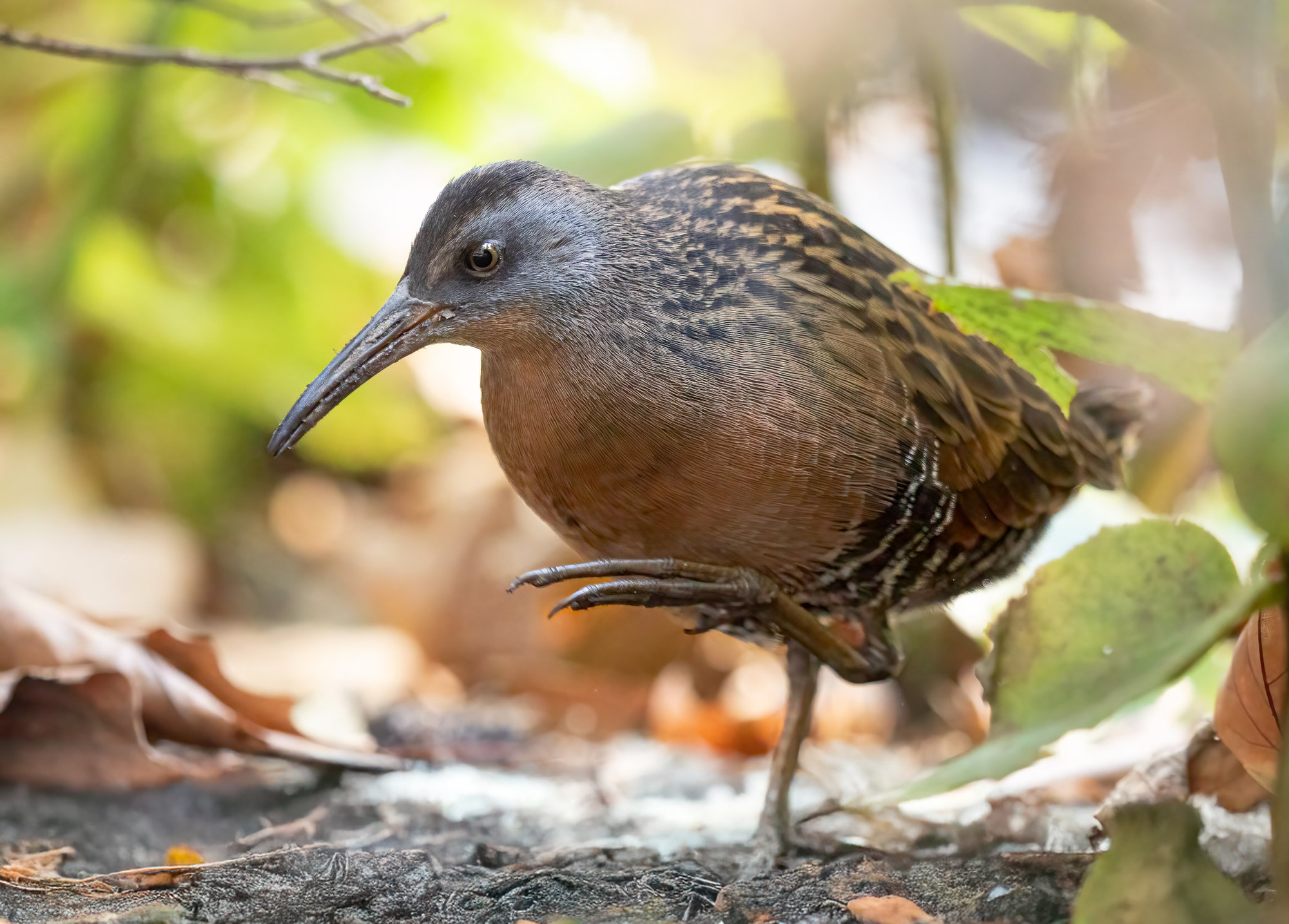
Photo Rhododendrites (opens in a new tab) / Wikimedia Commons, CC BY-SA 4.0 (opens in a new tab)
At a glance
- Size
- About 20 to 27 cm long
- Weight
- About 65 to 95 g
- Habitat
- Freshwater and brackish marshes with dense cover
- Diet
- Insects, snails, worms, small fish and seeds
- In Georgia
- An uncommon winter visitor, October to April
- Voice
- A grunting "wep-wep-wep" and a descending series of oinks
- Rabies vector
- No
Identification
- Key marks
- Rusty breast; grey face; long, slightly drooping reddish bill; barred black and white flanks
- Told apart from
- King rail, which is twice the size
- Told apart from
- Sora, which has a short yellow bill
- Where to look
- Muddy edges of dense marsh, especially at dawn
Behaviour
Virginia rails creep through dense marsh vegetation, probing mud with their long bills. Their bodies are laterally compressed, letting them slip between stems.
Why they matter
Virginia rails are a good sign that a marsh has dense, healthy vegetation and plenty of invertebrates. They migrate at night and are sometimes found in towns after flying into lit buildings.
Reproduction and lifecycle
Nest — A loose cup in marsh plants
Eggs — Usually 5 to 12
Incubation — About 18 to 20 days
Chicks — Leave the nest within a day
Flight — At about four weeks
Lifespan — A few years
Living around people
- A rail found in a street or car park after a night of migration is usually stunned from a collision; it needs a rehabilitator.
Misconceptions
- A rail in a town is lost. It was migrating at night and was probably drawn down by lights.
Related species
Seasonal activity
When this species is breeding, and when there are nests on the ground. Mowing during the shaded months is how most nests are found.
| Jan | Feb | Mar | Apr | May | Jun | Jul | Aug | Sep | Oct | Nov | Dec | |
|---|---|---|---|---|---|---|---|---|---|---|---|---|
| Breeding | Jan: no | Feb: no | Mar: no | Apr: no | May: no | Jun: no | Jul: no | Aug: no | Sep: no | Oct: no | Nov: no | Dec: no |
| Active nests | Jan: no | Feb: no | Mar: no | Apr: no | May: no | Jun: no | Jul: no | Aug: no | Sep: no | Oct: no | Nov: no | Dec: no |
| Notes | Wintering | Wintering | Migrating north | Last birds leave | Nesting farther north | Nesting | Chicks | Young independent | Migration begins | Arriving in Georgia | Wintering | Wintering |
Where it lives
Recorded in 70 states and provinces. Each one links to the other animals there, and to the rehabilitators licensed for them.
United States
- Alabamain winter
- Arizona
- Arkansasin winter
- California
- Colorado
- Connecticutbreeding
- Delaware
- Floridain winter
- Georgiain winter
- Idaho
- Illinoisbreeding
- Indianabreeding
- Iowabreeding
- Kansas
- Kentuckyin winter
- Louisianain winter
- Mainebreeding
- Maryland
- Massachusettsbreeding
- Michiganbreeding
- Minnesotabreeding
- Mississippiin winter
- Missouriin winter
- Montana
- Nebraskabreeding
- Nevada
- New Hampshirebreeding
- New Jersey
- New Mexico
- New Yorkbreeding
- North Carolinain winter
- North Dakotabreeding
- Ohiobreeding
- Oklahomain winter
- Oregon
- Pennsylvaniabreeding
- Rhode Island
- South Carolinain winter
- South Dakotabreeding
- Tennesseein winter
- Texasin winter
- Utah
- Vermontbreeding
- Virginia
- Washington
- West Virginiabreeding
- Wisconsinbreeding
- Wyomingbreeding
Canada
If you found one
Answer a few questions and you will get a specific answer for what you are looking at.
I found an animal