
Species
Clapper rail
Rallus crepitans
The loud, hidden chicken-like bird of Georgia's salt marshes, heard clattering from the cordgrass at dusk.
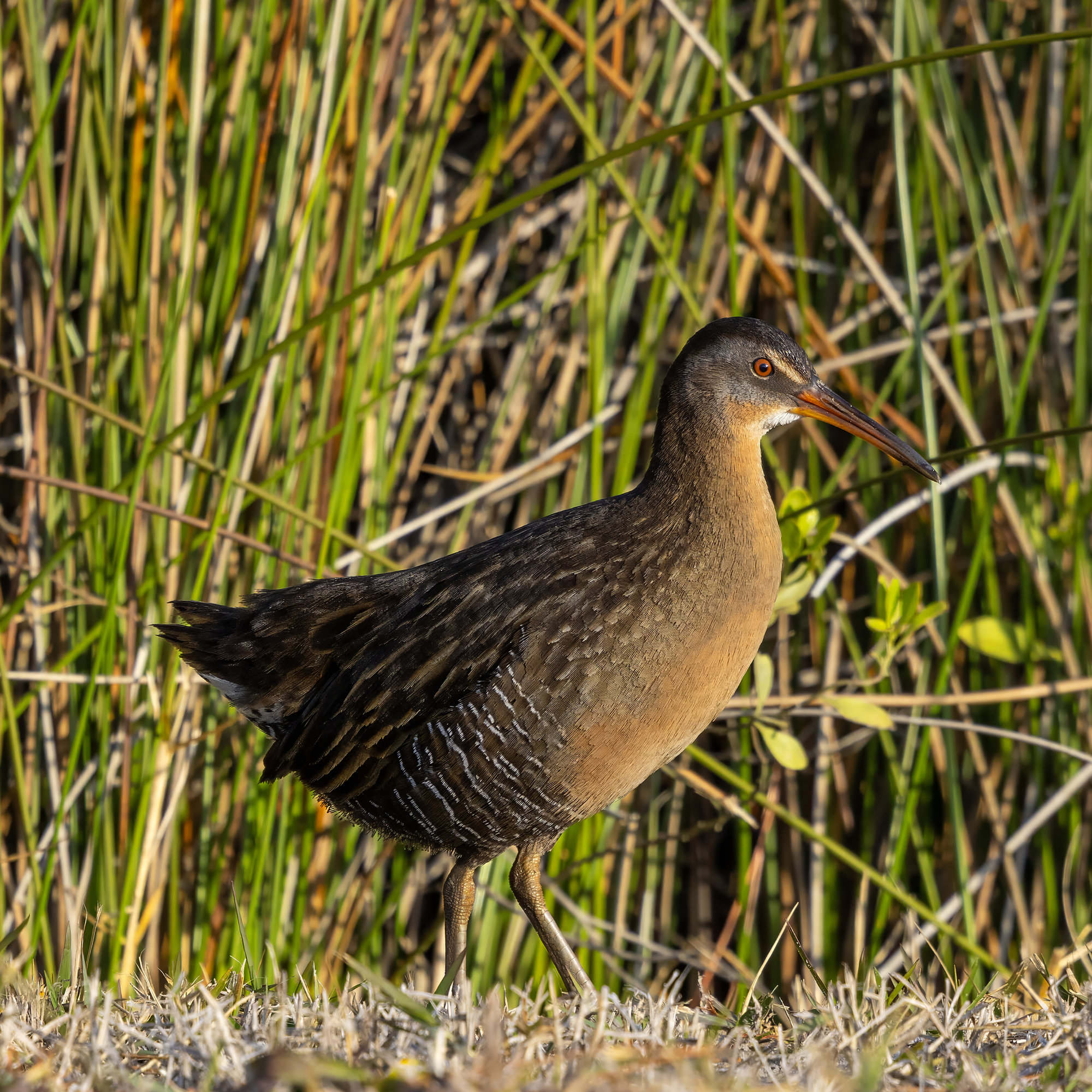
Photo Dan Vickers (opens in a new tab) / iNaturalist, CC BY 4.0 (opens in a new tab)
At a glance
- Size
- About 32 to 41 cm long
- Weight
- About 250 to 400 g
- Habitat
- Salt marshes of cordgrass along tidal creeks
- Diet
- Fiddler crabs, snails, worms, small fish and insects
- In Georgia
- A common resident of coastal salt marshes
- Voice
- A loud, harsh "kek-kek-kek-kek", often answered by other rails across the marsh
- Rabies vector
- No
Identification
- Key marks
- Chicken-sized, grey-brown with a greyer face; long, slightly drooping bill; barred grey and white flanks; short upturned tail
- Told apart from
- King rail, which is warmer and more rusty, and lives in fresh or brackish marsh
- Told apart from
- Juvenile night-herons, which are larger with shorter, thicker bills
- Where to look
- Edges of tidal creeks at low tide, especially near boardwalks and causeways
Behaviour
Clapper rails walk through the cordgrass on long toes, their narrow bodies slipping between stems. They are most active at low tide, when they come out onto the mud to hunt fiddler crabs. During very high tides they may be forced into the open.
Why they matter
Clapper rails are a key predator of fiddler crabs and snails in the salt marsh, and they depend entirely on healthy cordgrass. Georgia's broad salt marshes, among the most extensive on the Atlantic coast, support many of them.
Reproduction and lifecycle
Nest — A platform of grass, often with a woven canopy, above the high-tide line
Eggs — Usually 7 to 11
Incubation — About 20 to 23 days, shared by both parents
Chicks — Black and downy; leave the nest within a day
Flight — At about nine to ten weeks
Lifespan — A few years
Living around people
- Crab traps left in creeks drown rails and terrapins.
- Marsh edges disturbed by boat wakes and development lose nesting sites.
Misconceptions
- Rails are rare because they are rarely seen. Clapper rails are common; they are simply good at hiding.
Related species
Seasonal activity
When this species is breeding, and when there are nests on the ground. Mowing during the shaded months is how most nests are found.
| Jan | Feb | Mar | Apr | May | Jun | Jul | Aug | Sep | Oct | Nov | Dec | |
|---|---|---|---|---|---|---|---|---|---|---|---|---|
| Breeding | Jan: no | Feb: no | Mar: no | Apr: no | May: no | Jun: no | Jul: no | Aug: no | Sep: no | Oct: no | Nov: no | Dec: no |
| Active nests | Jan: no | Feb: no | Mar: no | Apr: no | May: no | Jun: no | Jul: no | Aug: no | Sep: no | Oct: no | Nov: no | Dec: no |
| Notes | Resident in marshes | Calling increases | Pairs forming | Nesting begins | Nesting | Chicks with parents | Second broods | Young independent | Present | Northern migrants join residents | Present | Present |
Where it lives
Recorded in 18 states and provinces. Each one links to the other animals there, and to the rehabilitators licensed for them.
United States
Mexico
If you found one
Answer a few questions and you will get a specific answer for what you are looking at.
I found an animal