
Species
Veery
Catharus fuscescens
A tawny thrush whose spiralling, flute-like song descends through the mountain forests of north Georgia.
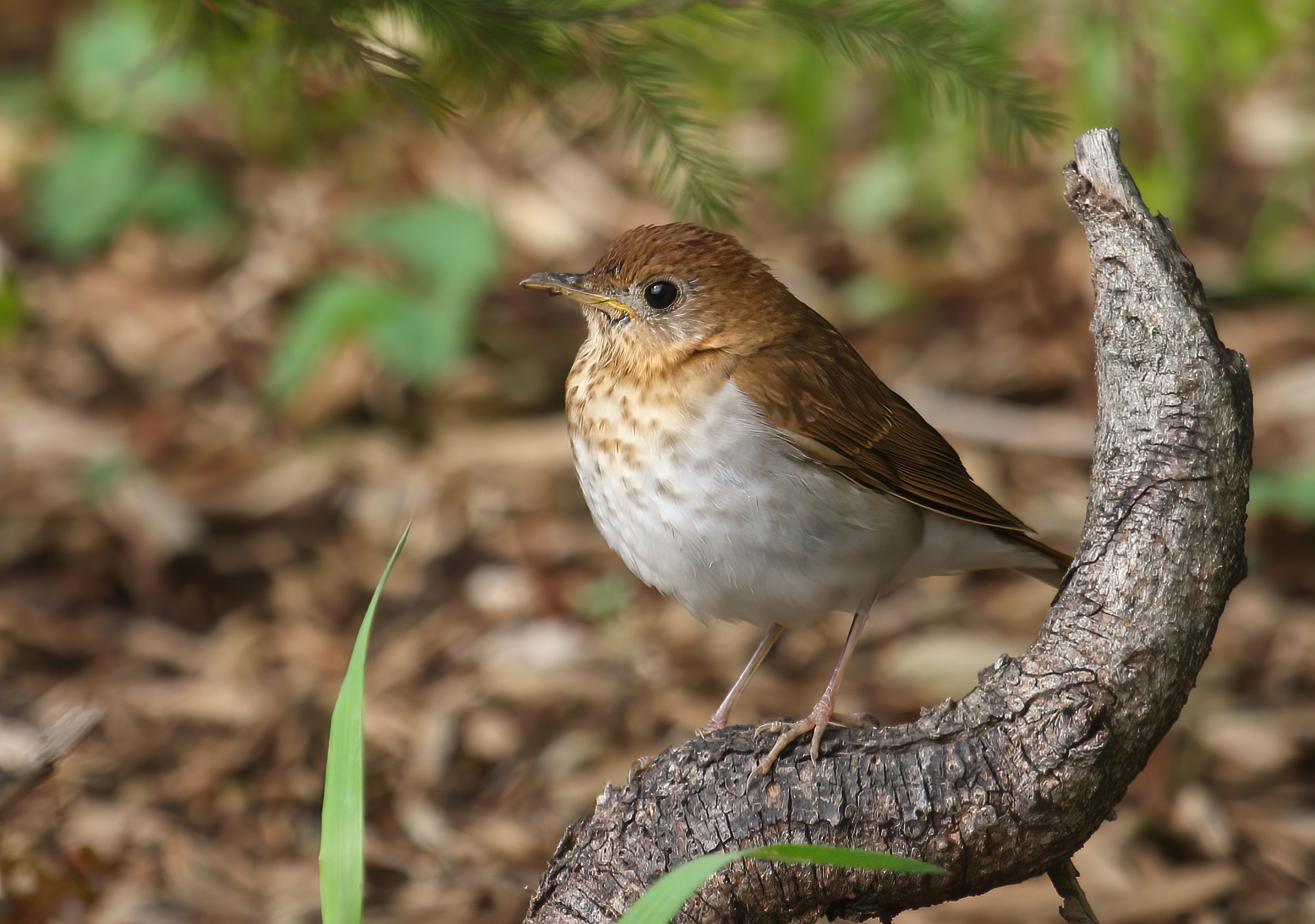
Photo Cephas (opens in a new tab) / Wikimedia Commons, CC BY-SA 3.0 (opens in a new tab)
At a glance
- Size
- About 16 to 19 cm long
- Weight
- About 26 to 39 g
- Habitat
- Damp deciduous forests with dense understorey
- Diet
- Insects, spiders and berries
- In Georgia
- Breeds in the mountains; a migrant elsewhere
- Voice
- A descending, spiralling, flute-like song
- Rabies vector
- No
Identification
- Key marks
- Warm tawny-brown above; faint, blurry spots on a buff breast
- Told apart from
- Wood thrush, which has bold black spots
- Told apart from
- Hermit thrush, which has a reddish tail and spotted breast
- Where to look
- Damp mountain woods in summer; any woods on migration
Behaviour
Veeries forage on the forest floor, flipping leaves for insects. They migrate to the southern Amazon each winter.
Why they matter
Veeries have been found to time their nesting season in a way that seems to reflect the coming hurricane season — birds had shorter seasons ahead of busy hurricane years. Whether that holds is still studied, but it shows how finely tuned migrants are to conditions across continents.
Reproduction and lifecycle
Nest — A cup on or near the ground
Eggs — Usually three or four
Incubation — About 10 to 14 days
Chicks — Fed by both parents
Flight — At about 10 to 12 days
Lifespan — Several years
Living around people
- Migrating thrushes are often killed by window strikes.
Misconceptions
- Birds cannot predict weather. Veeries may respond to cues that predict the hurricane season, though this is still being studied.
Related species
Seasonal activity
When this species is breeding, and when there are nests on the ground. Mowing during the shaded months is how most nests are found.
| Jan | Feb | Mar | Apr | May | Jun | Jul | Aug | Sep | Oct | Nov | Dec | |
|---|---|---|---|---|---|---|---|---|---|---|---|---|
| Breeding | Jan: no | Feb: no | Mar: no | Apr: no | May: no | Jun: no | Jul: no | Aug: no | Sep: no | Oct: no | Nov: no | Dec: no |
| Active nests | Jan: no | Feb: no | Mar: no | Apr: no | May: no | Jun: no | Jul: no | Aug: no | Sep: no | Oct: no | Nov: no | Dec: no |
| Notes | In South America | In South America | In South America | Migrating north | Arriving in the mountains | Nesting | Young fledging | Migrating south | Migrants | Last migrants | In South America | In South America |
Where it lives
Recorded in 49 states and provinces. Each one links to the other animals there, and to the rehabilitators licensed for them.
United States
- Alabamapassing through
- Coloradobreeding
- Connecticutbreeding
- Delawarebreeding
- District of Columbiabreeding
- Floridapassing through
- Georgiabreeding
- Idahobreeding
- Illinoisbreeding
- Indianabreeding
- Iowabreeding
- Kentuckypassing through
- Louisianapassing through
- Mainebreeding
- Marylandbreeding
- Massachusettsbreeding
- Michiganbreeding
- Minnesotabreeding
- Mississippipassing through
- Missouripassing through
- Montanabreeding
- New Hampshirebreeding
- New Jerseybreeding
- New Yorkbreeding
- North Carolinabreeding
- North Dakotabreeding
- Ohiobreeding
- Oregonbreeding
- Pennsylvaniabreeding
- Rhode Islandbreeding
- South Carolinapassing through
- South Dakotabreeding
- Tennesseebreeding
- Texaspassing through
- Vermontbreeding
- Virginiabreeding
- Washingtonbreeding
- West Virginiabreeding
- Wisconsinbreeding
- Wyomingbreeding
If you found one
Answer a few questions and you will get a specific answer for what you are looking at.
I found an animal