
Species
Wood thrush
Hylocichla mustelina
A cinnamon-brown thrush with bold black spots, whose flute-like song rings through Georgia's summer woods.
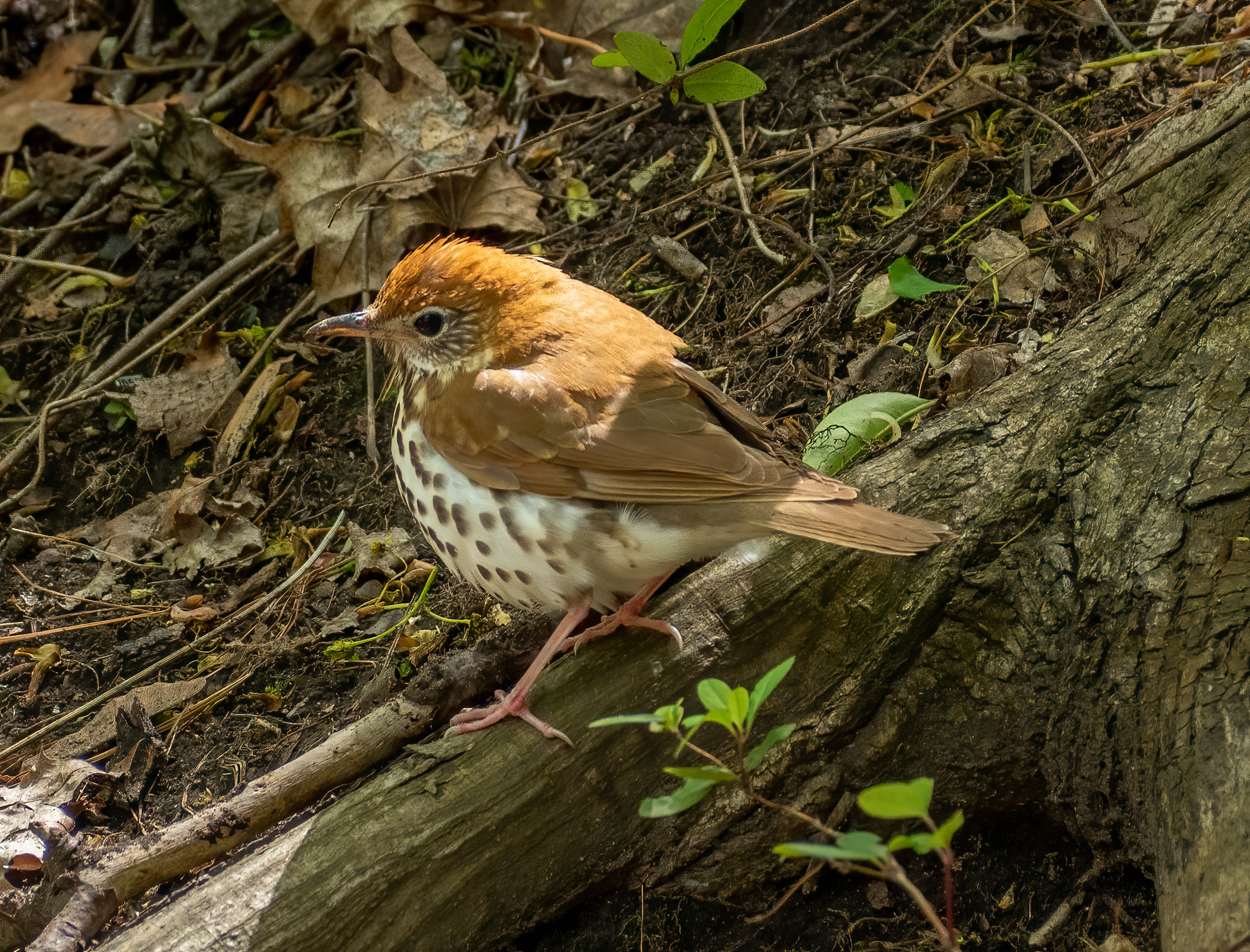
Photo Rhododendrites (opens in a new tab) / Wikimedia Commons, CC BY-SA 4.0 (opens in a new tab)
At a glance
- Size
- About 18 to 22 cm long
- Weight
- About 40 to 50 g
- Habitat
- Moist deciduous and mixed forests
- Diet
- Insects, snails and berries
- In Georgia
- A common summer resident, April to October
- Voice
- A flute-like "ee-oh-lay", ending with a trill
- Rabies vector
- No
Identification
- Key marks
- Rusty-brown above; white below with bold black spots; white eye-ring
- Told apart from
- Brown thrasher, which is larger with a long tail and streaks
- Told apart from
- Hermit thrush, which is smaller with fewer spots and a reddish tail
- Where to look
- Shady woods at dawn and dusk; listen for the song
Behaviour
Wood thrushes forage in leaf litter for insects and snails. They can sing two notes at once, using each side of the voice box separately.
Why they matter
Wood thrushes have declined by about 60 per cent since the 1960s, largely because of forest fragmentation and habitat loss in Central America. They are a symbol of the eastern forest and its troubles.
Reproduction and lifecycle
Nest — A cup of grass and mud in a tree fork
Eggs — Usually three or four
Incubation — About 13 days
Chicks — Fed by both parents
Flight — At about 12 to 15 days
Lifespan — Several years
Living around people
- Large blocks of forest protect nesting wood thrushes from cowbirds and predators.
- Window strikes are common on migration.
Misconceptions
- All spotted thrushes are the same bird. The wood thrush's bold spots and rusty head set it apart.
Related species
Seasonal activity
When this species is breeding, and when there are nests on the ground. Mowing during the shaded months is how most nests are found.
| Jan | Feb | Mar | Apr | May | Jun | Jul | Aug | Sep | Oct | Nov | Dec | |
|---|---|---|---|---|---|---|---|---|---|---|---|---|
| Breeding | Jan: no | Feb: no | Mar: no | Apr: no | May: no | Jun: no | Jul: no | Aug: no | Sep: no | Oct: no | Nov: no | Dec: no |
| Active nests | Jan: no | Feb: no | Mar: no | Apr: no | May: no | Jun: no | Jul: no | Aug: no | Sep: no | Oct: no | Nov: no | Dec: no |
| Notes | In Central America | In Central America | In Central America | Arriving | Nesting | Nesting | Second broods | Young fledging | Migrating south | Last birds | In Central America | In Central America |
Where it lives
Recorded in 49 states and provinces. Each one links to the other animals there, and to the rehabilitators licensed for them.
United States
- Alabamabreeding
- Arkansasbreeding
- Connecticutbreeding
- Delawarebreeding
- District of Columbiabreeding
- Floridabreeding
- Georgiabreeding
- Illinoisbreeding
- Indianabreeding
- Iowabreeding
- Kansasbreeding
- Kentuckybreeding
- Louisianabreeding
- Mainebreeding
- Marylandbreeding
- Massachusettsbreeding
- Michiganbreeding
- Minnesotabreeding
- Mississippibreeding
- Missouribreeding
- Nebraskabreeding
- New Hampshirebreeding
- New Jerseybreeding
- New Yorkbreeding
- North Carolinabreeding
- Ohiobreeding
- Oklahomabreeding
- Pennsylvaniabreeding
- Rhode Islandbreeding
- South Carolinabreeding
- South Dakotabreeding
- Tennesseebreeding
- Texasbreeding
- Vermontbreeding
- Virginiabreeding
- West Virginiabreeding
- Wisconsinbreeding
If you found one
Answer a few questions and you will get a specific answer for what you are looking at.
I found an animal