
Species
Three-toed box turtle
Terrapene triunguis
A box turtle of the south-central states that reaches west Georgia, usually with three toes on each hind foot.
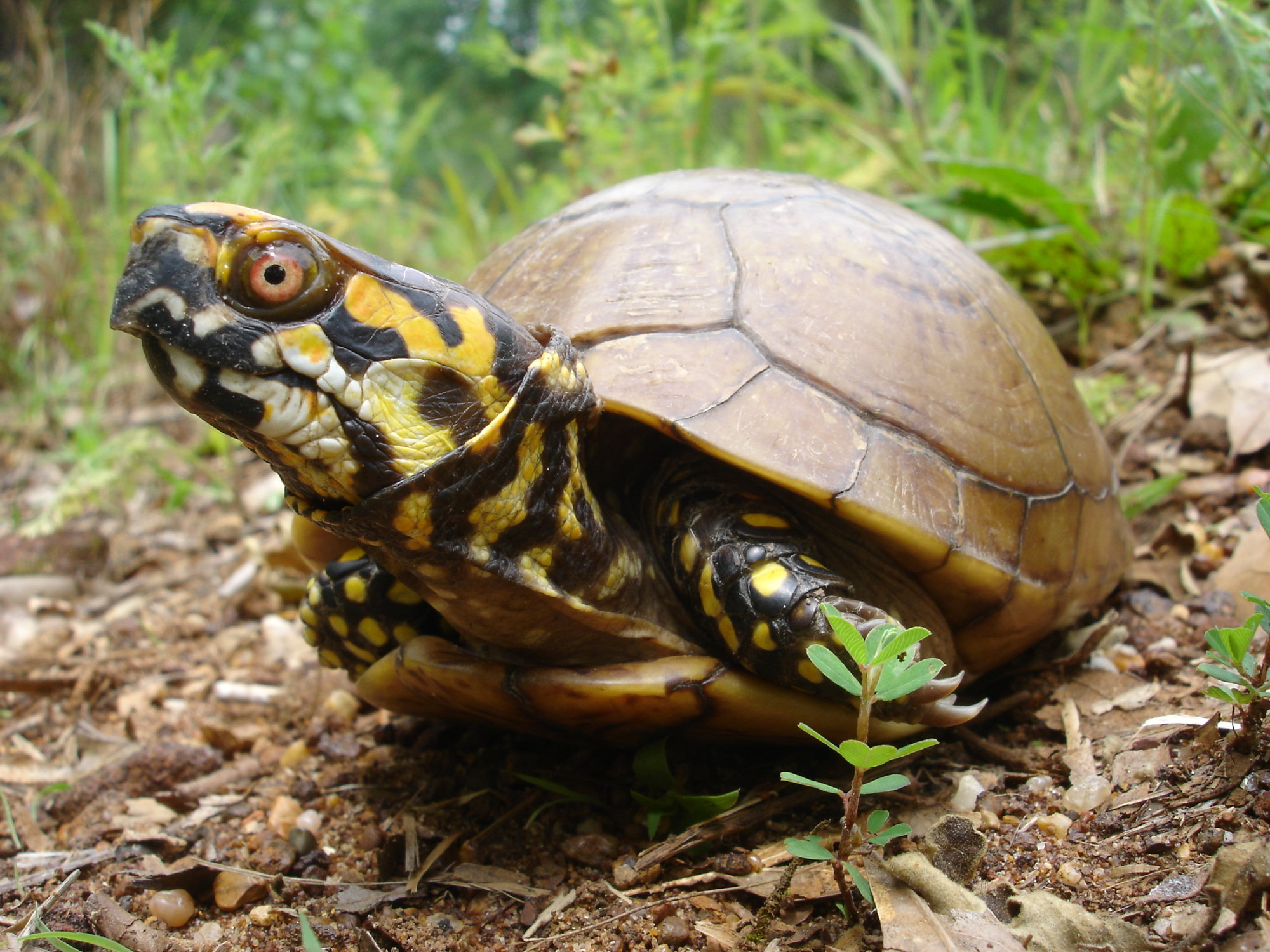
Photo Unknown photographer (opens in a new tab) / iNaturalist, CC0 1.0 (opens in a new tab)
At a glance
- Size
- Shell usually 11 to 16 cm long, high and domed
- Habitat
- Woodland, edges, fields and gardens
- Diet
- Insects, worms, snails, berries and mushrooms
- In Georgia
- West and northwest Georgia, where it meets and interbreeds with the eastern box turtle
- Rabies vector
- No
Identification
- Key marks
- Plain olive to brown domed shell; usually three toes on each hind foot; males often have red or orange on the head
- Told apart from
- Eastern box turtle, which usually has four hind toes and a boldly marked shell
- Where to look
- On woodland floors and edges after rain
Behaviour
Like other box turtles it lives its whole life within a small home range and closes its hinged shell when threatened. It is most active after rain and in the morning, and burrows in for winter.
Why they matter
Box turtles spread the seeds of the fruit they eat and eat slugs and snails. They breed slowly, so road deaths and collecting reduce them for decades.
Reproduction and lifecycle
Nest — Dug in open soil
Eggs — Usually 3 to 8
Incubation — About 70 to 90 days
Hatchlings — Small and secretive
Maturity — At several years
Lifespan — Several decades
Living around people
- Carry one across a road in the direction it was heading. Never move a box turtle to a new place; it wanders until it dies.
- Never put a box turtle in a pond; it can drown.
Misconceptions
- A box turtle far from water is lost. It is a land turtle, at home in woods and fields.
Related species
Seasonal activity
When this species is breeding, and when there are nests on the ground. Mowing during the shaded months is how most nests are found.
| Jan | Feb | Mar | Apr | May | Jun | Jul | Aug | Sep | Oct | Nov | Dec | |
|---|---|---|---|---|---|---|---|---|---|---|---|---|
| Breeding | Jan: no | Feb: no | Mar: no | Apr: no | May: no | Jun: no | Jul: no | Aug: no | Sep: no | Oct: no | Nov: no | Dec: no |
| Active nests | Jan: no | Feb: no | Mar: no | Apr: no | May: no | Jun: no | Jul: no | Aug: no | Sep: no | Oct: no | Nov: no | Dec: no |
| Notes | Buried | Buried | Emerging on warm days | Active; courtship | Nesting | Nesting; road crossings | Active after rain | Hatching | Hatchlings emerge | Feeding before winter | Burrowing in | Buried |
Where it lives
Recorded in 9 states and provinces. Each one links to the other animals there, and to the rehabilitators licensed for them.
If you found one
Answer a few questions and you will get a specific answer for what you are looking at.
I found an animal