
Species
Spotted salamander
Ambystoma maculatum
A big, yellow-spotted salamander that lives underground and walks to woodland pools on the first rainy nights of the year.
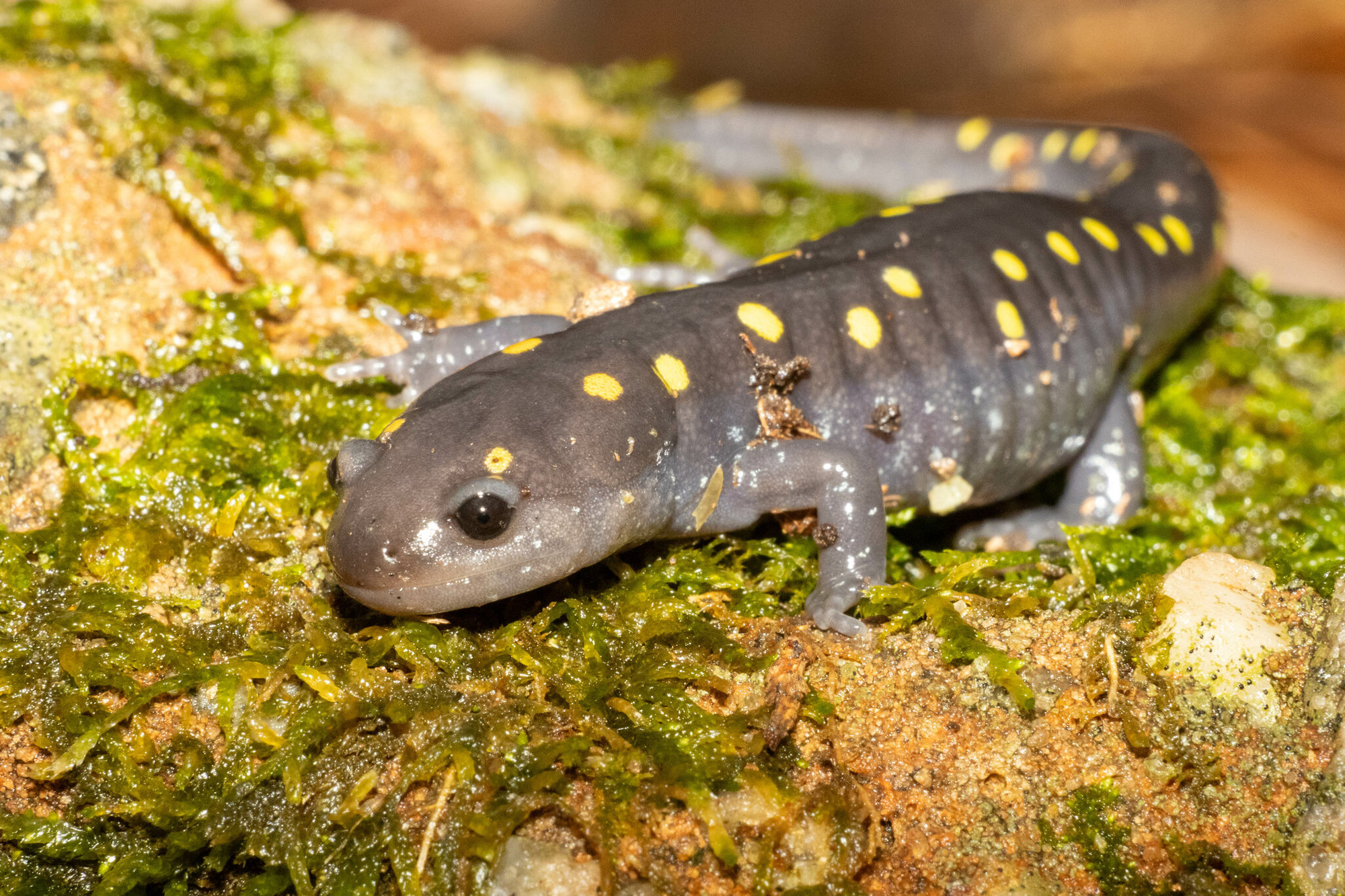
Photo Alex Stach (opens in a new tab) / iNaturalist, CC BY 4.0 (opens in a new tab)
At a glance
- Size
- Usually 15 to 20 cm long
- Habitat
- Moist forests with seasonal pools
- Diet
- Worms, insects, slugs and snails
- In Georgia
- The mountains, Piedmont and upper Coastal Plain
- Rabies vector
- No
Identification
- Key marks
- Stout, dark grey to black with two rows of round yellow or orange spots
- Told apart from
- Eastern tiger salamander, which has irregular olive or yellow blotches
- Told apart from
- Marbled salamander, which has white or silver bands
- Where to look
- Crossing roads on rainy winter nights; under logs
Behaviour
Spotted salamanders spend most of the year in burrows. On the first warm, rainy nights of winter they migrate to the same woodland pools where they hatched, sometimes in large numbers. Their eggs often turn green from algae living inside them, which help supply oxygen.
Why they matter
They are a large part of the animal life of eastern forests, eating invertebrates in the soil. The alga that lives in their eggs, and even in their cells, is one of the few known partnerships of its kind in animals with backbones.
Reproduction and lifecycle
Eggs — Clumps of 50 to 250 in firm jelly, attached to twigs in pools
Hatching — In one to two months
Larvae — Gilled; change in two to four months
Maturity — At a few years
Lifespan — Over 20 years
Migration — To the pool where they hatched
Living around people
- On rainy winter nights near woodland pools, drive slowly and watch for salamanders on the road.
- A salamander on a road can be carried across in the direction it was heading, with wet hands.
- Woodland pools that dry in summer are easily filled; they are where these salamanders breed.
Misconceptions
- Salamanders are lizards. They are amphibians, with moist skin and no scales.
Related species
Seasonal activity
When this species is breeding, and when there are nests on the ground. Mowing during the shaded months is how most nests are found.
| Jan | Feb | Mar | Apr | May | Jun | Jul | Aug | Sep | Oct | Nov | Dec | |
|---|---|---|---|---|---|---|---|---|---|---|---|---|
| Breeding | Jan: no | Feb: no | Mar: no | Apr: no | May: no | Jun: no | Jul: no | Aug: no | Sep: no | Oct: no | Nov: no | Dec: no |
| Active nests | Jan: no | Feb: no | Mar: no | Apr: no | May: no | Jun: no | Jul: no | Aug: no | Sep: no | Oct: no | Nov: no | Dec: no |
| Notes | Migrating to pools on rainy nights | Breeding | Breeding | Larvae in pools | Larvae | Young leaving pools | Underground | Underground | Underground | Underground | Underground | Moving on rainy nights |
Where it lives
Recorded in 35 states and provinces. Each one links to the other animals there, and to the rehabilitators licensed for them.
United States
If you found one
Answer a few questions and you will get a specific answer for what you are looking at.
I found an animal