
Species
Marbled salamander
Ambystoma opacum
A stout, black-and-silver salamander that lays its eggs on dry pond beds in autumn and waits for the rain.
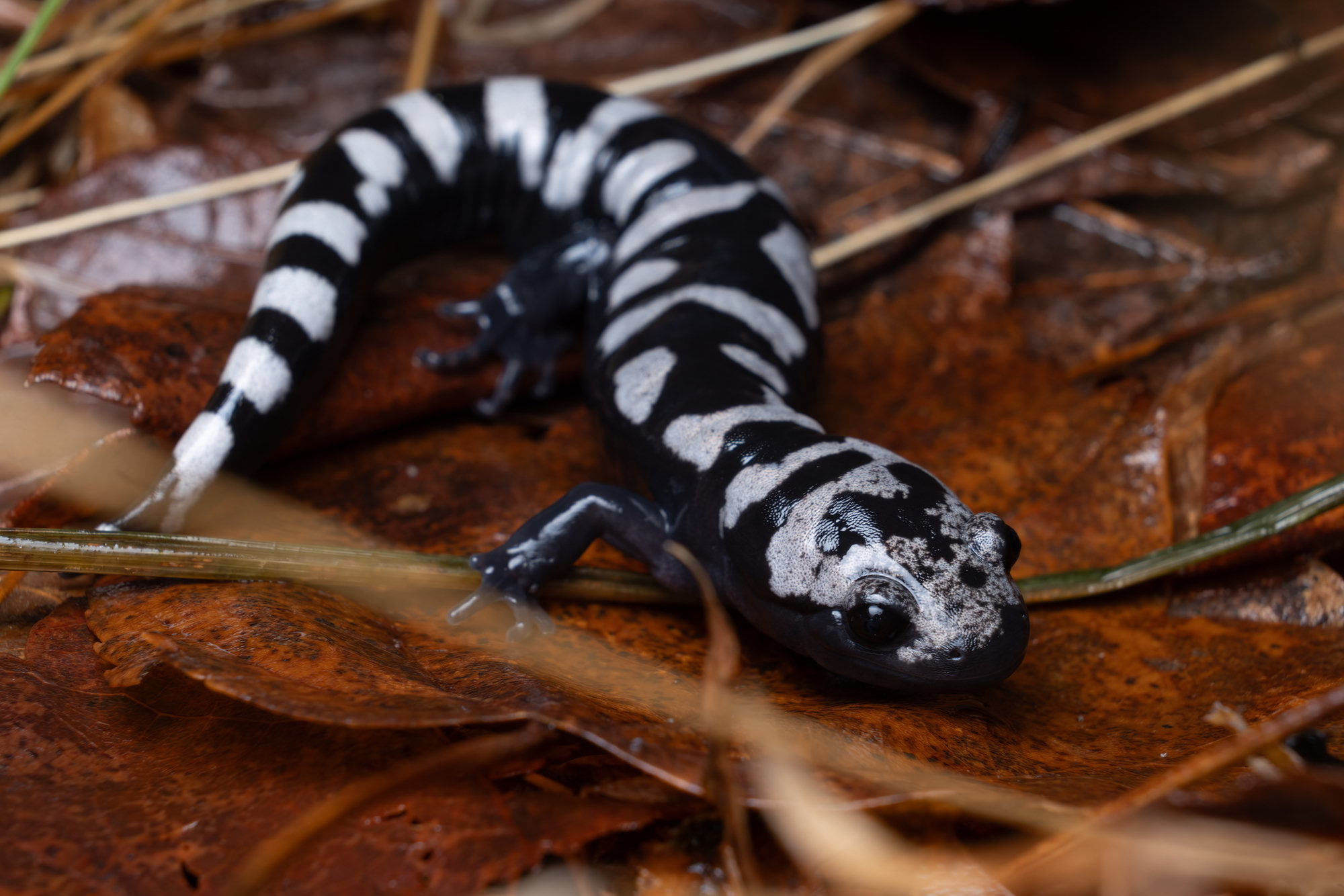
Photo Matt Felperin (opens in a new tab) / iNaturalist, CC BY 4.0 (opens in a new tab)
At a glance
- Size
- Usually 9 to 13 cm long
- Habitat
- Woodland near seasonal ponds and floodplains
- Diet
- Insects, worms, slugs and snails
- In Georgia
- Statewide
- Rabies vector
- No
Identification
- Key marks
- Stout and black with bold white or silver crossbands; bands brighter in males
- Told apart from
- Spotted salamander, which has yellow spots
- Where to look
- Under logs near dry pond beds in autumn
Behaviour
Marbled salamanders breed in autumn on the dry beds of seasonal ponds. The female lays her eggs in a hollow and stays with them until winter rains flood the pond, when the eggs hatch.
Why they matter
Their larvae get a head start on other salamanders and are important predators in woodland pools.
Reproduction and lifecycle
Eggs — 50 to 200, laid on land in a dry pond bed
Nest — Guarded by the female until the pond floods
Hatching — When water covers them
Larvae — Change in the spring
Maturity — At about two years
Lifespan — Around 10 years
Living around people
- Seasonal ponds and the woods around them are what these salamanders need.
Misconceptions
- Amphibians lay eggs only in water. Marbled salamanders lay theirs on dry ground.
Related species
Seasonal activity
When this species is breeding, and when there are nests on the ground. Mowing during the shaded months is how most nests are found.
| Jan | Feb | Mar | Apr | May | Jun | Jul | Aug | Sep | Oct | Nov | Dec | |
|---|---|---|---|---|---|---|---|---|---|---|---|---|
| Breeding | Jan: no | Feb: no | Mar: no | Apr: no | May: no | Jun: no | Jul: no | Aug: no | Sep: no | Oct: no | Nov: no | Dec: no |
| Active nests | Jan: no | Feb: no | Mar: no | Apr: no | May: no | Jun: no | Jul: no | Aug: no | Sep: no | Oct: no | Nov: no | Dec: no |
| Notes | Larvae in pools | Larvae | Larvae | Larvae | Young leaving pools | Underground | Underground | Underground | Moving to pond beds | Laying on dry pond beds | Females guarding eggs | Eggs hatch as ponds fill |
Where it lives
Recorded in 26 states and provinces. Each one links to the other animals there, and to the rehabilitators licensed for them.
If you found one
Answer a few questions and you will get a specific answer for what you are looking at.
I found an animal