
Species
Mole salamander
Ambystoma talpoideum
A small, big-headed salamander that spends almost all its life in burrows beneath the forest floor.
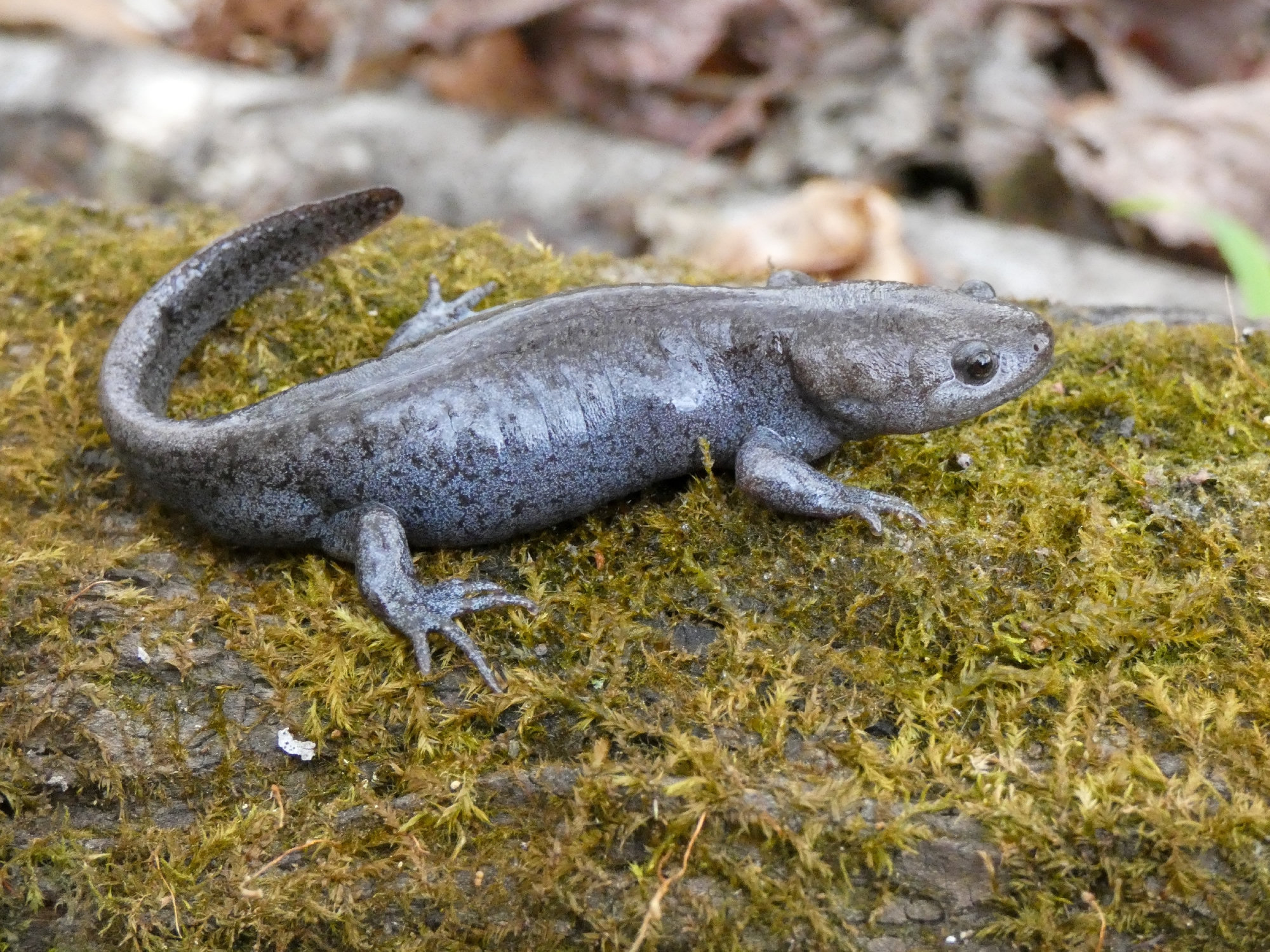
Photo Unknown photographer (opens in a new tab) / iNaturalist, CC0 1.0 (opens in a new tab)
At a glance
- Size
- Usually 8 to 12 cm long
- Habitat
- Bottomland forests and pine woods near seasonal ponds
- Diet
- Insects, worms and other small invertebrates
- In Georgia
- Statewide except the mountains
- Rabies vector
- No
Identification
- Key marks
- Short and stout with a large, broad head; grey to brown with pale flecks
- Told apart from
- Other mole salamanders, which lack the oversized head
- Where to look
- Under logs near ponds; on roads on rainy winter nights
Behaviour
Mole salamanders spend most of their lives underground. Some never lose their gills and stay aquatic as adults, breeding without leaving the pond.
Why they matter
They are abundant predators of soil invertebrates and prey for many animals.
Reproduction and lifecycle
Eggs — Small clusters attached to twigs in ponds
Hatching — In a few weeks
Larvae — Some keep gills as adults
Maturity — Within one to two years
Lifespan — Several years
Migration — On rainy winter nights
Living around people
- Leave fish out of woodland ponds; fish eat salamander larvae.
Misconceptions
- Gilled salamanders are always larvae. Some adults keep their gills.
Related species
Seasonal activity
When this species is breeding, and when there are nests on the ground. Mowing during the shaded months is how most nests are found.
| Jan | Feb | Mar | Apr | May | Jun | Jul | Aug | Sep | Oct | Nov | Dec | |
|---|---|---|---|---|---|---|---|---|---|---|---|---|
| Breeding | Jan: no | Feb: no | Mar: no | Apr: no | May: no | Jun: no | Jul: no | Aug: no | Sep: no | Oct: no | Nov: no | Dec: no |
| Active nests | Jan: no | Feb: no | Mar: no | Apr: no | May: no | Jun: no | Jul: no | Aug: no | Sep: no | Oct: no | Nov: no | Dec: no |
| Notes | Breeding in ponds | Breeding | Larvae | Larvae | Larvae | Young leaving ponds | Underground | Underground | Underground | Underground | Moving on rainy nights | Breeding begins |
Where it lives
Recorded in 14 states and provinces. Each one links to the other animals there, and to the rehabilitators licensed for them.
If you found one
Answer a few questions and you will get a specific answer for what you are looking at.
I found an animal