
Species
Southern toad
Anaxyrus terrestris
The common toad of south Georgia's yards, with bony ridges on its head that end in knobs.
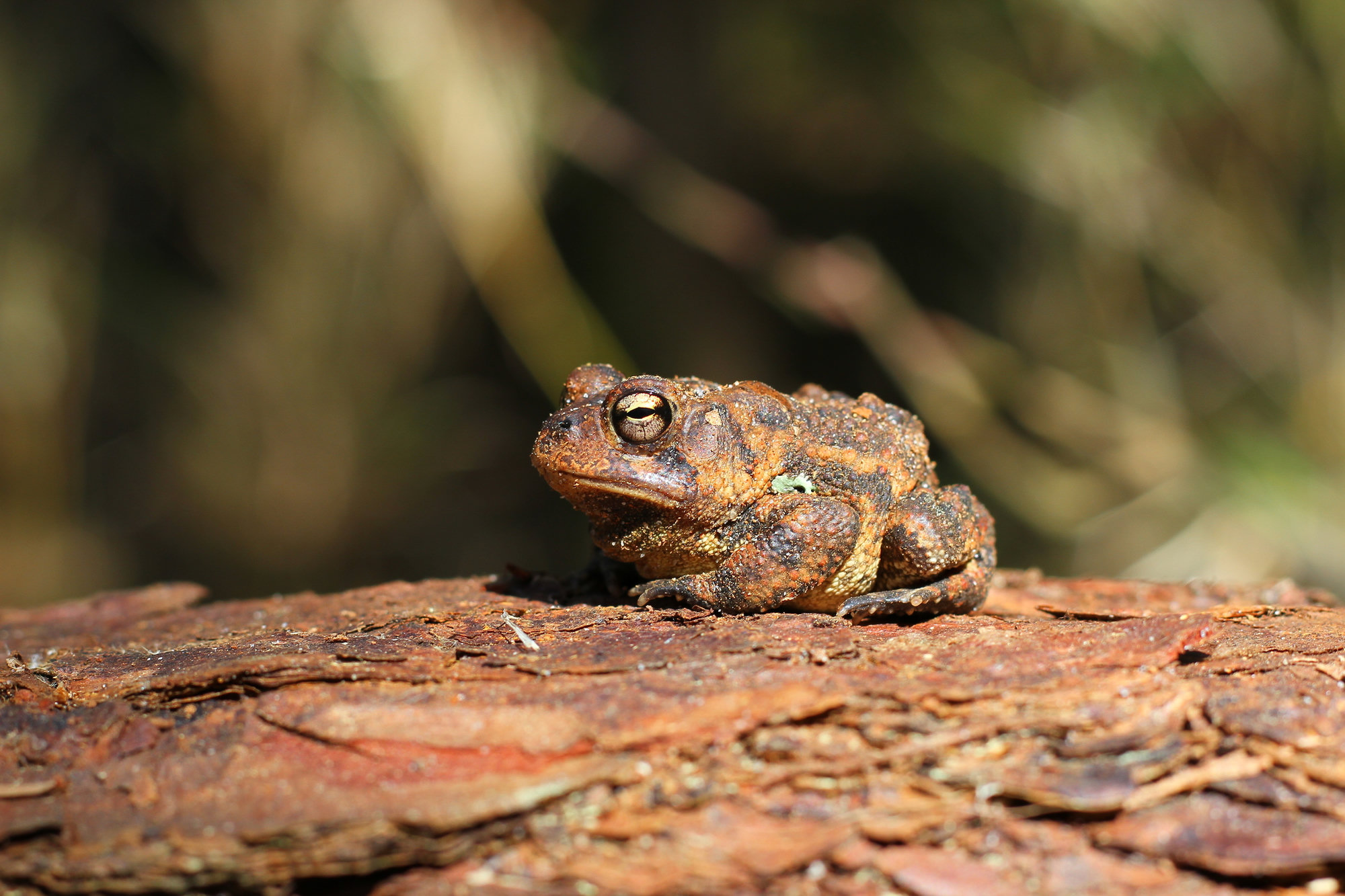
Photo Joshua Liverman (opens in a new tab) / iNaturalist, CC BY 4.0 (opens in a new tab)
At a glance
- Size
- About 4 to 9 cm long
- Habitat
- Sandy woods, fields, gardens and towns
- Diet
- Beetles, ants, crickets, slugs and other invertebrates
- In Georgia
- Common in the Coastal Plain and lower Piedmont
- Voice
- A long, high trill lasting several seconds
- Rabies vector
- No
Identification
- Key marks
- Warty brown, grey or reddish skin; high ridges on the head ending in prominent knobs behind the eyes
- Told apart from
- Fowler's toad, which has lower head ridges without knobs and three or more warts in each dark spot
- Where to look
- Under porch lights on summer nights and in gardens after rain
Behaviour
Southern toads spend the day burrowed in sandy soil and come out at night to hunt insects, often under lights. When handled they release a bitter secretion from glands behind the eyes that makes them unpleasant to eat.
Why they matter
A single toad eats thousands of insects a season, including garden pests, and is food for hognose snakes, which specialise in toads.
Reproduction and lifecycle
Eggs — Thousands, in long strings in shallow water
Hatching — In a few days
Tadpoles — Small and black; change into toadlets in about 4 to 8 weeks
Maturity — In one to two years
Lifespan — Several years
Calling — On warm spring nights
Living around people
- Toads are harmless to people; wash hands after handling one.
- A dog that mouths a toad may drool; rinse its mouth with water, and call a vet if it seems unwell.
- Toadlets crossing paths after summer rain are leaving their ponds; they need no help.
Misconceptions
- Toads give you warts. Warts are caused by a human virus.
Related species
Seasonal activity
When this species is breeding, and when there are nests on the ground. Mowing during the shaded months is how most nests are found.
| Jan | Feb | Mar | Apr | May | Jun | Jul | Aug | Sep | Oct | Nov | Dec | |
|---|---|---|---|---|---|---|---|---|---|---|---|---|
| Breeding | Jan: no | Feb: no | Mar: no | Apr: no | May: no | Jun: no | Jul: no | Aug: no | Sep: no | Oct: no | Nov: no | Dec: no |
| Active nests | Jan: no | Feb: no | Mar: no | Apr: no | May: no | Jun: no | Jul: no | Aug: no | Sep: no | Oct: no | Nov: no | Dec: no |
| Notes | Burrowed | Burrowed | Breeding on warm, wet nights | Breeding | Breeding | Young toads leave the water | Active at night | Active | Active | Active on warm nights | Burrowing in | Burrowed |
Where it lives
Recorded in 8 states and provinces. Each one links to the other animals there, and to the rehabilitators licensed for them.
If you found one
Answer a few questions and you will get a specific answer for what you are looking at.
I found an animal