
Species
American toad
Anaxyrus americanus
The big garden toad of north Georgia, with a long musical trill in spring.
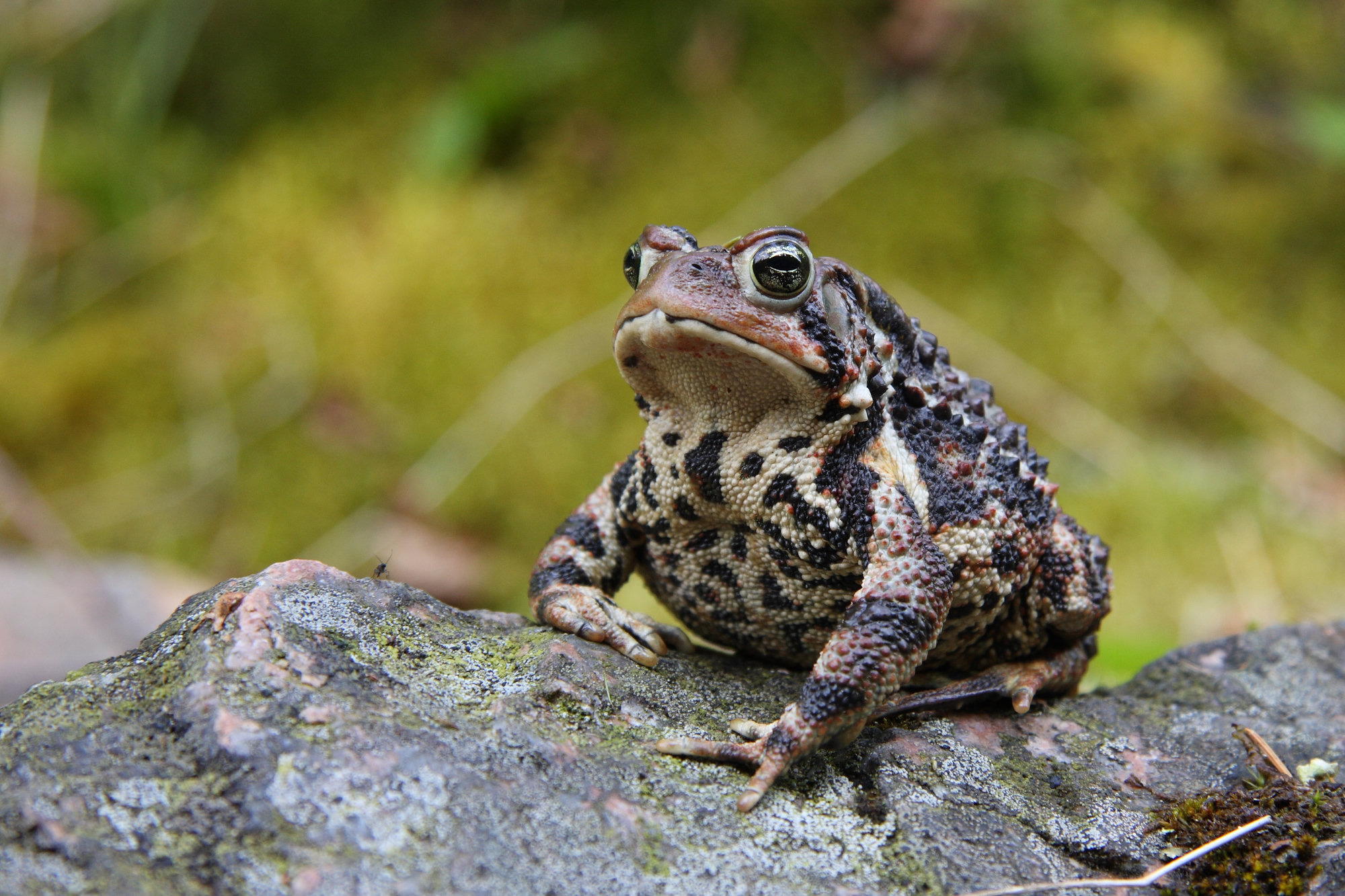
Photo Cephas (opens in a new tab) / Wikimedia Commons, CC BY-SA 3.0 (opens in a new tab)
At a glance
- Size
- About 5 to 9 cm long
- Habitat
- Woods, fields, gardens and suburbs
- Diet
- Insects, slugs, worms and spiders
- In Georgia
- The mountains and Piedmont
- Voice
- A long, sweet musical trill lasting up to 30 seconds
- Rabies vector
- No
Identification
- Key marks
- Warty brown or reddish; one or two large warts in each dark spot; spotted belly
- Told apart from
- Fowler's toad, which has three or more warts per spot and an unspotted belly
- Where to look
- In gardens and woods at night; breeding in ponds in early spring
Behaviour
American toads are among the first amphibians to breed in spring in north Georgia. They live on land away from water most of the year and are active on damp nights.
Why they matter
They eat great numbers of insects and slugs, and their tadpoles graze algae in ponds.
Reproduction and lifecycle
Eggs — Thousands, in long double strings
Hatching — In about a week
Tadpoles — Black; change into toadlets in about 6 to 8 weeks
Maturity — In two to three years
Lifespan — Several years
Calling — In early spring
Living around people
- Toads in the garden are pest control; wash hands after handling one.
Misconceptions
- Handling a toad gives you warts. It does not.
Related species
Seasonal activity
When this species is breeding, and when there are nests on the ground. Mowing during the shaded months is how most nests are found.
| Jan | Feb | Mar | Apr | May | Jun | Jul | Aug | Sep | Oct | Nov | Dec | |
|---|---|---|---|---|---|---|---|---|---|---|---|---|
| Breeding | Jan: no | Feb: no | Mar: no | Apr: no | May: no | Jun: no | Jul: no | Aug: no | Sep: no | Oct: no | Nov: no | Dec: no |
| Active nests | Jan: no | Feb: no | Mar: no | Apr: no | May: no | Jun: no | Jul: no | Aug: no | Sep: no | Oct: no | Nov: no | Dec: no |
| Notes | Burrowed | Burrowed | Breeding | Breeding | Toadlets leaving ponds | Active at night | Active | Active | Active | Active on warm nights | Burrowing in | Burrowed |
Where it lives
Recorded in 42 states and provinces. Each one links to the other animals there, and to the rehabilitators licensed for them.
United States
- Alabama
- Arkansas
- Connecticut
- Delaware
- District of Columbia
- Georgia
- Illinois
- Indiana
- Iowa
- Kansas
- Kentucky
- Maine
- Maryland
- Massachusetts
- Michigan
- Minnesota
- Mississippi
- Missouri
- Nebraska
- New Hampshire
- New Jersey
- New York
- North Carolina
- Ohio
- Oklahoma
- Pennsylvania
- Rhode Island
- South Carolina
- South Dakota
- Tennessee
- Texas
- Vermont
- Virginia
- West Virginia
- Wisconsin
If you found one
Answer a few questions and you will get a specific answer for what you are looking at.
I found an animal