
Species
Oak toad
Anaxyrus quercicus
A tiny toad of sandy pine woods, active by day, whose call sounds like a peeping chick.
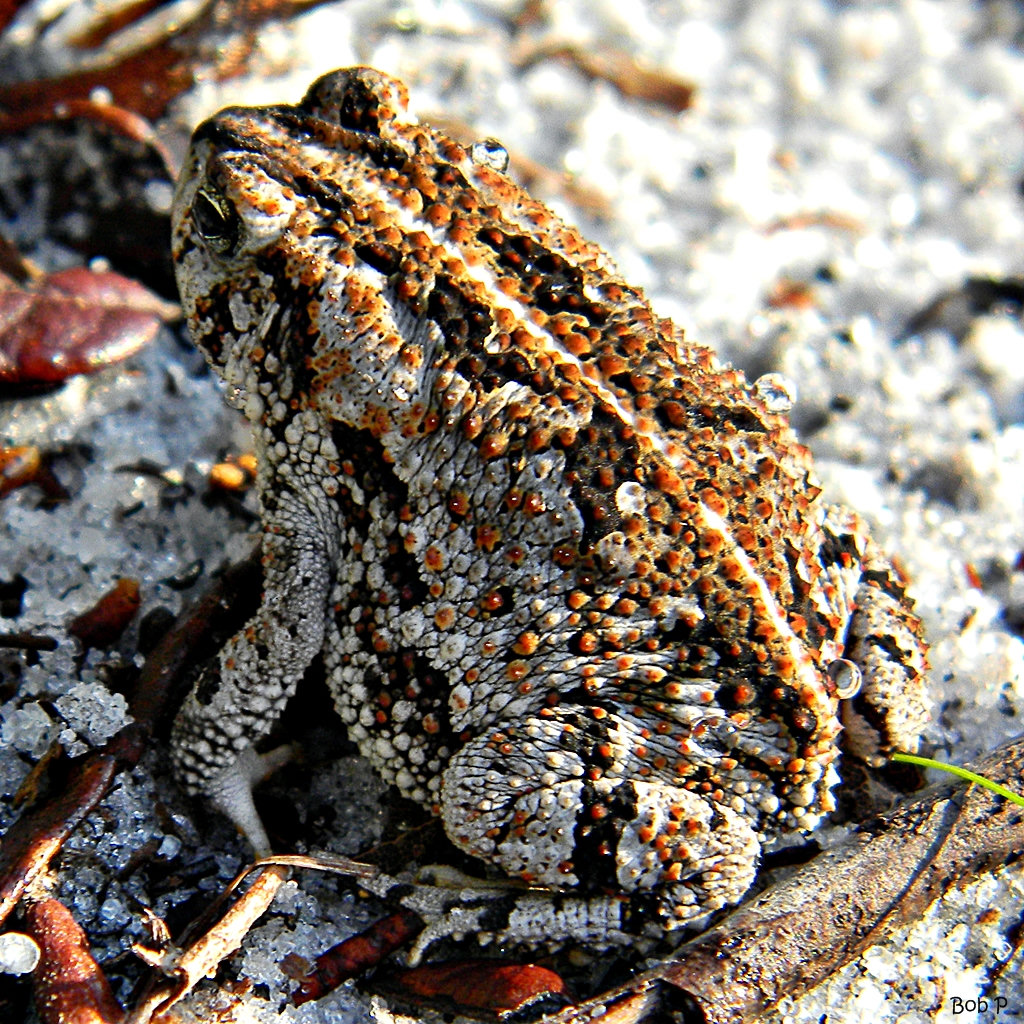
Photo Bob Peterson from North Palm Beach, Florida, Planet Earth! (opens in a new tab) / Wikimedia Commons, CC BY-SA 2.0 (opens in a new tab)
At a glance
- Size
- About 2 to 3.5 cm long
- Habitat
- Sandy pine flatwoods, sandhills and oak scrub
- Diet
- Ants and other small insects
- In Georgia
- The Coastal Plain
- Voice
- A high, chick-like peeping
- Rabies vector
- No
Identification
- Key marks
- Very small; grey to black with a pale stripe down the back; red or orange warts
- Told apart from
- Young southern toads, which lack the stripe and orange warts
- Where to look
- On sandy ground in the daytime after rain
Behaviour
Oak toads are North America's smallest toad and, unlike most, are active by day. They breed in shallow, temporary pools after summer rains.
Why they matter
They eat ants and small insects and depend on temporary pools in pine woods.
Reproduction and lifecycle
Eggs — Small strings in shallow pools
Hatching — In a day or two
Tadpoles — Change into toadlets in 4 to 8 weeks
Maturity — Within a year
Lifespan — A few years
Calling — During summer rains
Living around people
- It is harmless; seasonal pools in pine woods are what it needs.
Misconceptions
- A tiny toad is always a baby. The oak toad is fully grown.
Related species
Seasonal activity
When this species is breeding, and when there are nests on the ground. Mowing during the shaded months is how most nests are found.
| Jan | Feb | Mar | Apr | May | Jun | Jul | Aug | Sep | Oct | Nov | Dec | |
|---|---|---|---|---|---|---|---|---|---|---|---|---|
| Breeding | Jan: no | Feb: no | Mar: no | Apr: no | May: no | Jun: no | Jul: no | Aug: no | Sep: no | Oct: no | Nov: no | Dec: no |
| Active nests | Jan: no | Feb: no | Mar: no | Apr: no | May: no | Jun: no | Jul: no | Aug: no | Sep: no | Oct: no | Nov: no | Dec: no |
| Notes | Burrowed | Burrowed | Burrowed | Emerging | Breeding after rain | Breeding | Breeding | Toadlets | Active | Burrowing in | Burrowed | Burrowed |
Where it lives
Recorded in 8 states and provinces. Each one links to the other animals there, and to the rehabilitators licensed for them.
If you found one
Answer a few questions and you will get a specific answer for what you are looking at.
I found an animal