
Species
Southeastern five-lined skink
Plestiodon inexpectatus
A striped skink of dry pine woods, very like the common five-lined skink.
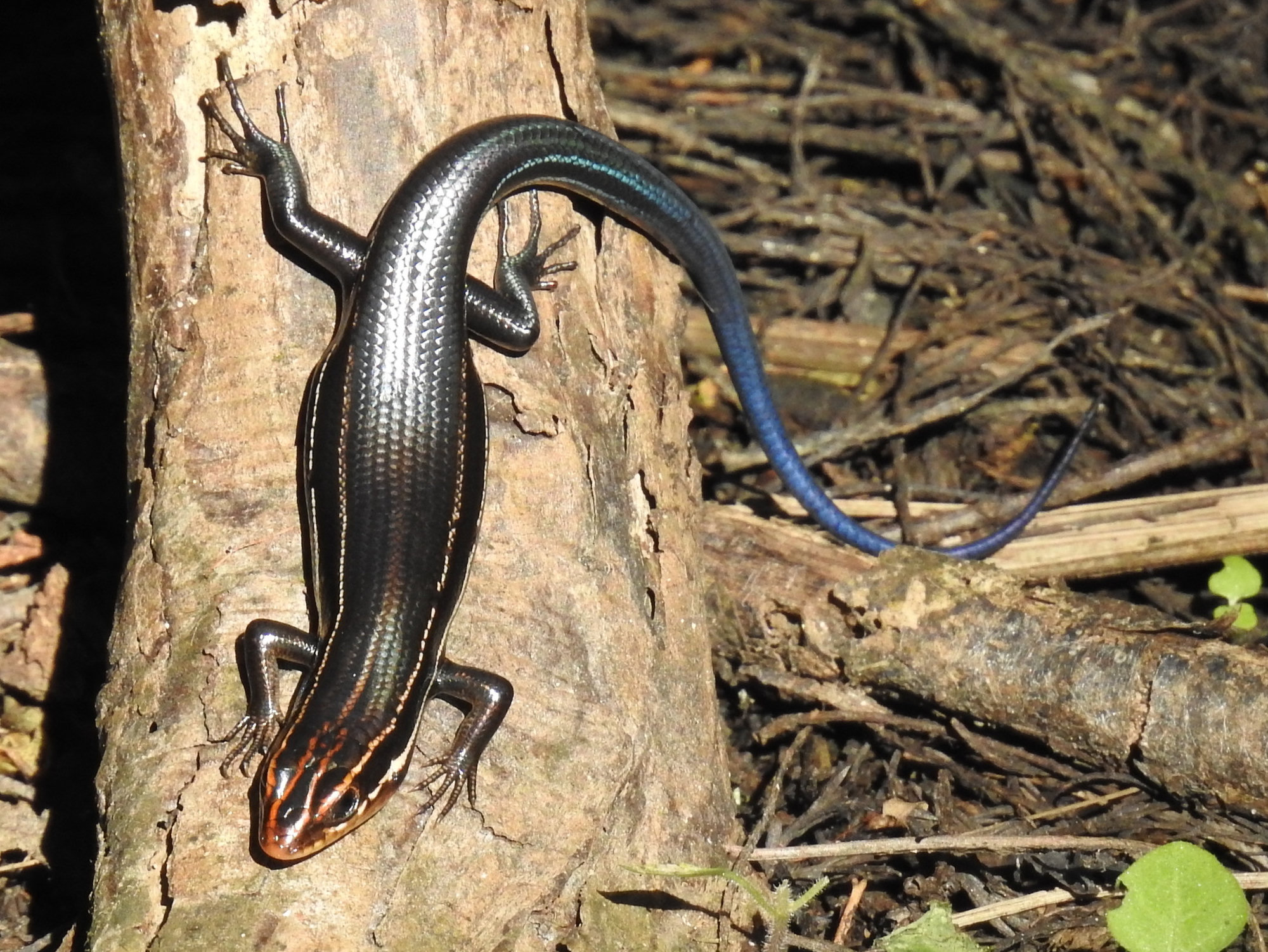
Photo Andrew Durso (opens in a new tab) / iNaturalist, CC BY 4.0 (opens in a new tab)
At a glance
- Size
- About 12 to 22 cm long including the tail
- Habitat
- Dry, open pine and oak woods, sandhills and coastal islands
- Diet
- Insects and spiders
- In Georgia
- Statewide, most common in the Coastal Plain
- Rabies vector
- No
Identification
- Key marks
- Smooth, striped skink; young black with cream stripes and a blue tail
- Told apart from
- Common five-lined skink, which has a row of wide scales under the tail; this species' scales there are all small
- Where to look
- On logs and stumps in dry, sunny woods
Behaviour
It prefers drier ground than the common five-lined skink and is often on the ground among pine litter. Like its relatives it can drop its tail to escape.
Why they matter
It is one of the insect-eating lizards of Georgia's pinelands and sandhills and a food source for their snakes and birds.
Reproduction and lifecycle
Eggs — Usually 3 to 9
Nest — Under logs or in soil, guarded by the female
Incubation — About 4 to 8 weeks
Hatchlings — Blue-tailed
Maturity — In about two years
Lifespan — Several years
Living around people
- These skinks are harmless and eat insects.
Misconceptions
- Blue-tailed lizards are venomous. They are harmless.
Related species
Seasonal activity
When this species is breeding, and when there are nests on the ground. Mowing during the shaded months is how most nests are found.
| Jan | Feb | Mar | Apr | May | Jun | Jul | Aug | Sep | Oct | Nov | Dec | |
|---|---|---|---|---|---|---|---|---|---|---|---|---|
| Breeding | Jan: no | Feb: no | Mar: no | Apr: no | May: no | Jun: no | Jul: no | Aug: no | Sep: no | Oct: no | Nov: no | Dec: no |
| Active nests | Jan: no | Feb: no | Mar: no | Apr: no | May: no | Jun: no | Jul: no | Aug: no | Sep: no | Oct: no | Nov: no | Dec: no |
| Notes | Sheltering | Sheltering | Emerging | Active | Breeding | Laying | Hatching | Young active | Active | Active on warm days | Sheltering | Sheltering |
Where it lives
Recorded in 10 states and provinces. Each one links to the other animals there, and to the rehabilitators licensed for them.
If you found one
Answer a few questions and you will get a specific answer for what you are looking at.
I found an animal