
Species
Broad-headed skink
Plestiodon laticeps
Georgia's largest skink: a big, tree-climbing lizard whose males grow wide, orange heads in spring.
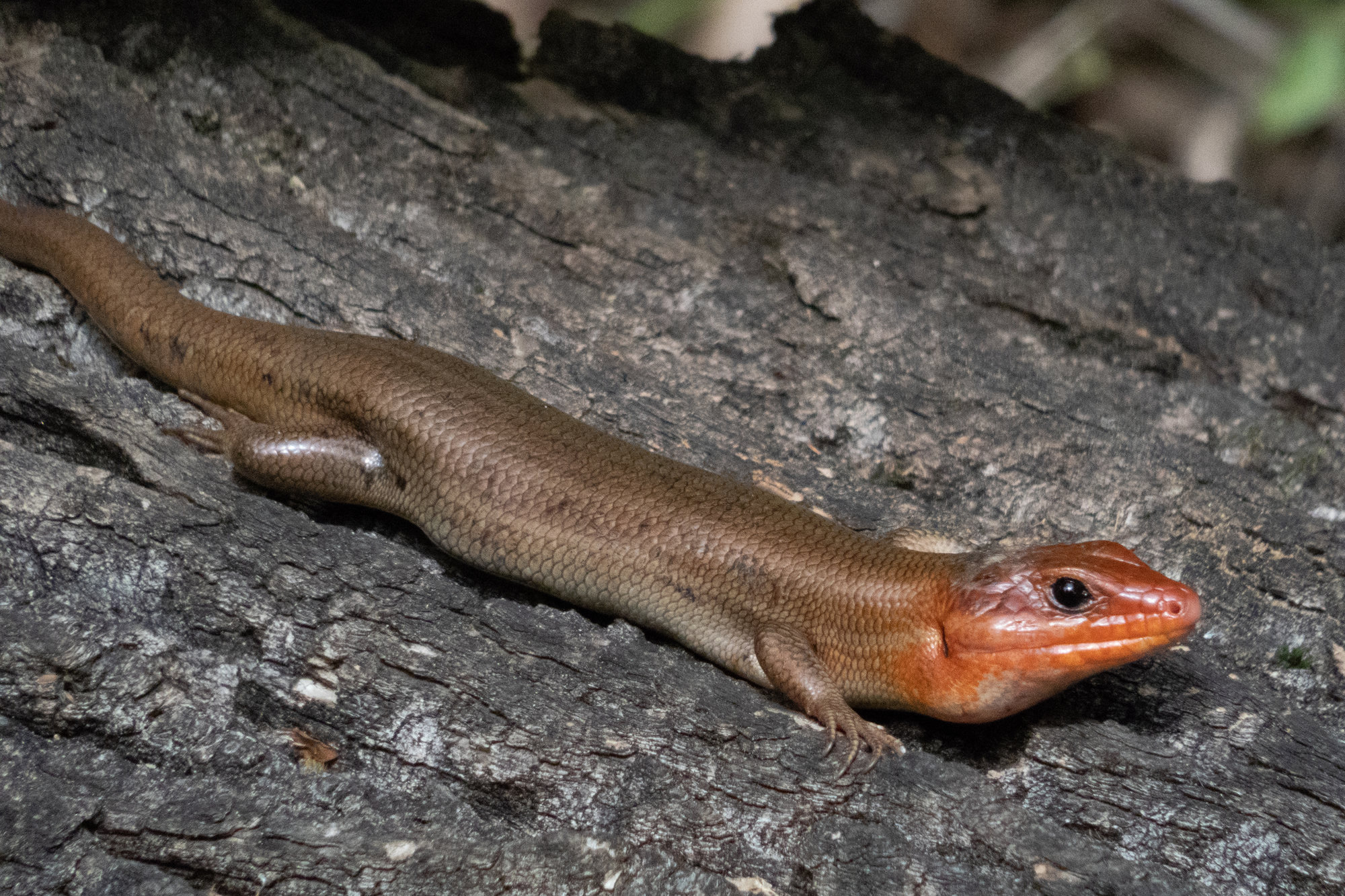
Photo Shawn Taylor (opens in a new tab) / iNaturalist, CC BY 4.0 (opens in a new tab)
At a glance
- Size
- About 16 to 32 cm long including the tail
- Habitat
- Woodland with large trees, especially live oaks, and old buildings
- Diet
- Insects, spiders, snails and small lizards
- In Georgia
- Common statewide
- Rabies vector
- No
Identification
- Key marks
- Large, smooth skink; young striped with a blue tail; adult males brown with broad orange-red heads
- Told apart from
- Five-lined skinks, which are smaller with narrower heads and more stripes on the scales under the tail
- Where to look
- On large tree trunks, in tree holes and on old buildings
Behaviour
Broad-headed skinks are good climbers and often live in holes high in trees. In spring males develop swollen, red-orange heads and fight fiercely over females. Females guard their eggs.
Why they matter
As large insect-eaters they take wasps, beetles and roaches, and they are food for hawks and snakes. Old trees with cavities are what they need.
Reproduction and lifecycle
Eggs — Usually 6 to 16
Nest — In rotting logs or tree cavities, guarded by the female
Incubation — About 4 to 8 weeks
Hatchlings — Striped, with blue tails
Maturity — In two to three years
Lifespan — Several years
Living around people
- Broad-headed skinks are harmless; a large one may bite if handled, without harm.
- Old trees with holes are their homes.
Misconceptions
- The red-headed "scorpion" is venomous. It is a harmless lizard.
Related species
Seasonal activity
When this species is breeding, and when there are nests on the ground. Mowing during the shaded months is how most nests are found.
| Jan | Feb | Mar | Apr | May | Jun | Jul | Aug | Sep | Oct | Nov | Dec | |
|---|---|---|---|---|---|---|---|---|---|---|---|---|
| Breeding | Jan: no | Feb: no | Mar: no | Apr: no | May: no | Jun: no | Jul: no | Aug: no | Sep: no | Oct: no | Nov: no | Dec: no |
| Active nests | Jan: no | Feb: no | Mar: no | Apr: no | May: no | Jun: no | Jul: no | Aug: no | Sep: no | Oct: no | Nov: no | Dec: no |
| Notes | Sheltering | Sheltering | Emerging | Males with red heads; courtship | Breeding | Females guarding eggs | Hatching | Young active | Active | Active on warm days | Sheltering | Sheltering |
Where it lives
Recorded in 21 states and provinces. Each one links to the other animals there, and to the rehabilitators licensed for them.
If you found one
Answer a few questions and you will get a specific answer for what you are looking at.
I found an animal