
Species
Sooty tern
Onychoprion fuscatus
A tropical sea tern that can stay aloft for years, sometimes blown to Georgia's coast and inland by hurricanes.
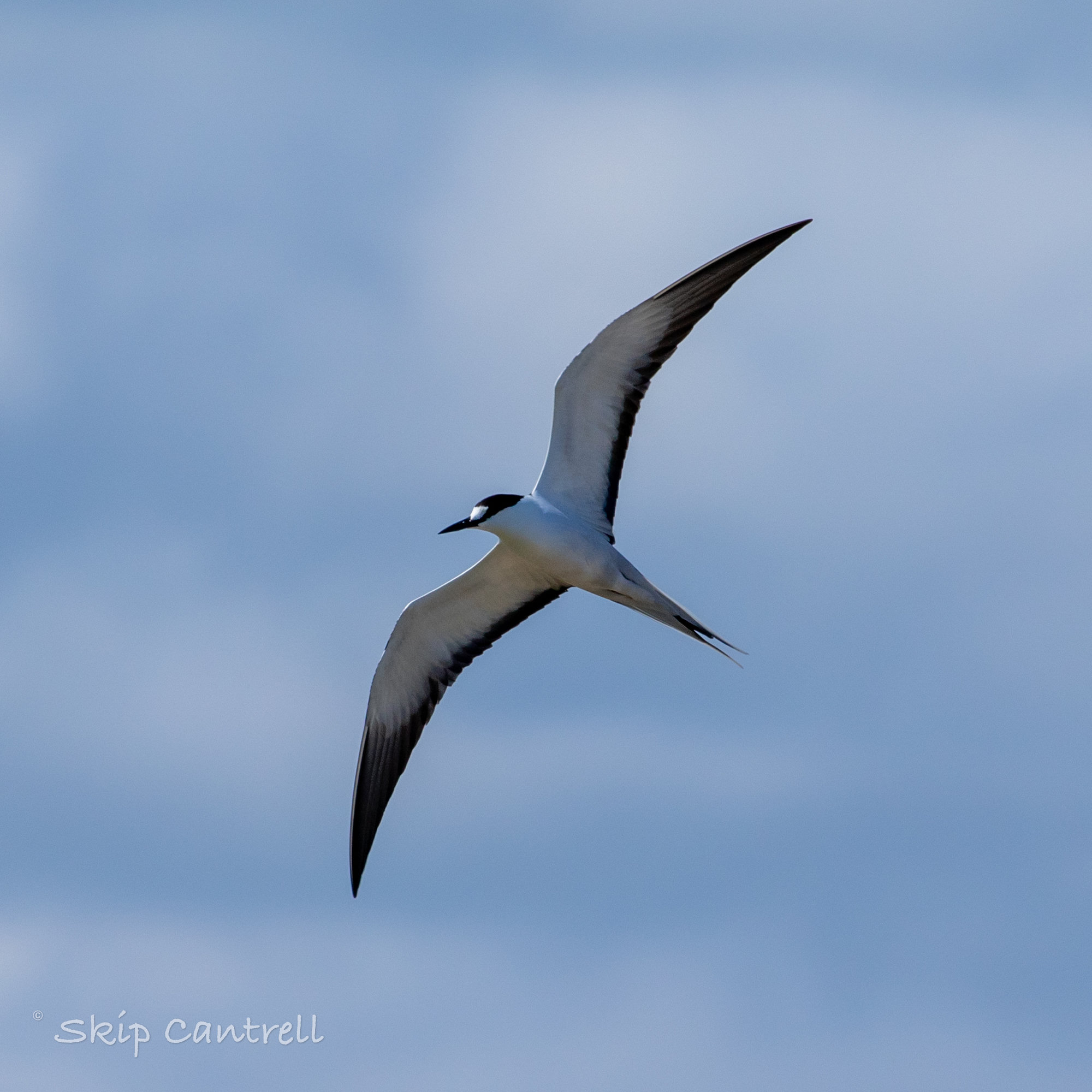
Photo tcantrell52 (opens in a new tab) / iNaturalist, CC BY 4.0 (opens in a new tab)
At a glance
- Size
- About 38 to 45 cm long; wingspan about 90 cm
- Weight
- About 150 to 240 g
- Habitat
- Open tropical ocean; nests on remote islands
- Diet
- Small fish and squid taken from the surface
- In Georgia
- Offshore in summer; blown ashore or inland by tropical storms
- Voice
- A nasal "wide-a-wake"
- Rabies vector
- No
Identification
- Key marks
- Black above, white below; white forehead; long, deeply forked tail
- Told apart from
- Bridled tern, which is paler grey-brown above with a white collar
- Where to look
- After tropical storms and hurricanes, on beaches, lakes and even inland reservoirs
Behaviour
Sooty terns rarely land on water, because their feathers are not waterproof. Young birds may stay in the air for several years before returning to breed, feeding and even resting on the wing.
Why they matter
Sooty terns are among the most numerous seabirds in the tropics, and among the most aerial of all birds. Hurricanes sometimes carry them far inland, where their sudden appearance on a Georgia lake is a reminder of storms passing through.
Reproduction and lifecycle
Nest — A scrape on sand on remote tropical islands
Eggs — Usually one
Incubation — About 28 to 30 days
Chick — Fed by both parents for many weeks
Flight — At about eight to ten weeks
Lifespan — Wild birds over thirty years are recorded
Living around people
- A tern found on the ground after a storm is exhausted or injured and should go to a rehabilitator; it cannot take off from flat ground easily.
Misconceptions
- A seabird on land after a storm will recover on its own. Sooty terns cannot safely rest on water and often need help.
Related species
Seasonal activity
When this species is breeding, and when there are nests on the ground. Mowing during the shaded months is how most nests are found.
| Jan | Feb | Mar | Apr | May | Jun | Jul | Aug | Sep | Oct | Nov | Dec | |
|---|---|---|---|---|---|---|---|---|---|---|---|---|
| Breeding | Jan: no | Feb: no | Mar: no | Apr: no | May: no | Jun: no | Jul: no | Aug: no | Sep: no | Oct: no | Nov: no | Dec: no |
| Active nests | Jan: no | Feb: no | Mar: no | Apr: no | May: no | Jun: no | Jul: no | Aug: no | Sep: no | Oct: no | Nov: no | Dec: no |
| Notes | At sea in the tropics | At sea | Colonies forming on tropical islands | Nesting | Nesting | Chicks | Offshore; storm-blown birds possible | Hurricane season; birds may be blown inland | Hurricane season | Leaving | At sea | At sea |
Where it lives
Recorded in 20 states and provinces. Each one links to the other animals there, and to the rehabilitators licensed for them.
United States
- Alabamapassing through
- Arkansaspassing through
- Californiapassing through
- Floridabreeding
- Georgiapassing through
- Hawaii
- Kentuckypassing through
- Louisianapassing through
- Massachusettspassing through
- Mississippipassing through
- New Jerseypassing through
- North Carolinapassing through
- Ohiopassing through
- South Carolinapassing through
- Tennesseepassing through
- Texasbreeding
If you found one
Answer a few questions and you will get a specific answer for what you are looking at.
I found an animal