
Species
Bridled tern
Onychoprion anaethetus
A grey-backed tropical tern of the Gulf Stream, seen off Georgia's coast in summer.
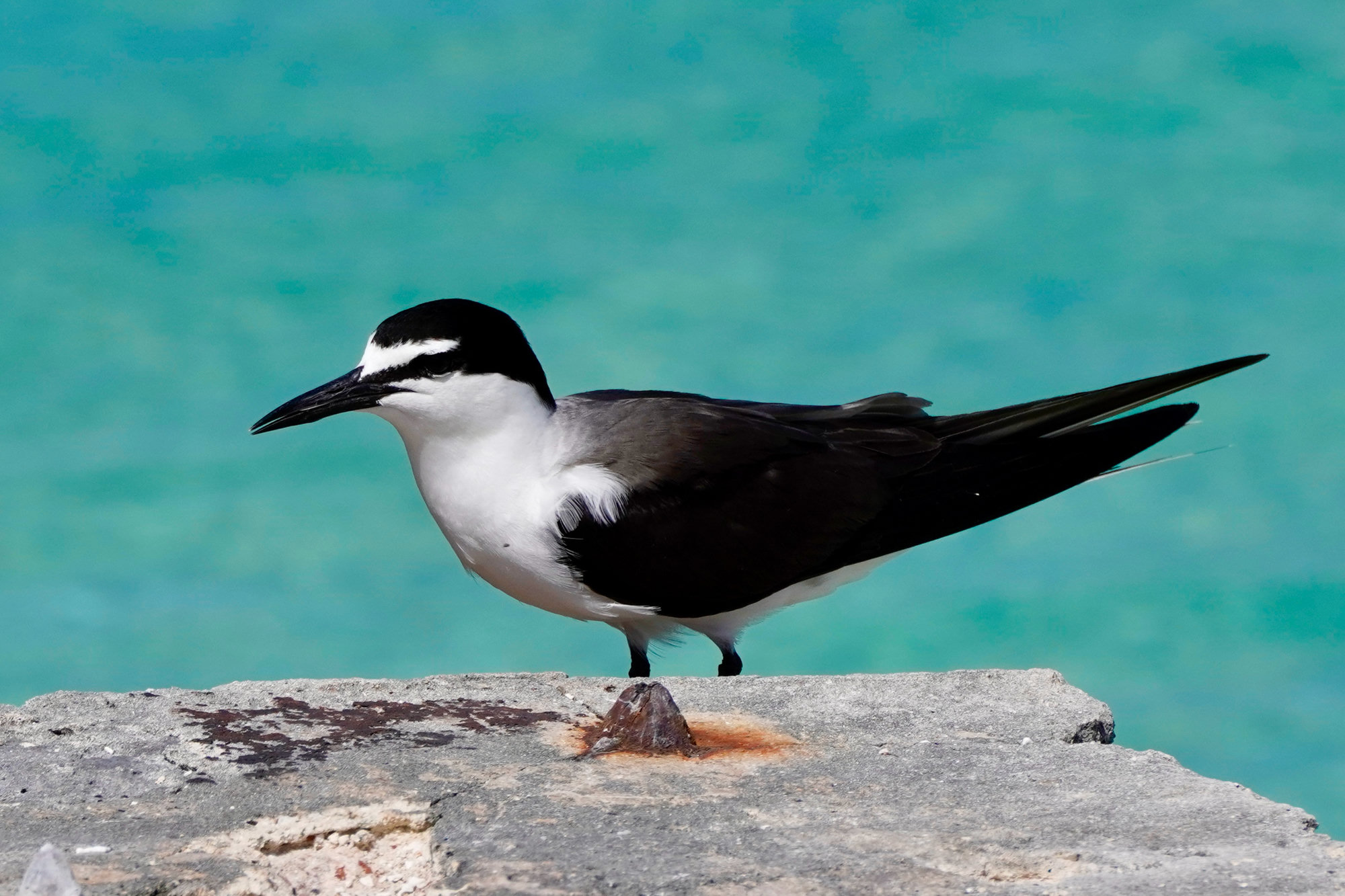
Photo ian bullock (opens in a new tab) / iNaturalist, CC BY 4.0 (opens in a new tab)
At a glance
- Size
- About 30 to 32 cm long
- Weight
- About 95 to 150 g
- Habitat
- Warm offshore waters, often near floating sargassum weed
- Diet
- Small fish and squid
- In Georgia
- Offshore in summer; occasionally blown ashore by storms
- Voice
- A yapping "wep-wep"
- Rabies vector
- No
Identification
- Key marks
- Grey-brown back; black cap; white forehead that extends behind the eye; white collar
- Told apart from
- Sooty tern, which is black above and lacks the pale collar
- Where to look
- Far offshore in summer, often perched on floating debris
Behaviour
Bridled terns feed on small fish around floating sargassum mats and often rest on flotsam.
Why they matter
These terns depend on the floating sargassum of the Gulf Stream, a moving habitat that shelters young fish and turtles. They show how much of the ocean's life gathers around such floating islands.
Reproduction and lifecycle
Nest — A scrape among rocks on tropical islands
Eggs — Usually one
Incubation — About 28 to 30 days
Chick — Fed by both parents
Lifespan — Several years
Living around people
- A bridled tern ashore after a storm needs a rehabilitator.
Misconceptions
- Terns are small gulls. They are a separate group, with pointed bills, and most dive for fish.
Related species
Seasonal activity
When this species is breeding, and when there are nests on the ground. Mowing during the shaded months is how most nests are found.
| Jan | Feb | Mar | Apr | May | Jun | Jul | Aug | Sep | Oct | Nov | Dec | |
|---|---|---|---|---|---|---|---|---|---|---|---|---|
| Breeding | Jan: no | Feb: no | Mar: no | Apr: no | May: no | Jun: no | Jul: no | Aug: no | Sep: no | Oct: no | Nov: no | Dec: no |
| Active nests | Jan: no | Feb: no | Mar: no | Apr: no | May: no | Jun: no | Jul: no | Aug: no | Sep: no | Oct: no | Nov: no | Dec: no |
| Notes | At sea in the tropics | At sea | At sea | Nesting on Caribbean islands | Nesting | Offshore | Offshore | Offshore; storms may blow birds ashore | Offshore | Leaving | At sea | At sea |
Where it lives
Recorded in 21 states and provinces. Each one links to the other animals there, and to the rehabilitators licensed for them.
United States
- Alabamapassing through
- Connecticutpassing through
- Floridapassing through
- Georgiapassing through
- Louisianapassing through
- Mainepassing through
- Marylandpassing through
- Massachusettspassing through
- Mississippipassing through
- New Hampshirepassing through
- New Jerseypassing through
- New Yorkpassing through
- North Carolinapassing through
- South Carolinapassing through
- Texaspassing through
- Virginiapassing through
If you found one
Answer a few questions and you will get a specific answer for what you are looking at.
I found an animal