
Species
Slender glass lizard
Ophisaurus attenuatus
A long, legless lizard of dry grassland that is easily mistaken for a snake.
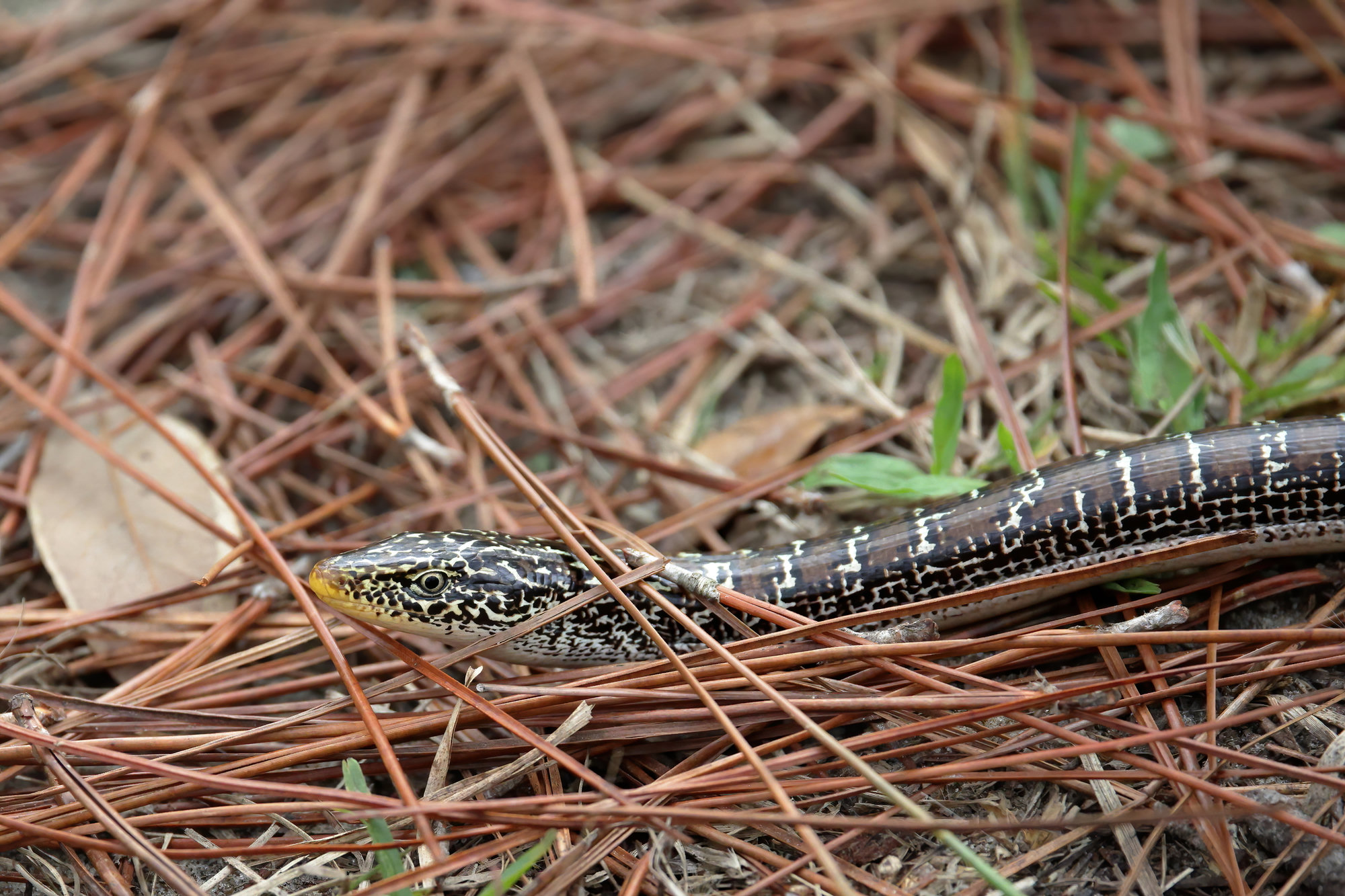
Photo Lauren McLaurin (opens in a new tab) / iNaturalist, CC BY 4.0 (opens in a new tab)
At a glance
- Size
- About 55 to 107 cm long, most of it tail
- Habitat
- Dry grassland, old fields, open woods and sandhills
- Diet
- Insects, spiders and small invertebrates
- In Georgia
- Statewide in open, grassy places, but uncommon
- Rabies vector
- No
Identification
- Key marks
- Long and legless; tan with a dark stripe down the back and dark stripes below the side groove
- Told apart from
- Eastern glass lizard, which lacks stripes below the side groove
- Told apart from
- Snakes, which have no eyelids or ear openings
- Where to look
- In long grass, sometimes crossing roads
Behaviour
Like other glass lizards it can shed its long tail when grabbed. It hunts insects in grass and burrows into soil and leaf litter.
Why they matter
It is part of the grassland community that has shrunk as fields have been built on or planted with trees.
Reproduction and lifecycle
Eggs — Usually 5 to 16
Nest — Under cover, guarded by the female
Incubation — About 8 weeks
Hatchlings — Small and slender
Maturity — In two to three years
Lifespan — Several years
Living around people
- It is harmless; it can be guided into long grass with a broom if it must be moved.
Misconceptions
- It is a snake. It is a lizard without legs, with eyelids and ear openings.
Related species
Seasonal activity
When this species is breeding, and when there are nests on the ground. Mowing during the shaded months is how most nests are found.
| Jan | Feb | Mar | Apr | May | Jun | Jul | Aug | Sep | Oct | Nov | Dec | |
|---|---|---|---|---|---|---|---|---|---|---|---|---|
| Breeding | Jan: no | Feb: no | Mar: no | Apr: no | May: no | Jun: no | Jul: no | Aug: no | Sep: no | Oct: no | Nov: no | Dec: no |
| Active nests | Jan: no | Feb: no | Mar: no | Apr: no | May: no | Jun: no | Jul: no | Aug: no | Sep: no | Oct: no | Nov: no | Dec: no |
| Notes | Sheltering | Sheltering | Emerging | Active | Breeding | Laying | Guarding eggs | Hatching | Young active | Active | Sheltering | Sheltering |
Where it lives
Recorded in 15 states and provinces. Each one links to the other animals there, and to the rehabilitators licensed for them.
If you found one
Answer a few questions and you will get a specific answer for what you are looking at.
I found an animal