
Species
Island glass lizard
Ophisaurus compressus
A slim, legless lizard of Georgia's coastal islands and dunes.
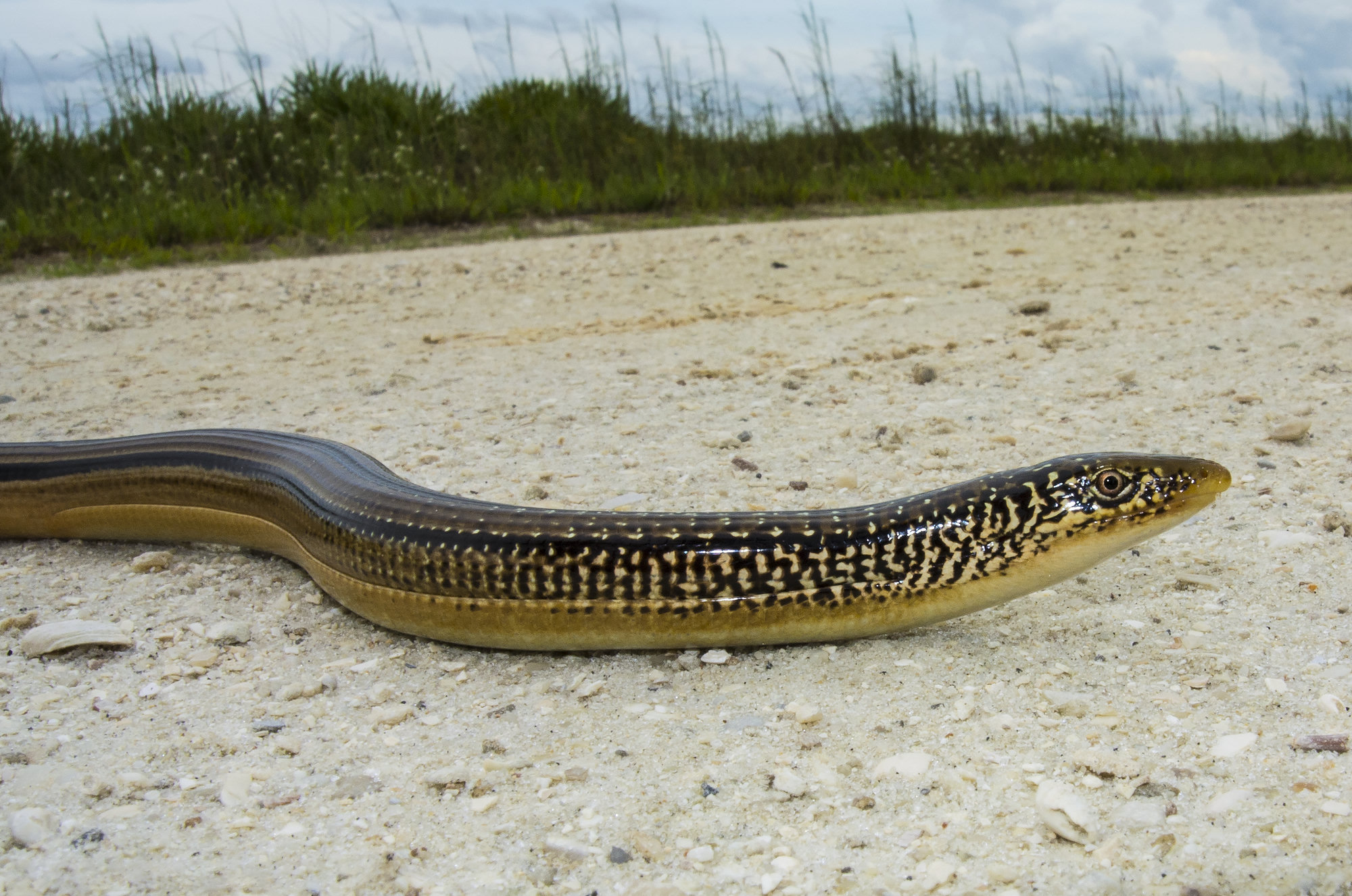
Photo Glenn Bartolotti (opens in a new tab) / Wikimedia Commons, CC BY-SA 4.0 (opens in a new tab)
At a glance
- Size
- About 38 to 61 cm long
- Habitat
- Coastal dunes, maritime forest edges and sandy pine woods
- Diet
- Insects and spiders
- In Georgia
- Barrier islands and the coastal mainland
- Rabies vector
- No
Identification
- Key marks
- Long and legless; tan with a single dark stripe along each side above the side groove
- Told apart from
- Eastern and slender glass lizards, which have more stripes
- Told apart from
- Snakes, which have no eyelids or ear openings
- Where to look
- In dune grass and sandy clearings near the coast
Behaviour
Like other glass lizards it can drop its tail when caught. It shelters in sand and under debris and hunts insects in grass.
Why they matter
It is one of the animals of coastal dunes and scrub, habitats squeezed by building on the coast.
Reproduction and lifecycle
Eggs — Usually 4 to 11
Nest — In sand under cover, guarded by the female
Incubation — About 8 weeks
Hatchlings — Small and striped
Maturity — In a few years
Lifespan — Several years
Living around people
- It is harmless; leaving dune vegetation alone protects it.
Misconceptions
- It is a snake. It has eyelids and ear openings, which snakes lack.
Related species
Seasonal activity
When this species is breeding, and when there are nests on the ground. Mowing during the shaded months is how most nests are found.
| Jan | Feb | Mar | Apr | May | Jun | Jul | Aug | Sep | Oct | Nov | Dec | |
|---|---|---|---|---|---|---|---|---|---|---|---|---|
| Breeding | Jan: no | Feb: no | Mar: no | Apr: no | May: no | Jun: no | Jul: no | Aug: no | Sep: no | Oct: no | Nov: no | Dec: no |
| Active nests | Jan: no | Feb: no | Mar: no | Apr: no | May: no | Jun: no | Jul: no | Aug: no | Sep: no | Oct: no | Nov: no | Dec: no |
| Notes | Sheltering | Sheltering | Emerging | Active | Breeding | Laying | Guarding eggs | Hatching | Young active | Active | Sheltering | Sheltering |
Where it lives
Recorded in 2 states and provinces. Each one links to the other animals there, and to the rehabilitators licensed for them.
If you found one
Answer a few questions and you will get a specific answer for what you are looking at.
I found an animal