
Species
Six-lined racerunner
Aspidoscelis sexlineatus
A fast, striped lizard of hot, sandy ground that dashes for cover at the slightest movement.
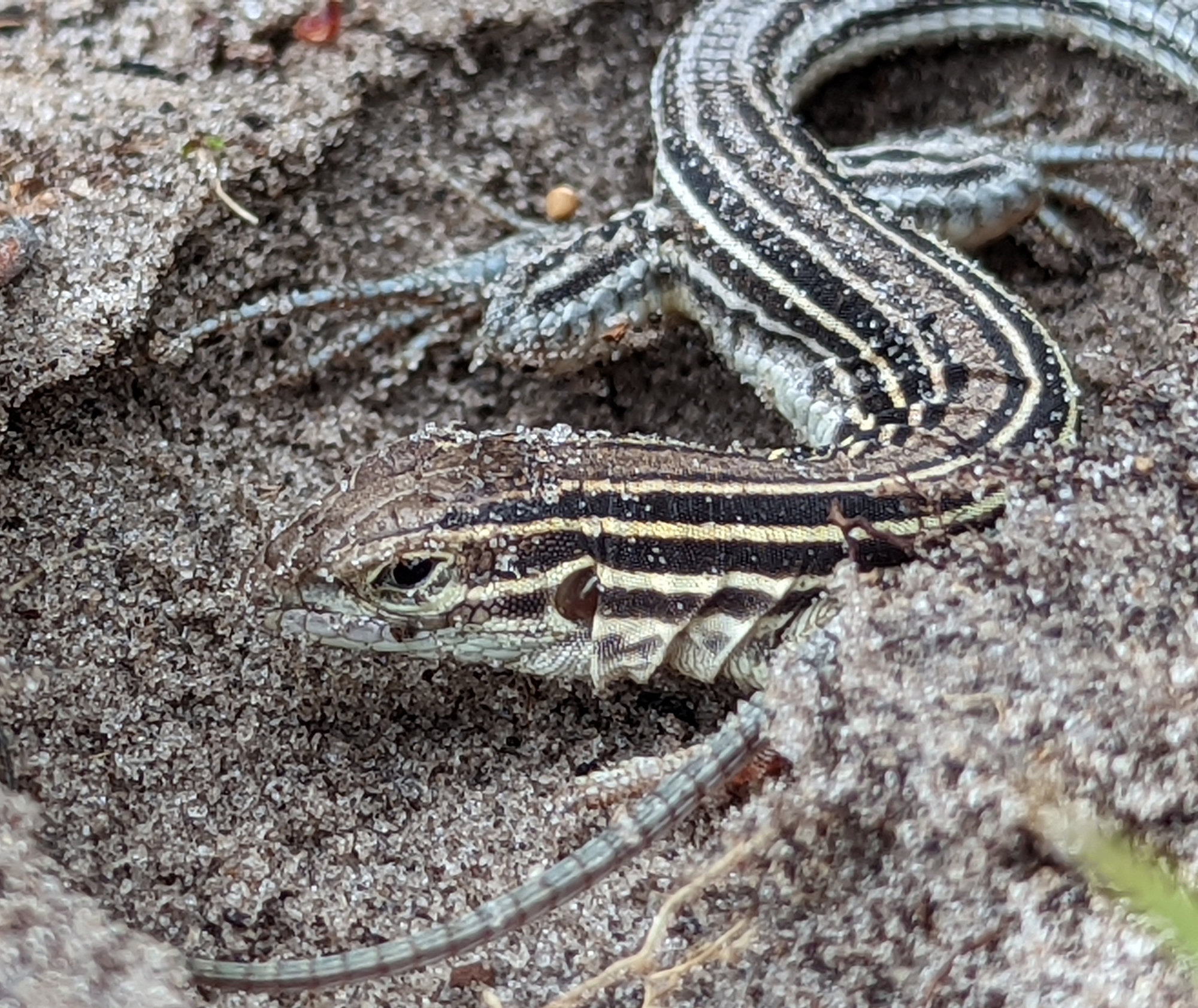
Photo Unknown photographer (opens in a new tab) / iNaturalist, CC0 1.0 (opens in a new tab)
At a glance
- Size
- About 15 to 27 cm long including the long tail
- Habitat
- Open, sandy or grassy ground: sandhills, fields, roadsides and dunes
- Diet
- Insects and spiders
- In Georgia
- Common statewide in open, sandy places
- Rabies vector
- No
Identification
- Key marks
- Slim, dark brown with six pale stripes; long tail; males have a bluish-green belly and throat
- Told apart from
- Five-lined skinks, which are shinier and slower, with smooth scales
- Where to look
- Running across sandy ground in the hottest part of the day
Behaviour
Racerunners are among the fastest lizards in North America, able to sprint close to 30 km an hour in short bursts. They are active in the heat of the day, when other lizards shelter, and forage by poking their snouts into the sand.
Why they matter
They eat many grasshoppers, beetles and spiders on open ground and are prey for snakes and hawks. Open, sunny sandy places are becoming scarce, and racerunners go with them.
Reproduction and lifecycle
Eggs — Usually 1 to 6
Nest — Dug in loose sand
Incubation — About 6 to 8 weeks
Hatchlings — Striped, with light blue tails
Maturity — In their first year
Lifespan — A few years
Living around people
- Racerunners are harmless and hard to catch; they are best enjoyed at a distance.
Misconceptions
- Fast-moving lizards are dangerous. Racerunners are simply quick; they are harmless.
Related species
Seasonal activity
When this species is breeding, and when there are nests on the ground. Mowing during the shaded months is how most nests are found.
| Jan | Feb | Mar | Apr | May | Jun | Jul | Aug | Sep | Oct | Nov | Dec | |
|---|---|---|---|---|---|---|---|---|---|---|---|---|
| Breeding | Jan: no | Feb: no | Mar: no | Apr: no | May: no | Jun: no | Jul: no | Aug: no | Sep: no | Oct: no | Nov: no | Dec: no |
| Active nests | Jan: no | Feb: no | Mar: no | Apr: no | May: no | Jun: no | Jul: no | Aug: no | Sep: no | Oct: no | Nov: no | Dec: no |
| Notes | Sheltering underground | Sheltering | Sheltering | Emerging | Active; breeding | Laying | Laying | Hatchlings | Active | Going underground | Sheltering | Sheltering |
Where it lives
Recorded in 26 states and provinces. Each one links to the other animals there, and to the rehabilitators licensed for them.
If you found one
Answer a few questions and you will get a specific answer for what you are looking at.
I found an animal