
Species
Sedge wren
Cistothorus stellaris
A tiny, streaky wren of damp grassy meadows and marsh edges that winters in Georgia.
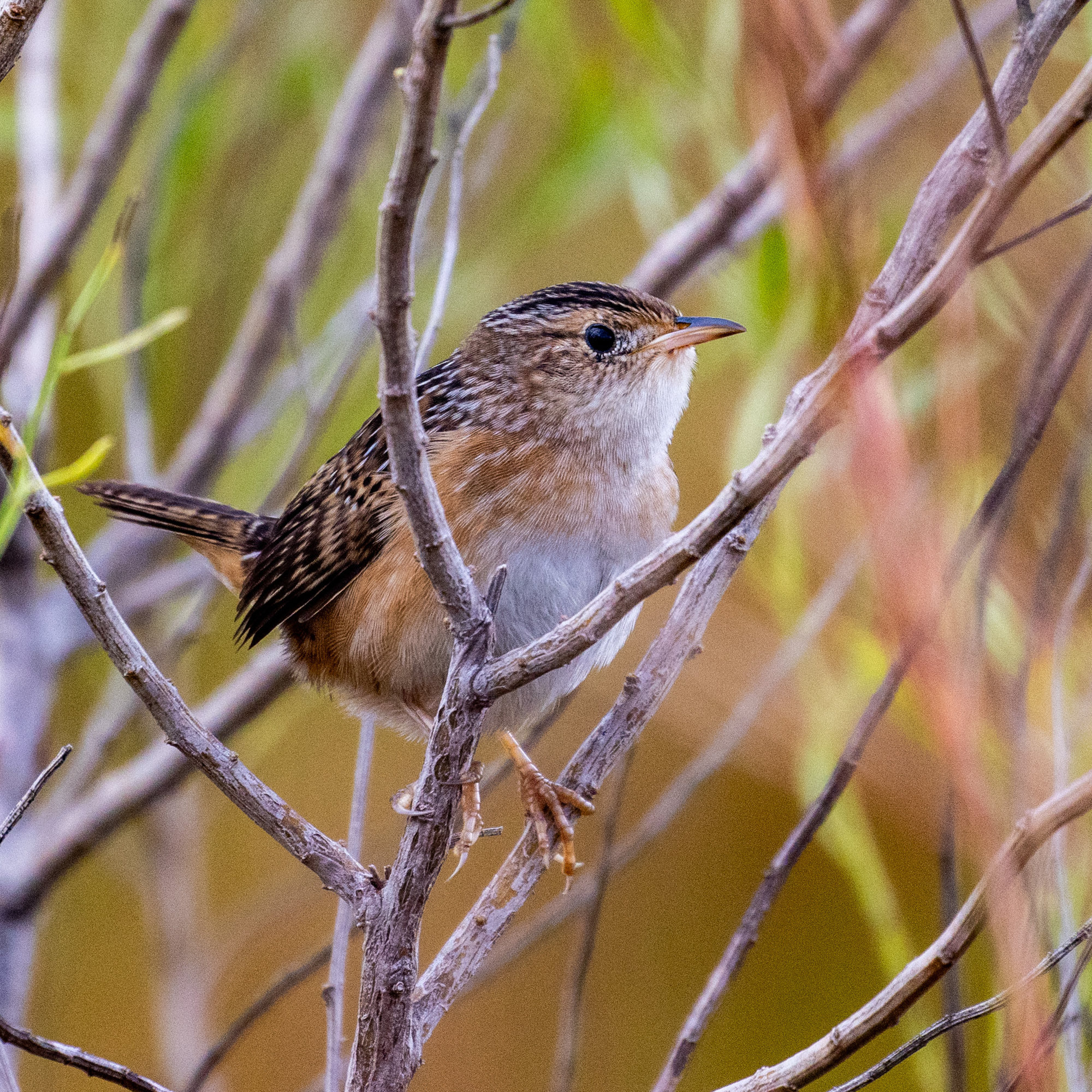
Photo tcantrell52 (opens in a new tab) / iNaturalist, CC BY 4.0 (opens in a new tab)
At a glance
- Size
- About 10 to 12 cm long
- Weight
- About 7 to 11 g
- Habitat
- Wet meadows, grassy marsh edges and sedge
- Diet
- Insects and spiders
- In Georgia
- An uncommon winter visitor, especially on the coast
- Voice
- A dry, chattering song
- Rabies vector
- No
Identification
- Key marks
- Tiny; buff and streaked above; short bill; faint eyebrow
- Told apart from
- Marsh wren, which has a bold white eyebrow and lives in taller marsh
- Where to look
- Damp, grassy fields and marsh edges in winter
Behaviour
Sedge wrens are secretive, staying low in grass. They move around unpredictably in summer, nesting wherever conditions suit.
Why they matter
Sedge wrens depend on wet meadows, which have been drained widely. Their nomadic nesting habits make them one of the least predictable songbirds.
Reproduction and lifecycle
Nest — A ball of woven grass in dense sedge
Eggs — Usually five to seven
Incubation — About 12 to 14 days
Chicks — Fed by both parents
Lifespan — A few years
Living around people
- Wet, grassy field corners left unmown help them in winter.
Misconceptions
- All marsh wrens are the same. Sedge and marsh wrens use different habitats.
Related species
Seasonal activity
When this species is breeding, and when there are nests on the ground. Mowing during the shaded months is how most nests are found.
| Jan | Feb | Mar | Apr | May | Jun | Jul | Aug | Sep | Oct | Nov | Dec | |
|---|---|---|---|---|---|---|---|---|---|---|---|---|
| Breeding | Jan: no | Feb: no | Mar: no | Apr: no | May: no | Jun: no | Jul: no | Aug: no | Sep: no | Oct: no | Nov: no | Dec: no |
| Active nests | Jan: no | Feb: no | Mar: no | Apr: no | May: no | Jun: no | Jul: no | Aug: no | Sep: no | Oct: no | Nov: no | Dec: no |
| Notes | Wintering | Wintering | Wintering | Leaving | Nesting farther north | Nesting | Nesting | Nesting | Migrating | Arriving | Wintering | Wintering |
Where it lives
Recorded in 42 states and provinces. Each one links to the other animals there, and to the rehabilitators licensed for them.
United States
- Alabamain winter
- Arkansasin winter
- Connecticutbreeding
- Delawarein winter
- Floridain winter
- Georgiain winter
- Illinoisbreeding
- Indianabreeding
- Iowabreeding
- Kansaspassing through
- Kentuckyin winter
- Louisianain winter
- Marylandin winter
- Michiganbreeding
- Minnesotabreeding
- Mississippiin winter
- Missouribreeding
- Montanabreeding
- Nebraskabreeding
- New Jerseyin winter
- New Yorkbreeding
- North Carolinain winter
- North Dakotabreeding
- Ohiobreeding
- Oklahomain winter
- South Carolinain winter
- South Dakotabreeding
- Tennesseein winter
- Texasin winter
- Vermontbreeding
- Virginiain winter
- Wisconsinbreeding
Canada
If you found one
Answer a few questions and you will get a specific answer for what you are looking at.
I found an animal