
Species
Scarletsnake
Cemophora coccinea
A small, burrowing snake banded in red, black and cream, often mistaken for a coral snake.
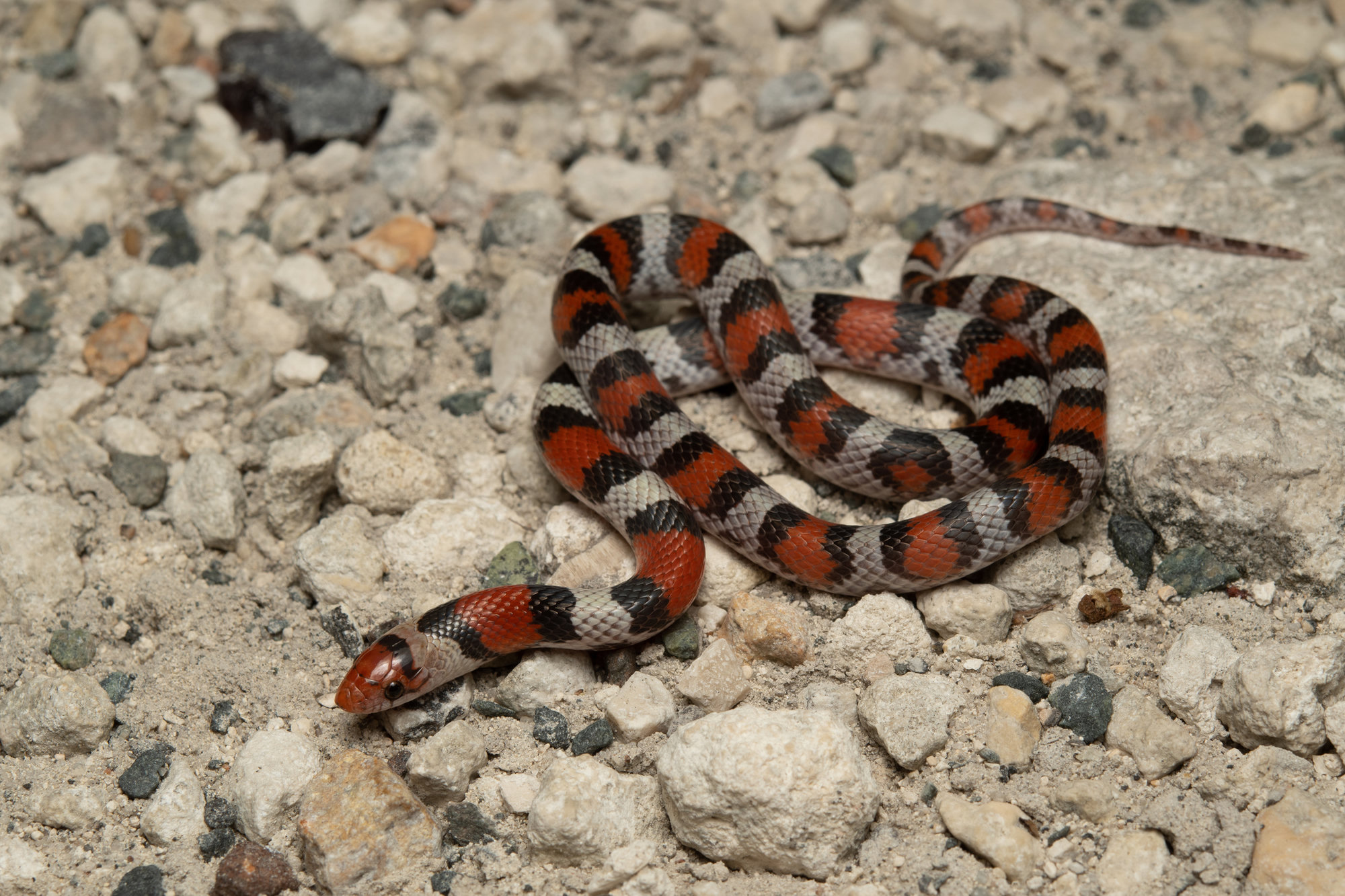
Photo Court Harding (opens in a new tab) / iNaturalist, CC BY 4.0 (opens in a new tab)
At a glance
- Size
- Usually 35 to 50 cm long
- Habitat
- Sandy pine woods, fields and gardens
- Diet
- Reptile eggs, mainly; also small snakes and lizards
- In Georgia
- Statewide except the mountains
- Venomous
- No
- Rabies vector
- No
Identification
- Key marks
- Red blotches bordered in black on a cream or white ground; pointed red snout; white belly
- Told apart from
- Eastern coralsnake, whose red bands touch yellow and whose snout is black
- Where to look
- Under boards and logs, and on roads at night
Behaviour
It burrows in loose soil and is active mostly at night. It eats reptile eggs, slicing into large ones with enlarged teeth at the back of its jaw.
Why they matter
It is one of the many small snakes that live beneath the ground in Georgia's sandy soils.
Reproduction and lifecycle
Eggs — Usually 3 to 8
Nest — In loose soil
Incubation — About 70 to 80 days
Hatchlings — Brightly banded
Maturity — In two to three years
Lifespan — Several years
Living around people
- It is harmless; a banded snake with a red snout is not a coral snake.
Misconceptions
- Every red, black and yellow snake is a coral snake. In the scarletsnake red touches black, and it is harmless.
Related species
Seasonal activity
When this species is breeding, and when there are nests on the ground. Mowing during the shaded months is how most nests are found.
| Jan | Feb | Mar | Apr | May | Jun | Jul | Aug | Sep | Oct | Nov | Dec | |
|---|---|---|---|---|---|---|---|---|---|---|---|---|
| Breeding | Jan: no | Feb: no | Mar: no | Apr: no | May: no | Jun: no | Jul: no | Aug: no | Sep: no | Oct: no | Nov: no | Dec: no |
| Active nests | Jan: no | Feb: no | Mar: no | Apr: no | May: no | Jun: no | Jul: no | Aug: no | Sep: no | Oct: no | Nov: no | Dec: no |
| Notes | Underground | Underground | Underground | Emerging | Active at night | Laying | Active | Hatching | Active | Underground | Underground | Underground |
Where it lives
Recorded in 11 states and provinces. Each one links to the other animals there, and to the rehabilitators licensed for them.
If you found one
Answer a few questions and you will get a specific answer for what you are looking at.
I found an animal