
Species
Eastern coralsnake
Micrurus fulvius
A shy, brilliantly banded venomous snake that spends most of its life under leaves and soil.
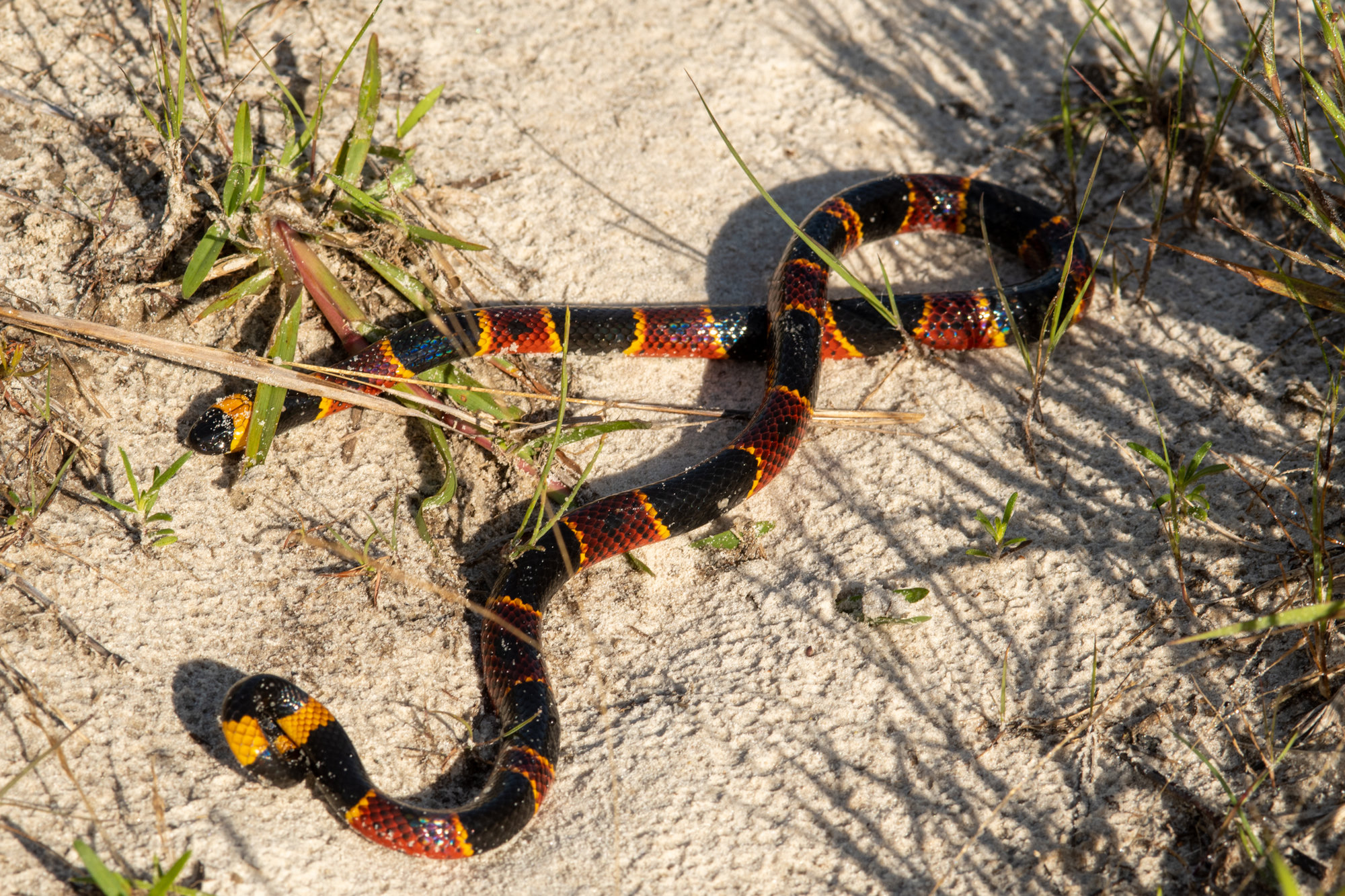
Photo Court Harding (opens in a new tab) / iNaturalist, CC BY 4.0 (opens in a new tab)
At a glance
- Size
- Usually 50 to 80 cm long; slender
- Habitat
- Sandhills, pine flatwoods, hardwood hammocks and gardens with leaf litter
- Diet
- Other snakes, lizards and skinks
- In Georgia
- The southern Coastal Plain
- Venomous
- Yes
- Rabies vector
- No
Identification
- Key marks
- Rings of red, yellow and black, with the red touching yellow; black snout
- Told apart from
- Scarlet kingsnake and scarletsnake, in which red touches black and the snout is red
- Where to look
- Rarely seen; sometimes crossing paths or in leaf litter after rain
Behaviour
Coral snakes are secretive, spending most of their time under leaves, logs and loose soil. When threatened they may hide the head and wave the curled tail. They eat other snakes, which they swallow whole.
Why they matter
Coral snakes are a check on populations of small snakes and lizards. Bites are rare, and almost always happen when someone picks one up.
Reproduction and lifecycle
Eggs — Usually 3 to 12, laid in early summer
Nest — Under logs or in soil
Incubation — About 60 to 90 days
Hatchlings — Brightly banded, venomous from hatching
Maturity — In about two years
Lifespan — Several years or more
Living around people
- Never pick up a brightly banded snake.
- If someone is bitten, call 911 and get to a hospital at once, even if there is little pain; coral snake venom acts on the nerves, and symptoms can be delayed. Do not cut, suck, ice or tie off the bite.
Misconceptions
- Coral snakes cannot bite people because their mouths are too small. They can, and bites need hospital care.
- The colour rhyme works everywhere. "Red touches yellow" identifies coral snakes in the Southeast, but it is not reliable for coral snakes outside the United States.
Related species
Seasonal activity
When this species is breeding, and when there are nests on the ground. Mowing during the shaded months is how most nests are found.
| Jan | Feb | Mar | Apr | May | Jun | Jul | Aug | Sep | Oct | Nov | Dec | |
|---|---|---|---|---|---|---|---|---|---|---|---|---|
| Breeding | Jan: no | Feb: no | Mar: no | Apr: no | May: no | Jun: no | Jul: no | Aug: no | Sep: no | Oct: no | Nov: no | Dec: no |
| Active nests | Jan: no | Feb: no | Mar: no | Apr: no | May: no | Jun: no | Jul: no | Aug: no | Sep: no | Oct: no | Nov: no | Dec: no |
| Notes | Underground | Active on warm days | Active; mating | Active | Active | Laying | Active | Hatching | Active; mating | Active | Active on warm days | Underground |
Where it lives
Recorded in 7 states and provinces. Each one links to the other animals there, and to the rehabilitators licensed for them.
If you found one
Answer a few questions and you will get a specific answer for what you are looking at.
I found an animal