
Species
Rufous hummingbird
Selasphorus rufus
A fiery orange hummingbird from the Northwest that is the most frequent winter hummingbird in Georgia.
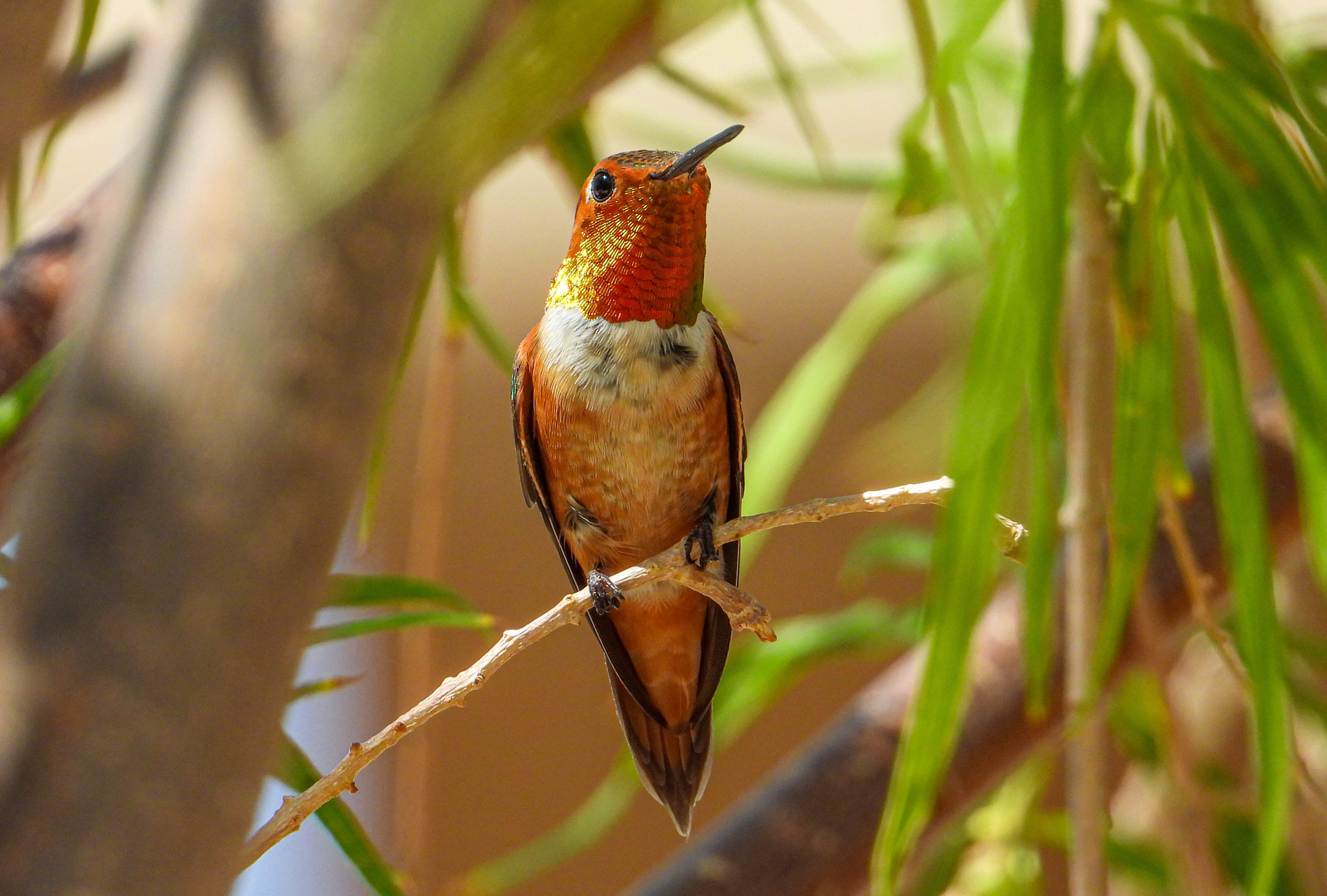
Photo highsinger (opens in a new tab) / iNaturalist, CC BY 4.0 (opens in a new tab)
At a glance
- Size
- About 7 to 9 cm long
- Weight
- About 3 to 4 g
- Habitat
- Gardens and feeders in winter
- Diet
- Nectar and small insects
- In Georgia
- An uncommon but regular winter visitor, October to March
- Voice
- Sharp chips; males make a whine with their wings
- Rabies vector
- No
Identification
- Male
- Bright orange-rufous back and sides; iridescent orange-red throat
- Female
- Green back; rufous sides and base of tail; a few orange spots on the throat
- Told apart from
- Ruby-throated hummingbird, which has no orange
- Where to look
- Feeders and late-flowering gardens in winter
Behaviour
Rufous hummingbirds are aggressive, defending feeders and flowers against much bigger birds. They withstand cold nights by going into torpor, lowering their body temperature and heart rate to save energy.
Why they matter
Rufous hummingbirds make one of the longest migrations of any bird for its size — from Mexico to Alaska and back — and a growing number winter in the Southeast. Their survival of freezing nights in torpor shows how small bodies manage extreme conditions.
Reproduction and lifecycle
Nest — A cup of plant down, moss and spider silk, in the Northwest
Eggs — Two
Incubation — About 15 to 17 days
Nestlings — Fledge at about 21 days
Lifespan — Several years
Living around people
- Feeders kept clean and thawed in winter can support a rufous hummingbird through cold spells.
- A hummingbird that seems frozen and still on a cold morning may be in torpor and will revive as it warms.
Misconceptions
- A winter hummingbird is lost. Rufous hummingbirds winter in the Southeast every year.
- A motionless hummingbird on a cold morning is dead. It may be in torpor, and usually recovers as the day warms.
Related species
Seasonal activity
When this species is breeding, and when there are nests on the ground. Mowing during the shaded months is how most nests are found.
| Jan | Feb | Mar | Apr | May | Jun | Jul | Aug | Sep | Oct | Nov | Dec | |
|---|---|---|---|---|---|---|---|---|---|---|---|---|
| Breeding | Jan: no | Feb: no | Mar: no | Apr: no | May: no | Jun: no | Jul: no | Aug: no | Sep: no | Oct: no | Nov: no | Dec: no |
| Active nests | Jan: no | Feb: no | Mar: no | Apr: no | May: no | Jun: no | Jul: no | Aug: no | Sep: no | Oct: no | Nov: no | Dec: no |
| Notes | Wintering | Wintering | Leaving for the Northwest | Migrating north along the Pacific | Breeding in the Northwest | Breeding | Starting south through the mountains | Migrating south | Migrating south | Arriving in the Southeast | Wintering | Wintering |
Where it lives
Recorded in 43 states and provinces. Each one links to the other animals there, and to the rehabilitators licensed for them.
United States
Mexico
- Aguascalientespassing through
- Baja Californiain winter
- Chihuahuabreeding
- Colimain winter
- Durangoin winter
- Guanajuatopassing through
- Guerreroin winter
- Hidalgopassing through
- Jaliscoin winter
- Mexico Cityin winter
- Michoacanin winter
- Morelosin winter
- Nayaritin winter
- Nuevo Leonin winter
- Oaxacain winter
- Pueblain winter
- Queretaropassing through
- San Luis Potosiin winter
- Sinaloain winter
- Sonorain winter
- State of Mexicoin winter
- Zacatecaspassing through
If you found one
Answer a few questions and you will get a specific answer for what you are looking at.
I found an animal