
Species
Rose-breasted grosbeak
Pheucticus ludovicianus
A black-and-white grosbeak with a rose-red triangle on its breast, passing through Georgia in spring and autumn.
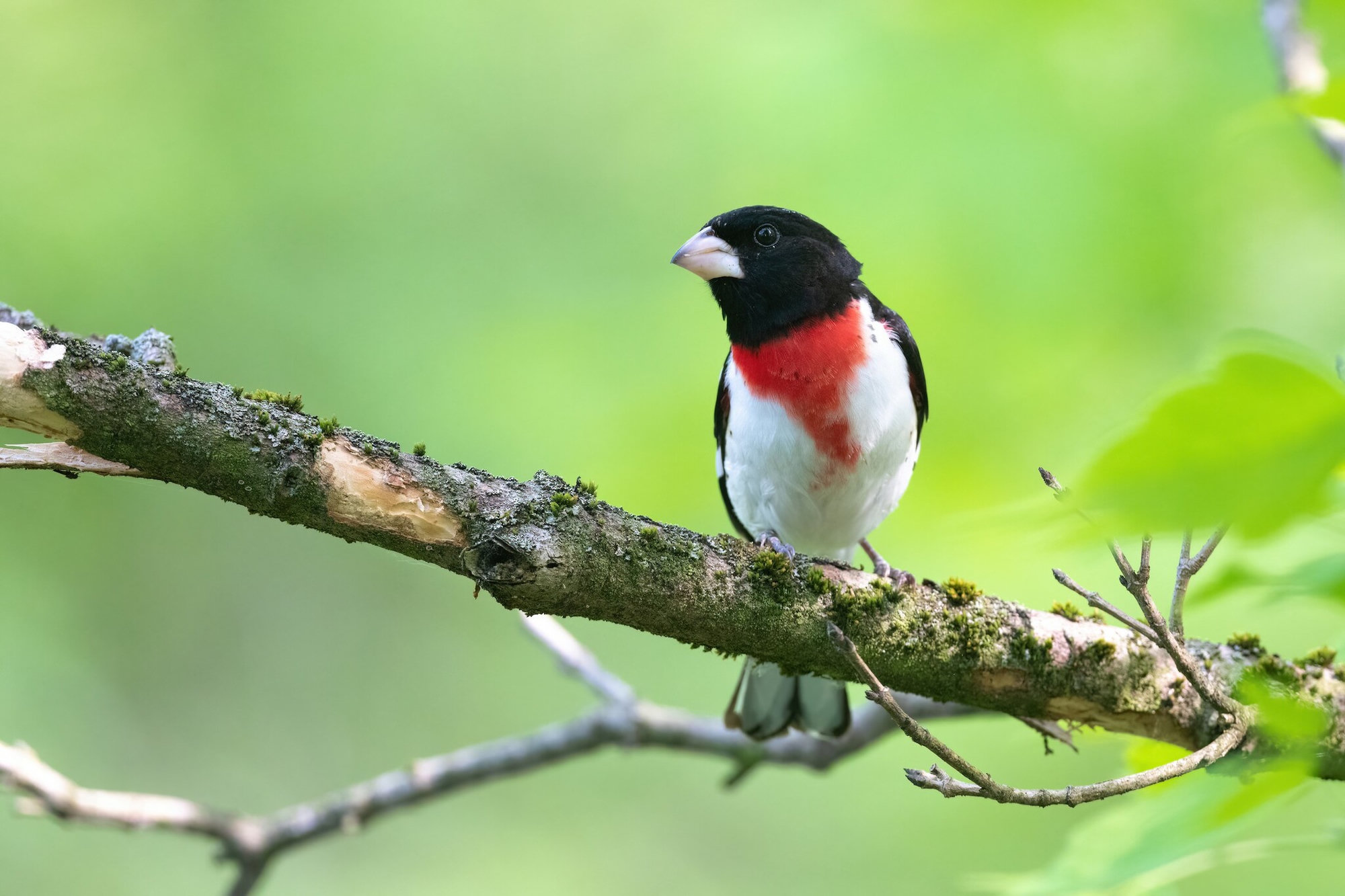
Photo Unknown photographer (opens in a new tab) / iNaturalist, CC0 1.0 (opens in a new tab)
At a glance
- Size
- About 18 to 21 cm long
- Weight
- About 35 to 65 g
- Habitat
- Deciduous woods and edges
- Diet
- Insects, seeds and fruit
- In Georgia
- A migrant; a few nest in the mountains
- Voice
- A robin-like song; a squeaky "eek" call
- Rabies vector
- No
Identification
- Male
- Black head and back; white belly; rose-red triangle on the breast
- Female
- Brown and streaked with a bold white eyebrow
- Told apart from
- Other grosbeaks, which lack the rose breast
- Where to look
- Feeders and woodland edges in April, May and September
Behaviour
Rose-breasted grosbeaks eat insects, seeds and fruit. Males share incubation and sing softly from the nest.
Why they matter
Rose-breasted grosbeaks eat many insect pests, including potato beetles. They depend on stopover woods on migration.
Reproduction and lifecycle
Nest — A flimsy cup in a tree
Eggs — Usually three to five
Incubation — About 11 to 14 days, shared by both parents
Chicks — Fed by both parents
Lifespan — Several years
Living around people
- Migrating grosbeaks visit feeders with sunflower seed.
Misconceptions
- The red on the breast is blood. It is the male's natural colour.
Related species
Seasonal activity
When this species is breeding, and when there are nests on the ground. Mowing during the shaded months is how most nests are found.
| Jan | Feb | Mar | Apr | May | Jun | Jul | Aug | Sep | Oct | Nov | Dec | |
|---|---|---|---|---|---|---|---|---|---|---|---|---|
| Breeding | Jan: no | Feb: no | Mar: no | Apr: no | May: no | Jun: no | Jul: no | Aug: no | Sep: no | Oct: no | Nov: no | Dec: no |
| Active nests | Jan: no | Feb: no | Mar: no | Apr: no | May: no | Jun: no | Jul: no | Aug: no | Sep: no | Oct: no | Nov: no | Dec: no |
| Notes | In South America | In South America | In South America | Migrants arriving | Nesting in the mountains and north | Nesting | Young fledging | Present | Migrants passing | Last migrants | In South America | In South America |
Where it lives
Recorded in 73 states and provinces. Each one links to the other animals there, and to the rehabilitators licensed for them.
United States
- Alabamapassing through
- Arkansaspassing through
- Californiabreeding
- Coloradobreeding
- Connecticutbreeding
- Delawarepassing through
- District of Columbiapassing through
- Floridapassing through
- Georgiabreeding
- Illinoisbreeding
- Indianabreeding
- Iowabreeding
- Kansasbreeding
- Kentuckypassing through
- Louisianapassing through
- Mainebreeding
- Marylandbreeding
- Massachusettsbreeding
- Michiganbreeding
- Minnesotabreeding
- Mississippipassing through
- Missouribreeding
- Nebraskabreeding
- Nevadabreeding
- New Hampshirebreeding
- New Jerseybreeding
- New Mexicopassing through
- New Yorkbreeding
- North Carolinabreeding
- North Dakotabreeding
- Ohiobreeding
- Oklahomapassing through
- Pennsylvaniabreeding
- Rhode Islandbreeding
- South Carolinapassing through
- South Dakotabreeding
- Tennesseepassing through
- Texaspassing through
- Vermontbreeding
- Virginiabreeding
- West Virginiabreeding
- Wisconsinbreeding
- Wyomingbreeding
Canada
Mexico
- Baja Californiain winter
- Campechein winter
- Chiapasin winter
- Guerreroin winter
- Hidalgoin winter
- Mexico Cityin winter
- Michoacanin winter
- Morelosin winter
- Nayaritin winter
- Oaxacain winter
- Pueblain winter
- Queretaroin winter
- Quintana Rooin winter
- San Luis Potosiin winter
- State of Mexicoin winter
- Tabascoin winter
- Tamaulipasin winter
- Veracruzin winter
- Yucatanin winter
If you found one
Answer a few questions and you will get a specific answer for what you are looking at.
I found an animal