
Species
Blue grosbeak
Passerina caerulea
A deep blue songbird with chestnut wing bars and a massive bill, singing from roadside shrubs in summer.
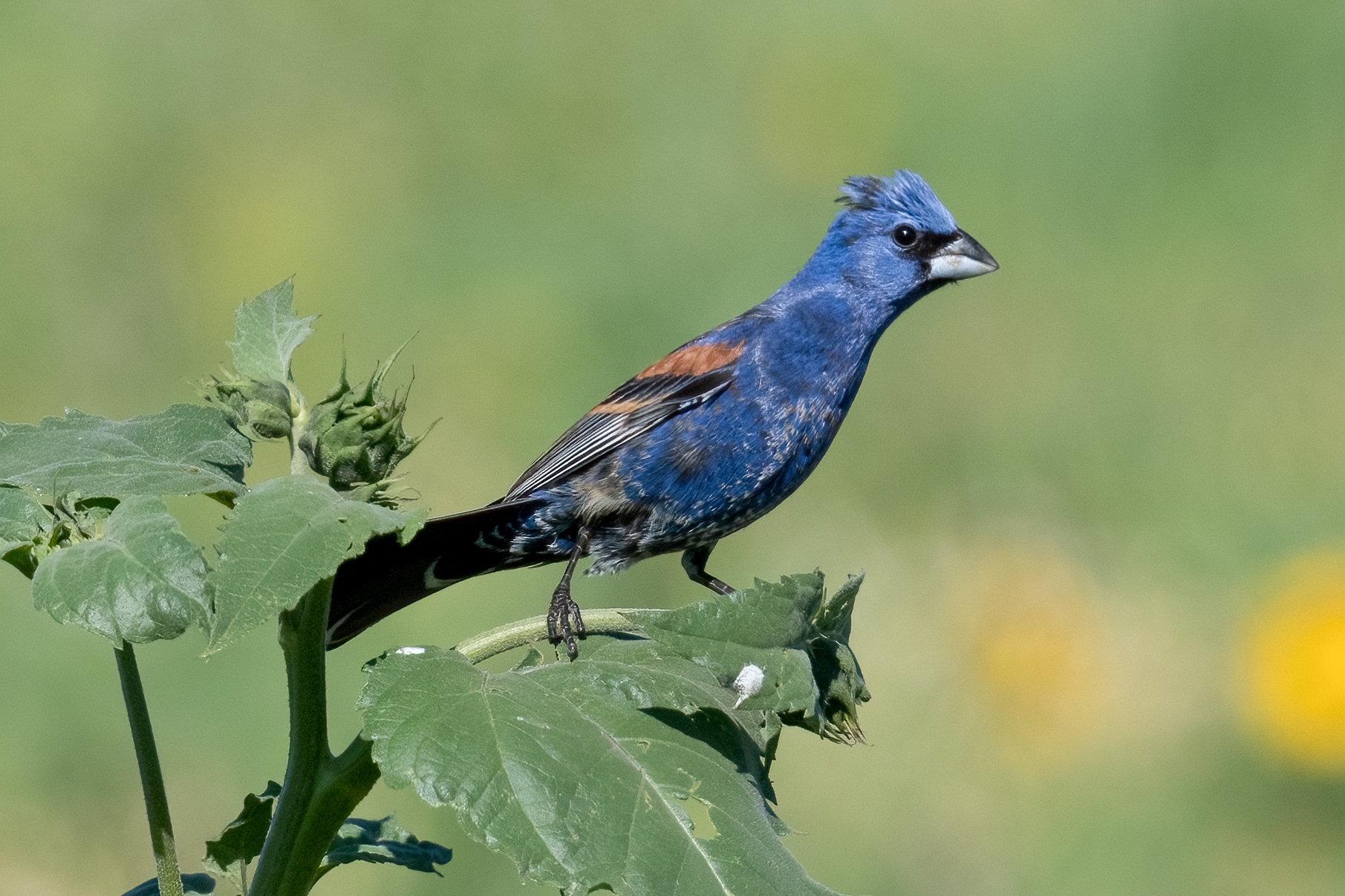
Photo Jonathan Eisen (opens in a new tab) / iNaturalist, CC BY 4.0 (opens in a new tab)
At a glance
- Size
- About 14 to 19 cm long
- Weight
- About 26 to 31 g
- Habitat
- Old fields, hedgerows and roadside shrubs
- Diet
- Insects, especially grasshoppers, and seeds
- In Georgia
- A common summer resident, April to September
- Voice
- A rich, warbling song; a metallic "chink"
- Rabies vector
- No
Identification
- Male
- Deep blue with chestnut wing bars and a large, silver-grey bill
- Female
- Warm brown with chestnut wing bars
- Told apart from
- Indigo bunting, which is smaller with no wing bars
- Where to look
- Shrubby fields and roadsides
Behaviour
Blue grosbeaks eat many grasshoppers and sing from wires and shrubs. They often flick their tails.
Why they matter
Blue grosbeaks eat many grasshoppers and other insects in fields. They rely on old fields and hedgerows.
Reproduction and lifecycle
Nest — A cup in a shrub, often decorated with snakeskin
Eggs — Usually three to five
Incubation — About 11 to 12 days
Chicks — Fed by both parents
Lifespan — Several years
Living around people
- Hedgerows and old fields left shrubby support them.
Misconceptions
- All blue birds are bluebirds or jays. The blue grosbeak has a massive bill.
Related species
Seasonal activity
When this species is breeding, and when there are nests on the ground. Mowing during the shaded months is how most nests are found.
| Jan | Feb | Mar | Apr | May | Jun | Jul | Aug | Sep | Oct | Nov | Dec | |
|---|---|---|---|---|---|---|---|---|---|---|---|---|
| Breeding | Jan: no | Feb: no | Mar: no | Apr: no | May: no | Jun: no | Jul: no | Aug: no | Sep: no | Oct: no | Nov: no | Dec: no |
| Active nests | Jan: no | Feb: no | Mar: no | Apr: no | May: no | Jun: no | Jul: no | Aug: no | Sep: no | Oct: no | Nov: no | Dec: no |
| Notes | In Central America | In Central America | In Central America | Arriving | Nesting | Nesting | Second broods | Young fledging | Leaving | Last birds | In Central America | In Central America |
Where it lives
Recorded in 73 states and provinces. Each one links to the other animals there, and to the rehabilitators licensed for them.
United States
- Alabamabreeding
- Arizonabreeding
- Arkansasbreeding
- Californiabreeding
- Coloradobreeding
- Delawarebreeding
- District of Columbiabreeding
- Floridabreeding
- Georgiabreeding
- Idahobreeding
- Illinoisbreeding
- Indianabreeding
- Iowabreeding
- Kansasbreeding
- Kentuckybreeding
- Louisianabreeding
- Marylandbreeding
- Massachusettsbreeding
- Michiganbreeding
- Minnesotabreeding
- Mississippibreeding
- Missouribreeding
- Nebraskabreeding
- Nevadabreeding
- New Jerseybreeding
- New Mexicobreeding
- North Carolinabreeding
- North Dakotabreeding
- Ohiobreeding
- Oklahomabreeding
- Pennsylvaniabreeding
- Rhode Islandbreeding
- South Carolinabreeding
- South Dakotabreeding
- Tennesseebreeding
- Texasbreeding
- Utahbreeding
- Virginiabreeding
- West Virginiabreeding
- Wisconsinbreeding
- Wyomingbreeding
Mexico
- Aguascalientes
- Baja Californiabreeding
- Baja California Surin winter
- Campechein winter
- Chiapas
- Chihuahuabreeding
- Coahuilabreeding
- Colimain winter
- Durango
- Guanajuato
- Guerreroin winter
- Hidalgo
- Jalisco
- Mexico City
- Michoacan
- Morelosin winter
- Nayaritin winter
- Nuevo Leonbreeding
- Oaxaca
- Puebla
- Queretaro
- Quintana Rooin winter
- San Luis Potosibreeding
- Sinaloa
- Sonorabreeding
- State of Mexico
- Tabascoin winter
- Tamaulipasbreeding
- Tlaxcala
- Veracruz
- Yucatanin winter
- Zacatecasbreeding
If you found one
Answer a few questions and you will get a specific answer for what you are looking at.
I found an animal