
Species
Indigo bunting
Passerina cyanea
A small, electric-blue bunting that sings all summer long and migrates by the stars.
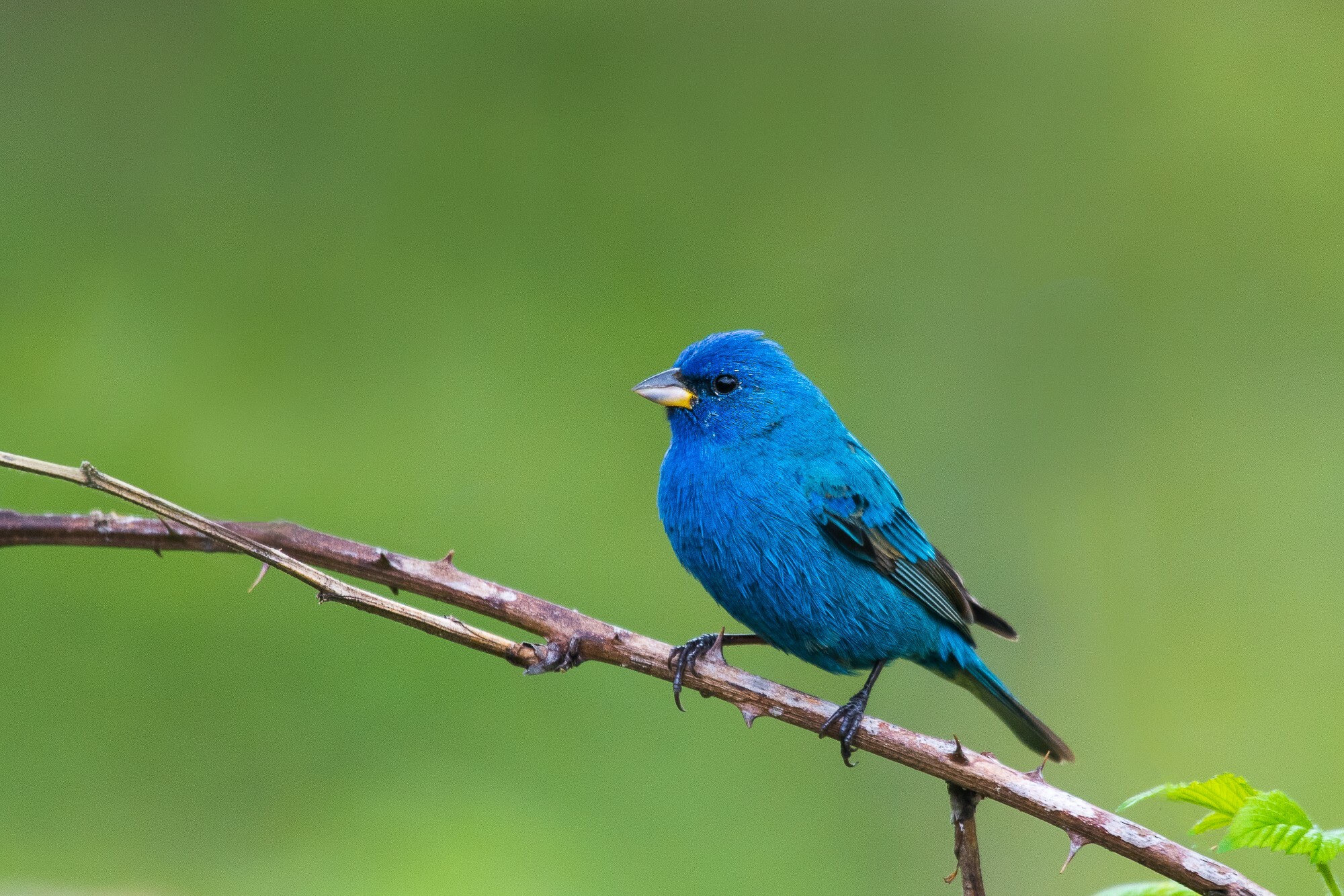
Photo Unknown photographer (opens in a new tab) / iNaturalist, CC0 1.0 (opens in a new tab)
At a glance
- Size
- About 12 to 13 cm long
- Weight
- About 12 to 18 g
- Habitat
- Woodland edges, old fields and roadsides
- Diet
- Insects in summer; seeds in winter
- In Georgia
- A common summer resident, April to October
- Voice
- Paired phrases: "fire-fire, where-where, here-here"
- Rabies vector
- No
Identification
- Male
- Brilliant blue all over
- Female
- Warm brown with faint streaks
- Told apart from
- Blue grosbeak, which is larger with chestnut wing bars
- Where to look
- Roadside shrubs and woodland edges
Behaviour
Indigo buntings migrate at night, using the stars to navigate — a finding from pioneering experiments in planetariums. Young males learn their songs from neighbours.
Why they matter
Indigo buntings have taught scientists much about how birds navigate by the stars. They eat many insects and seeds in old fields.
Reproduction and lifecycle
Nest — A cup in a shrub
Eggs — Usually three or four
Incubation — About 12 to 14 days
Chicks — Fed by the female
Lifespan — Several years
Living around people
- Shrubby field edges support them.
Misconceptions
- Indigo buntings are blue from pigment. Their blue comes from the structure of their feathers.
Related species
Seasonal activity
When this species is breeding, and when there are nests on the ground. Mowing during the shaded months is how most nests are found.
| Jan | Feb | Mar | Apr | May | Jun | Jul | Aug | Sep | Oct | Nov | Dec | |
|---|---|---|---|---|---|---|---|---|---|---|---|---|
| Breeding | Jan: no | Feb: no | Mar: no | Apr: no | May: no | Jun: no | Jul: no | Aug: no | Sep: no | Oct: no | Nov: no | Dec: no |
| Active nests | Jan: no | Feb: no | Mar: no | Apr: no | May: no | Jun: no | Jul: no | Aug: no | Sep: no | Oct: no | Nov: no | Dec: no |
| Notes | In Central America | In Central America | In Central America | Arriving | Nesting | Nesting | Second broods | Young fledging | Migrating | Last birds | In Central America | In Central America |
Where it lives
Recorded in 74 states and provinces. Each one links to the other animals there, and to the rehabilitators licensed for them.
United States
- Alabamabreeding
- Arizonabreeding
- Arkansasbreeding
- Californiabreeding
- Coloradobreeding
- Connecticutbreeding
- Delawarebreeding
- District of Columbiabreeding
- Florida
- Georgiabreeding
- Illinoisbreeding
- Indianabreeding
- Iowabreeding
- Kansasbreeding
- Kentuckybreeding
- Louisianabreeding
- Mainebreeding
- Marylandbreeding
- Massachusettsbreeding
- Michiganbreeding
- Minnesotabreeding
- Mississippibreeding
- Missouribreeding
- Nebraskabreeding
- Nevadabreeding
- New Hampshirebreeding
- New Jerseybreeding
- New Mexicobreeding
- New Yorkbreeding
- North Carolinabreeding
- North Dakotabreeding
- Ohiobreeding
- Oklahomabreeding
- Pennsylvaniabreeding
- Rhode Islandbreeding
- South Carolinabreeding
- South Dakotabreeding
- Tennesseebreeding
- Texasbreeding
- Utahbreeding
- Vermontbreeding
- Virginiabreeding
- West Virginiabreeding
- Wisconsinbreeding
Mexico
- Aguascalientespassing through
- Campechein winter
- Chiapasin winter
- Coahuilapassing through
- Colimain winter
- Guanajuatoin winter
- Guerreroin winter
- Hidalgoin winter
- Jaliscoin winter
- Mexico Cityin winter
- Michoacanin winter
- Morelosin winter
- Nayaritin winter
- Nuevo Leonin winter
- Oaxacain winter
- Pueblain winter
- Queretaroin winter
- Quintana Rooin winter
- San Luis Potosiin winter
- Sinaloain winter
- State of Mexicoin winter
- Tabascoin winter
- Tamaulipasin winter
- Veracruzin winter
- Yucatanin winter
If you found one
Answer a few questions and you will get a specific answer for what you are looking at.
I found an animal