
Species
River cooter
Pseudemys concinna
A big basking turtle of Georgia's rivers, grazing water plants in the current.
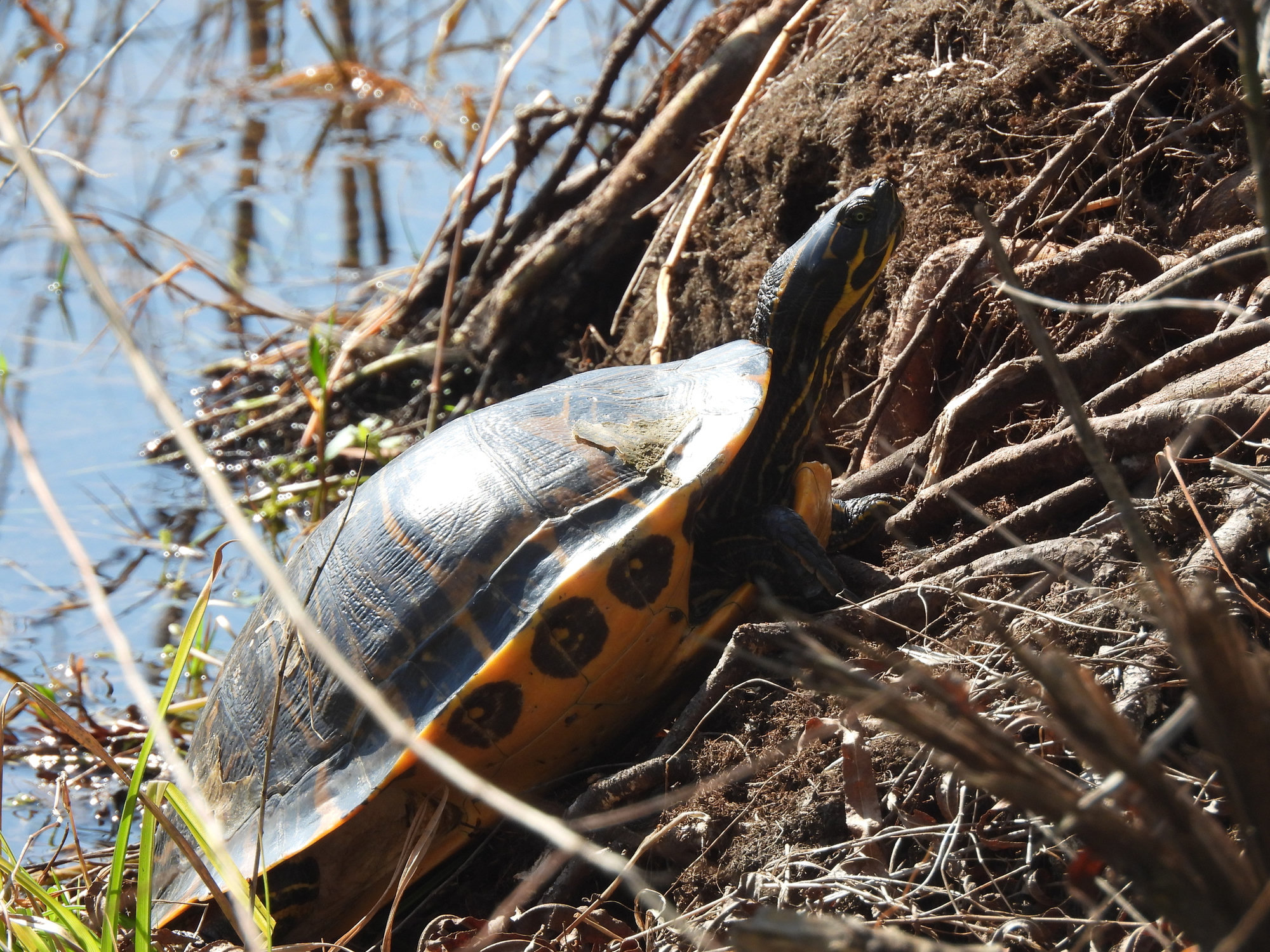
Photo ncb1221 (opens in a new tab) / iNaturalist, CC BY 4.0 (opens in a new tab)
At a glance
- Size
- Shell usually 23 to 33 cm long
- Habitat
- Rivers and large streams with a current; also lakes and reservoirs
- Diet
- Mostly water plants and algae; some snails and insects
- In Georgia
- Common in rivers statewide
- Rabies vector
- No
Identification
- Key marks
- Dark, flattened shell with a light C-shaped mark on the second scute of each side; yellow stripes on head and neck
- Told apart from
- Coastal plain cooter, whose underside is plain yellow rather than marked with dark lines along the seams
- Told apart from
- Pond slider, which has a yellow blotch or red stripe behind the eye
- Where to look
- Basking on logs and rocks in rivers, often in groups
Behaviour
River cooters are strong swimmers that live where water moves. They spend long hours basking and dive at the first sign of a person. Nearly all their food is plants, which makes them the grazers of Georgia's rivers.
Why they matter
By grazing water plants and algae, cooters keep them in balance, and their droppings return nutrients to the river. Their eggs and hatchlings feed many predators along the bank.
Reproduction and lifecycle
Nest — Dug in sandy soil near water
Eggs — Usually 12 to 20
Incubation — About 80 to 100 days
Hatchlings — Some overwinter in the nest
Maturity — At about 8 to 12 years
Lifespan — Several decades
Living around people
- Help a cooter across a road in the direction it was heading, held by the sides of the shell.
- Anglers can help by retrieving discarded fishing line, which entangles basking turtles.
Misconceptions
- Turtles basking in a line are sick or stranded. Basking warms them and dries their shells; it is healthy behaviour.
Related species
Seasonal activity
When this species is breeding, and when there are nests on the ground. Mowing during the shaded months is how most nests are found.
| Jan | Feb | Mar | Apr | May | Jun | Jul | Aug | Sep | Oct | Nov | Dec | |
|---|---|---|---|---|---|---|---|---|---|---|---|---|
| Breeding | Jan: no | Feb: no | Mar: no | Apr: no | May: no | Jun: no | Jul: no | Aug: no | Sep: no | Oct: no | Nov: no | Dec: no |
| Active nests | Jan: no | Feb: no | Mar: no | Apr: no | May: no | Jun: no | Jul: no | Aug: no | Sep: no | Oct: no | Nov: no | Dec: no |
| Notes | Inactive on cold days | Basking on warm days | Active and basking | Courtship | Females nesting | Females nesting | Nesting ends | Hatching begins | Hatchlings emerge or stay in the nest over winter | Feeding and basking | Slowing down | Mostly inactive |
Where it lives
Recorded in 26 states and provinces. Each one links to the other animals there, and to the rehabilitators licensed for them.
United States
- Alabama
- Arizonaintroduced
- Arkansas
- Californiaintroduced
- District of Columbiaintroduced
- Florida
- Georgia
- Illinois
- Kansas
- Kentucky
- Louisiana
- Marylandintroduced
- Mississippi
- Missouri
- New Jerseyintroduced
- New Yorkintroduced
- North Carolina
- Ohio
- Oklahoma
- Pennsylvaniaintroduced
- South Carolina
- Tennessee
- Texas
- Virginia
- Washingtonintroduced
If you found one
Answer a few questions and you will get a specific answer for what you are looking at.
I found an animal