
Species
Florida red-bellied cooter
Pseudemys nelsoni
A big basking turtle of southeast Georgia's swamps that sometimes lays its eggs inside alligator nests.
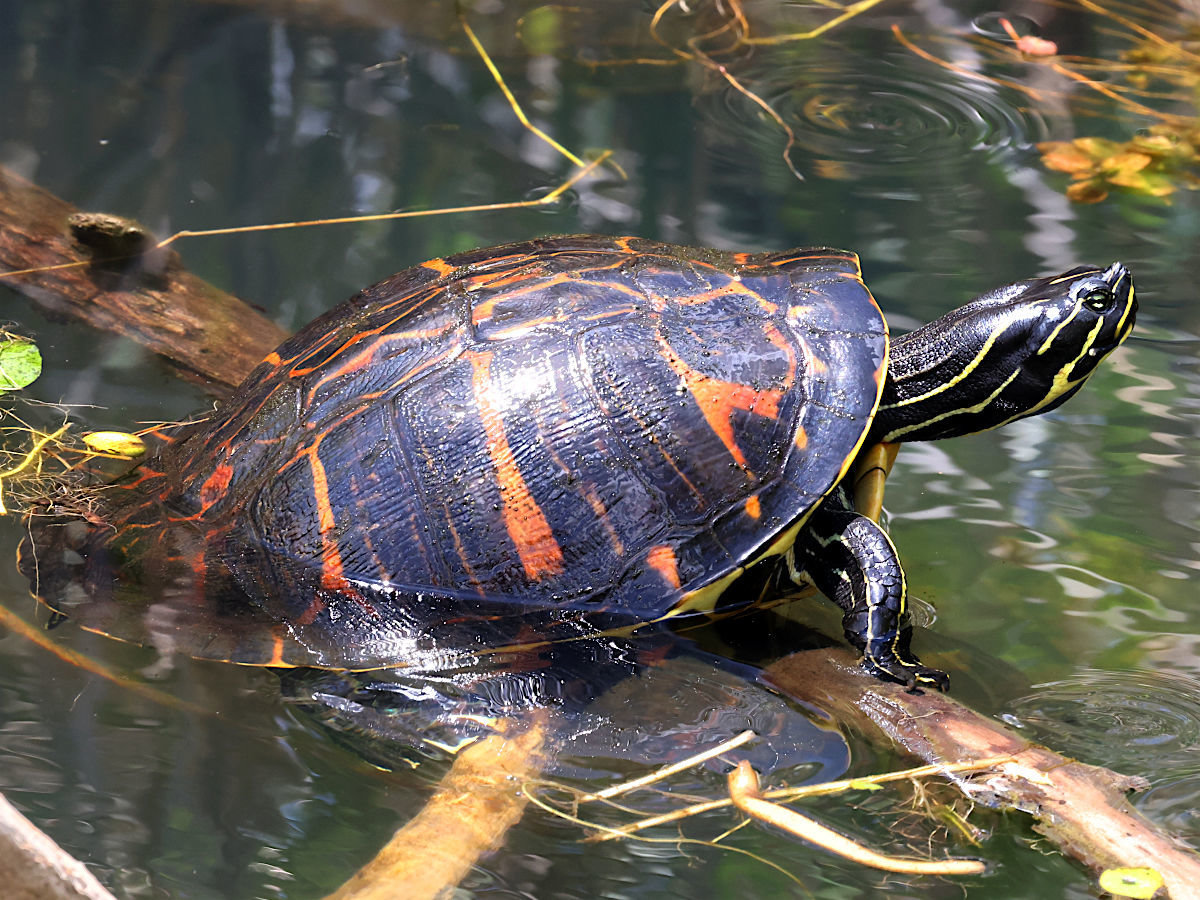
Photo Peter Chen 2.0 (opens in a new tab) / iNaturalist, CC BY 4.0 (opens in a new tab)
At a glance
- Size
- Shell usually 25 to 34 cm long
- Habitat
- Swamps, marshes, ponds, lakes and spring runs with dense water plants
- Diet
- Water plants and algae
- In Georgia
- Southeast Georgia, including the Okefenokee Swamp
- Rabies vector
- No
Identification
- Key marks
- Dark, high-arched shell with red or orange bars; reddish underside; a notch at the tip of the upper jaw with a cusp on each side
- Told apart from
- Coastal plain cooter, which has a plain yellow underside and no jaw notch
- Where to look
- Basking on logs and mats of floating plants in quiet water
Behaviour
Florida red-bellied cooters graze dense beds of water plants and bask for long periods. Females are known to dig their nests into the mounds alligators build, where the eggs gain warmth and a formidable guard.
Why they matter
They are grazers of southern swamps and spring runs, and their eggs and young feed many predators. The shared use of alligator nests is one of the more remarkable partnerships among Georgia's reptiles.
Reproduction and lifecycle
Nest — Dug in sandy soil, or into an alligator's nest mound
Eggs — Usually 7 to 25, in several clutches a year
Incubation — About 60 to 75 days
Hatchlings — Brightly patterned, with a green shell and yellow lines
Maturity — At several years
Lifespan — Decades
Living around people
- Help one across a road in the direction it was heading, held by the sides of the shell.
Misconceptions
- Turtle eggs in an alligator nest were stolen by the alligator. The turtle put them there.
Related species
Seasonal activity
When this species is breeding, and when there are nests on the ground. Mowing during the shaded months is how most nests are found.
| Jan | Feb | Mar | Apr | May | Jun | Jul | Aug | Sep | Oct | Nov | Dec | |
|---|---|---|---|---|---|---|---|---|---|---|---|---|
| Breeding | Jan: no | Feb: no | Mar: no | Apr: no | May: no | Jun: no | Jul: no | Aug: no | Sep: no | Oct: no | Nov: no | Dec: no |
| Active nests | Jan: no | Feb: no | Mar: no | Apr: no | May: no | Jun: no | Jul: no | Aug: no | Sep: no | Oct: no | Nov: no | Dec: no |
| Notes | Basking on warm days | Basking on warm days | Active | Courtship | Nesting | Nesting | Nesting | Hatching | Hatchlings emerge | Feeding | Slowing down | Mostly inactive |
Where it lives
Recorded in 2 states and provinces. Each one links to the other animals there, and to the rehabilitators licensed for them.
If you found one
Answer a few questions and you will get a specific answer for what you are looking at.
I found an animal