
Species
American alligator
Alligator mississippiensis
Georgia's only crocodilian: a patient predator of the rivers, swamps and marshes below the fall line.
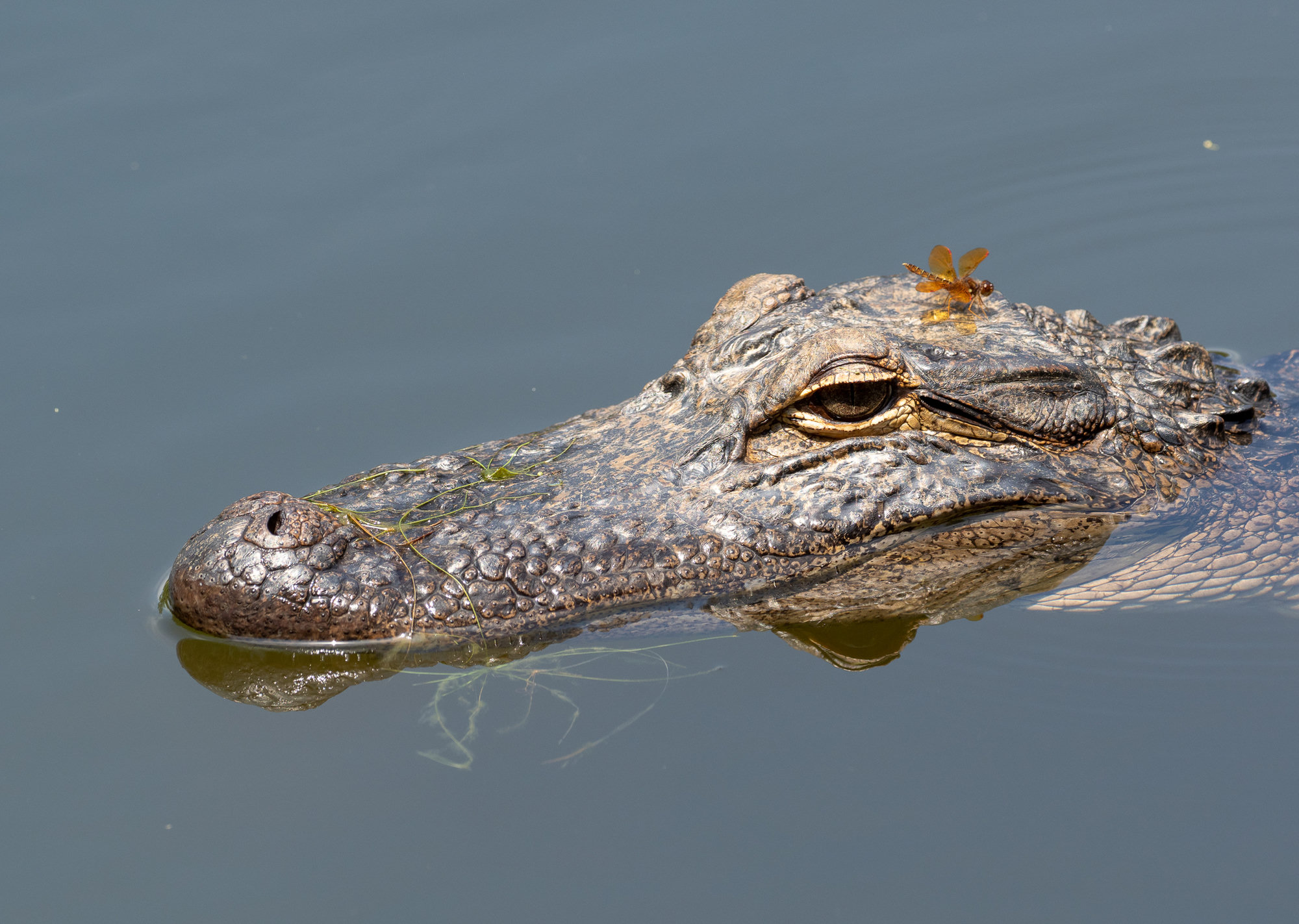
Photo Forest Botial-Jarvis (opens in a new tab) / iNaturalist, CC BY 4.0 (opens in a new tab)
At a glance
- Size
- Adults usually 2 to 4 m long; the largest males exceed 4 m
- Weight
- Adult females often 40 to 90 kg; large males over 200 kg
- Habitat
- Rivers, swamps, marshes, lakes, ponds and brackish coastal marsh
- Diet
- Fish, turtles, snakes, birds and mammals; young eat insects, snails and crayfish
- In Georgia
- Common in the Coastal Plain, below the fall line; scarce farther north
- Voice
- Deep bellows in spring; hatchlings grunt to call their mother
- Rabies vector
- No
Identification
- Key marks
- Dark grey to black, with a broad, rounded snout; young are black with bold yellow crossbands
- Told apart from
- No crocodile lives in Georgia; the alligator is the only crocodilian here
- Where to look
- Basking on banks and logs on warm days, or floating with only eyes and nostrils showing
Behaviour
Alligators are ambush hunters that can wait motionless for hours. Being cold-blooded, they bask to warm up and slow almost to a stop in winter, sheltering in dens dug into banks. In a freeze an alligator can keep its snout above the ice and ride out the cold. Females guard their nests and stay with their young for a year or more, answering their grunts.
Why they matter
In droughts, the holes alligators dig and keep open are often the last water for miles, and fish, turtles, frogs and wading birds survive in them. Their abandoned nest mounds are used by turtles laying their own eggs. Alligators were hunted close to extinction in the last century and have recovered across the Southeast, one of the clearest conservation successes on the continent.
Reproduction and lifecycle
Nest — A mound of vegetation and mud built by the female near water
Eggs — Usually 20 to 50
Incubation — About 60 to 70 days; nest temperature decides whether each egg becomes male or female
Young — About 20 cm long at hatching; they stay near the mother for one to two years
Maturity — At about 10 years
Lifespan — Wild alligators commonly live 35 to 50 years
Living around people
- Keep well back from any alligator, and further from one guarding a nest or young.
- Never feed an alligator. A fed alligator learns to approach people, and feeding them is illegal in Georgia and Florida.
- Keep dogs on a lead near fresh water in the Coastal Plain; alligators treat them as prey.
- An alligator crossing a road or resting in a pond in spring is usually moving between waters, and it will move on if left alone.
Misconceptions
- An alligator on land will chase you. Alligators lunge a short way at prey near the water's edge but do not run people down; walking away is enough.
- Baby alligators on their own have been abandoned. The mother is almost always nearby and will defend them.
Related species
Seasonal activity
When this species is breeding, and when there are nests on the ground. Mowing during the shaded months is how most nests are found.
| Jan | Feb | Mar | Apr | May | Jun | Jul | Aug | Sep | Oct | Nov | Dec | |
|---|---|---|---|---|---|---|---|---|---|---|---|---|
| Breeding | Jan: no | Feb: no | Mar: no | Apr: no | May: no | Jun: no | Jul: no | Aug: no | Sep: no | Oct: no | Nov: no | Dec: no |
| Active nests | Jan: no | Feb: no | Mar: no | Apr: no | May: no | Jun: no | Jul: no | Aug: no | Sep: no | Oct: no | Nov: no | Dec: no |
| Notes | Sheltering in dens; basking on warm days | Sheltering; basking on warm days | Becoming active as water warms | Bellowing and courtship begin | Courtship and mating | Females build nest mounds and lay | Females guard nests | Hatching begins | Hatchlings with the mother | Feeding before winter | Slowing down as water cools | Sheltering in dens |
Where it lives
Recorded in 10 states and provinces. Each one links to the other animals there, and to the rehabilitators licensed for them.
If you found one
Answer a few questions and you will get a specific answer for what you are looking at.
I found an animal