
Species
Red-winged blackbird
Agelaius phoeniceus
The blackbird with red shoulder patches that calls 'conk-la-ree!' from every Georgia marsh.
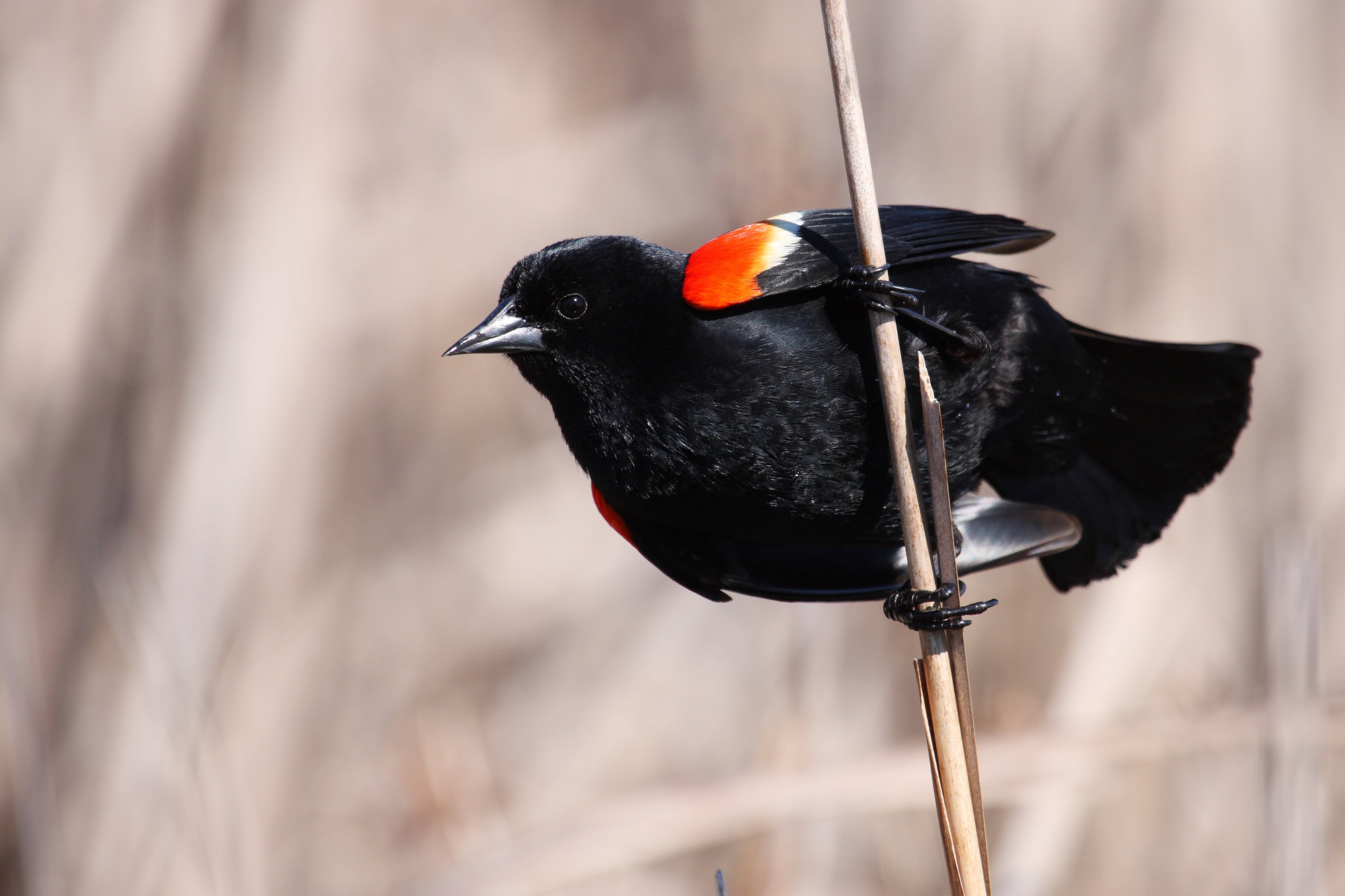
Photo Cephas (opens in a new tab) / Wikimedia Commons, CC BY-SA 3.0 (opens in a new tab)
At a glance
- Size
- About 17 to 23 cm long
- Weight
- About 32 to 77 g
- Habitat
- Marshes, wet fields, ditches and pastures
- Diet
- Insects in summer; seeds and grain in winter
- In Georgia
- Abundant resident statewide
- Voice
- A gurgling "conk-la-ree"
- Rabies vector
- No
Identification
- Male
- Glossy black with red and yellow shoulder patches
- Female
- Dark brown and heavily streaked
- Told apart from
- Common grackle, which is larger with a long tail
- Where to look
- Marshes, ditches and fields
Behaviour
Male red-winged blackbirds defend territories from cattails and fence posts, flashing their red shoulders. In winter they form huge flocks with other blackbirds.
Why they matter
Red-winged blackbirds are one of the most abundant birds in North America. They eat many insects in summer, including crop pests.
Reproduction and lifecycle
Nest — A woven cup attached to marsh plants
Eggs — Usually three or four
Incubation — About 11 to 13 days
Chicks — Fed by both parents
Flight — At about 11 to 14 days
Lifespan — Several years
Living around people
- Males defending nests may dive at people near marshes; moving on ends it.
Misconceptions
- Blackbirds are pests. They eat many harmful insects.
Related species
Seasonal activity
When this species is breeding, and when there are nests on the ground. Mowing during the shaded months is how most nests are found.
| Jan | Feb | Mar | Apr | May | Jun | Jul | Aug | Sep | Oct | Nov | Dec | |
|---|---|---|---|---|---|---|---|---|---|---|---|---|
| Breeding | Jan: no | Feb: no | Mar: no | Apr: no | May: no | Jun: no | Jul: no | Aug: no | Sep: no | Oct: no | Nov: no | Dec: no |
| Active nests | Jan: no | Feb: no | Mar: no | Apr: no | May: no | Jun: no | Jul: no | Aug: no | Sep: no | Oct: no | Nov: no | Dec: no |
| Notes | Winter flocks | Males singing | Nesting | Nesting | Chicks | Second broods | Young fledging | Flocks forming | Flocks | Flocks | Flocks | Flocks |
Where it lives
Recorded in 91 states and provinces. Each one links to the other animals there, and to the rehabilitators licensed for them.
United States
- Alabama
- Alaska
- Arizona
- Arkansas
- California
- Colorado
- Connecticutbreeding
- Delaware
- District of Columbia
- Florida
- Georgia
- Idaho
- Illinoisbreeding
- Indianabreeding
- Iowabreeding
- Kansas
- Kentuckybreeding
- Louisiana
- Mainebreeding
- Maryland
- Massachusettsbreeding
- Michiganbreeding
- Minnesotabreeding
- Mississippi
- Missouri
- Montanabreeding
- Nebraskabreeding
- Nevada
- New Hampshirebreeding
- New Jersey
- New Mexico
- New Yorkbreeding
- North Carolina
- North Dakotabreeding
- Ohiobreeding
- Oklahoma
- Oregon
- Pennsylvaniabreeding
- Rhode Islandbreeding
- South Carolina
- South Dakotabreeding
- Tennessee
- Texas
- Utah
- Vermontbreeding
- Virginia
- Washington
- West Virginiabreeding
- Wisconsinbreeding
- Wyomingbreeding
Canada
Mexico
- Baja California
- Baja California Sur
- Campeche
- Chiapas
- Chihuahua
- Coahuila
- Durango
- Guanajuatoin winter
- Hidalgo
- Jalisco
- Mexico City
- Michoacan
- Morelos
- Nayarit
- Nuevo Leon
- Oaxaca
- Puebla
- Queretaro
- Quintana Roo
- San Luis Potosiin winter
- Sinaloa
- Sonora
- State of Mexico
- Tabasco
- Tamaulipas
- Tlaxcalain winter
- Veracruz
- Yucatan
- Zacatecaspassing through
If you found one
Answer a few questions and you will get a specific answer for what you are looking at.
I found an animal