
Species
Rainbow snake
Farancia erytrogramma
A gleaming blue-black snake striped with red and yellow that lives almost entirely out of sight.
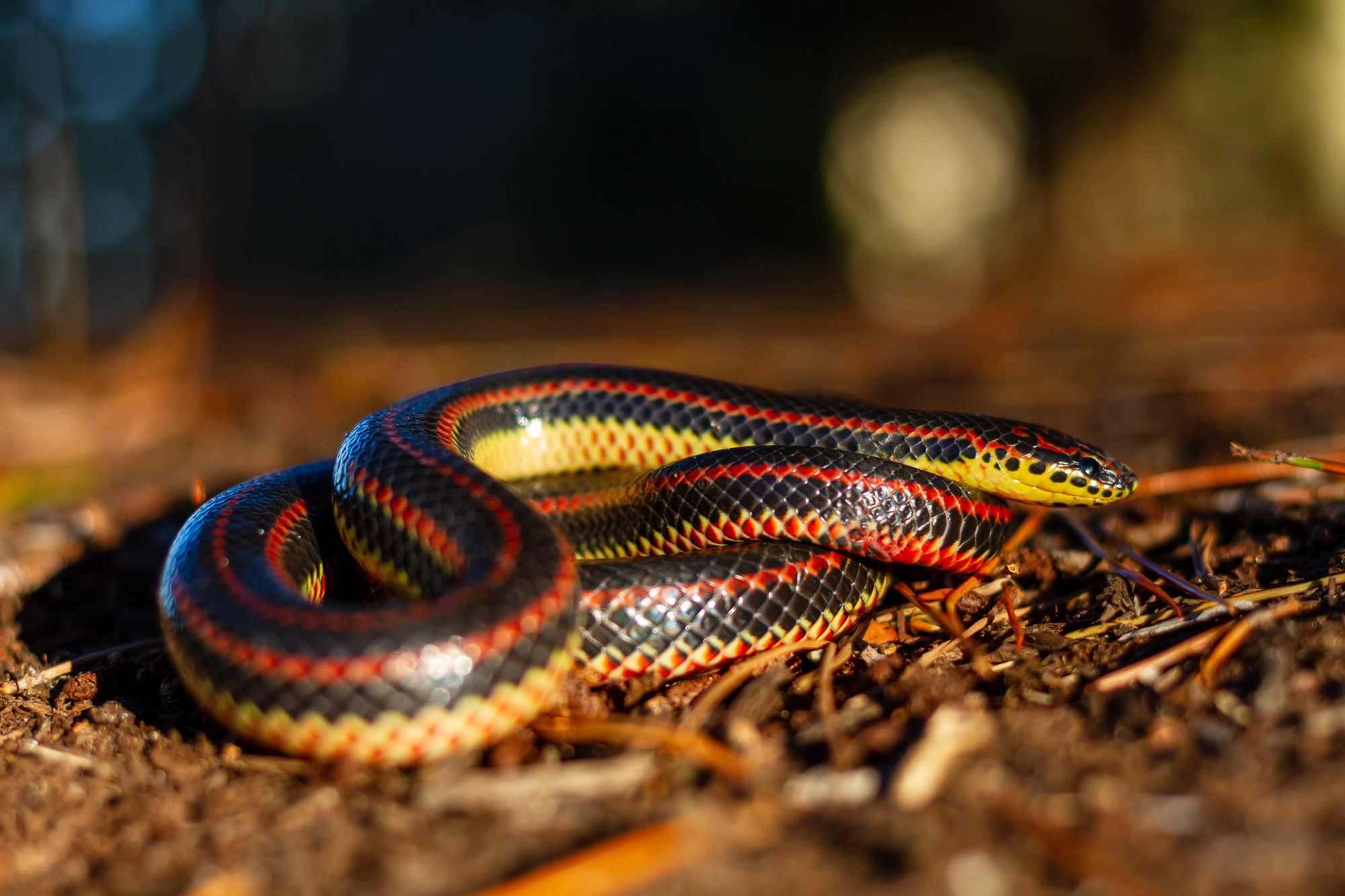
Photo Joshua Liverman (opens in a new tab) / iNaturalist, CC BY 4.0 (opens in a new tab)
At a glance
- Size
- Usually 90 to 140 cm long
- Habitat
- Blackwater streams, rivers, swamps and tidal marsh
- Diet
- American eels
- In Georgia
- The Coastal Plain
- Venomous
- No
- Rabies vector
- No
Identification
- Key marks
- Iridescent blue-black with three red stripes along the back; red and yellow sides and belly
- Told apart from
- Mudsnake, which has red bars on its sides rather than stripes along the back
- Where to look
- Very rarely seen; sometimes found crossing roads at night
Behaviour
Rainbow snakes burrow in sand and mud along waterways and eat almost nothing but American eels once grown. They are among the least often seen snakes in the Southeast.
Why they matter
Their dependence on eels ties them to the health of eel populations, which migrate between rivers and the sea.
Reproduction and lifecycle
Eggs — Usually 20 to 50
Nest — In sandy soil near water
Incubation — About 8 to 12 weeks
Hatchlings — About 20 cm long
Maturity — In a few years
Lifespan — Over 15 years
Living around people
- It is harmless and almost never bites.
Misconceptions
- Brightly coloured snakes are venomous. The rainbow snake is harmless.
Related species
Seasonal activity
When this species is breeding, and when there are nests on the ground. Mowing during the shaded months is how most nests are found.
| Jan | Feb | Mar | Apr | May | Jun | Jul | Aug | Sep | Oct | Nov | Dec | |
|---|---|---|---|---|---|---|---|---|---|---|---|---|
| Breeding | Jan: no | Feb: no | Mar: no | Apr: no | May: no | Jun: no | Jul: no | Aug: no | Sep: no | Oct: no | Nov: no | Dec: no |
| Active nests | Jan: no | Feb: no | Mar: no | Apr: no | May: no | Jun: no | Jul: no | Aug: no | Sep: no | Oct: no | Nov: no | Dec: no |
| Notes | Buried | Buried | Emerging | Active | Mating | Active | Laying | Guarding eggs | Hatching | Young active | Buried | Buried |
Where it lives
Recorded in 5 states and provinces. Each one links to the other animals there, and to the rehabilitators licensed for them.
United States
If you found one
Answer a few questions and you will get a specific answer for what you are looking at.
I found an animal