
Species
Black swampsnake
Seminatrix pygaea
A small, glossy black snake with a red belly, hidden in the plants of southern swamps.
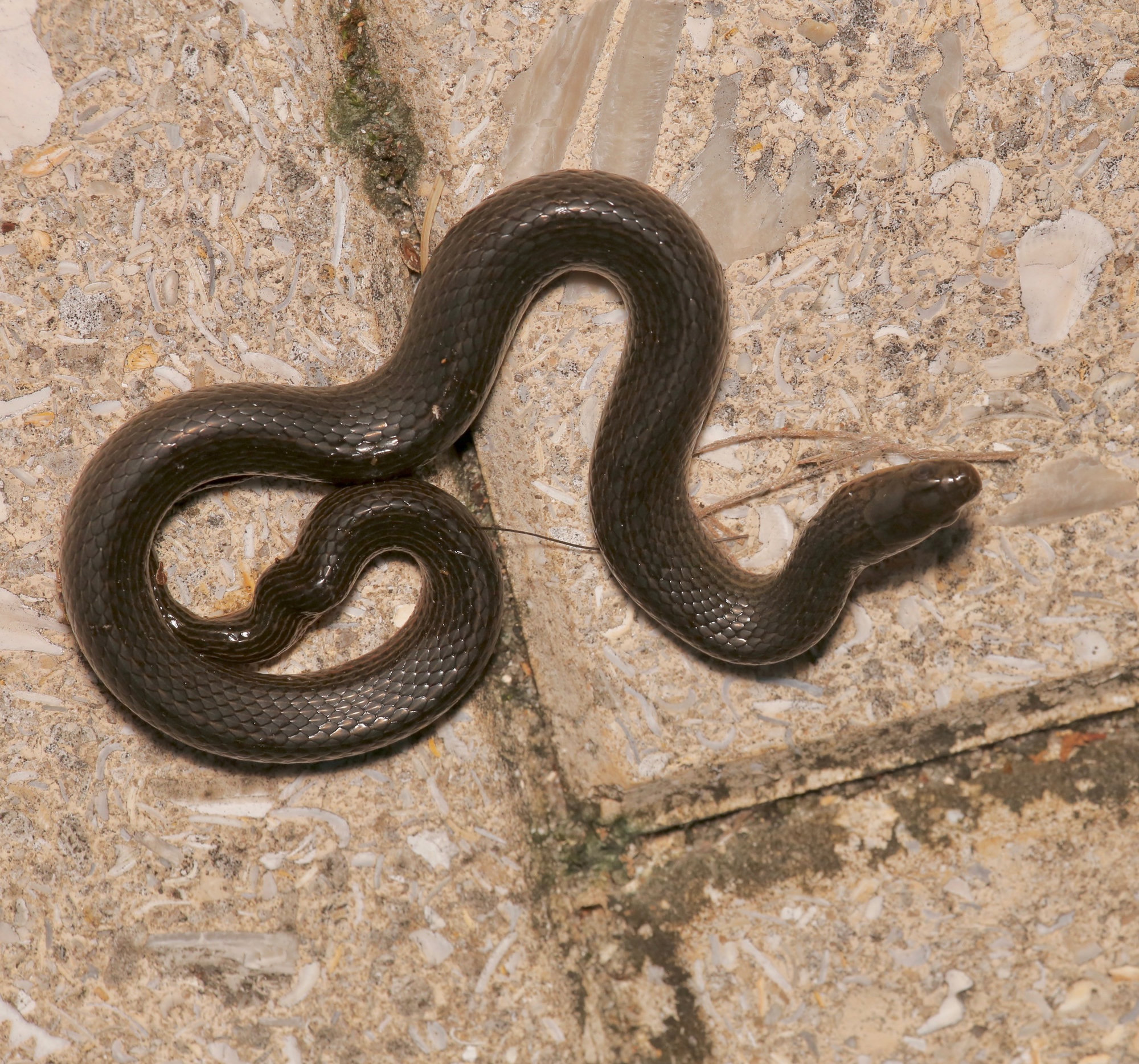
Photo Laura Gaudette (opens in a new tab) / iNaturalist, CC BY 4.0 (opens in a new tab)
At a glance
- Size
- Usually 25 to 40 cm long
- Habitat
- Cypress ponds, marshes, Carolina bays and floating vegetation
- Diet
- Earthworms, leeches, small fish, tadpoles and salamanders
- In Georgia
- The southern Coastal Plain
- Venomous
- No
- Rabies vector
- No
Identification
- Key marks
- Small, glossy black with a bright red or orange belly
- Told apart from
- Mudsnake, which is much larger with red bars reaching up the sides
- Where to look
- Among floating plants and water hyacinth
Behaviour
It spends almost all its time among wet vegetation, hunting small aquatic animals. Its populations rise and fall with droughts that dry its wetlands.
Why they matter
It is a small predator of southern wetlands and a sign that seasonal ponds and bays are still functioning.
Reproduction and lifecycle
Young — Born live, usually 2 to 14
Size at birth — About 12 cm
Maturity — In one to two years
Breeding — Every year
Lifespan — A few years
Habits — Aquatic
Living around people
- It is harmless; wetland drainage is its greatest threat.
Misconceptions
- A black snake with a red belly is venomous. This one is harmless.
Related species
Seasonal activity
When this species is breeding, and when there are nests on the ground. Mowing during the shaded months is how most nests are found.
| Jan | Feb | Mar | Apr | May | Jun | Jul | Aug | Sep | Oct | Nov | Dec | |
|---|---|---|---|---|---|---|---|---|---|---|---|---|
| Breeding | Jan: no | Feb: no | Mar: no | Apr: no | May: no | Jun: no | Jul: no | Aug: no | Sep: no | Oct: no | Nov: no | Dec: no |
| Active nests | Jan: no | Feb: no | Mar: no | Apr: no | May: no | Jun: no | Jul: no | Aug: no | Sep: no | Oct: no | Nov: no | Dec: no |
| Notes | Sheltering | Active on warm days | Active | Active | Mating | Active | Young born | Young born | Active | Active | Active on warm days | Sheltering |
Where it lives
Recorded in 4 states and provinces. Each one links to the other animals there, and to the rehabilitators licensed for them.
United States
If you found one
Answer a few questions and you will get a specific answer for what you are looking at.
I found an animal