
Species
Glossy swampsnake
Liodytes rigida
A shiny, secretive snake of southern wetlands with teeth shaped for gripping hard-shelled crayfish.
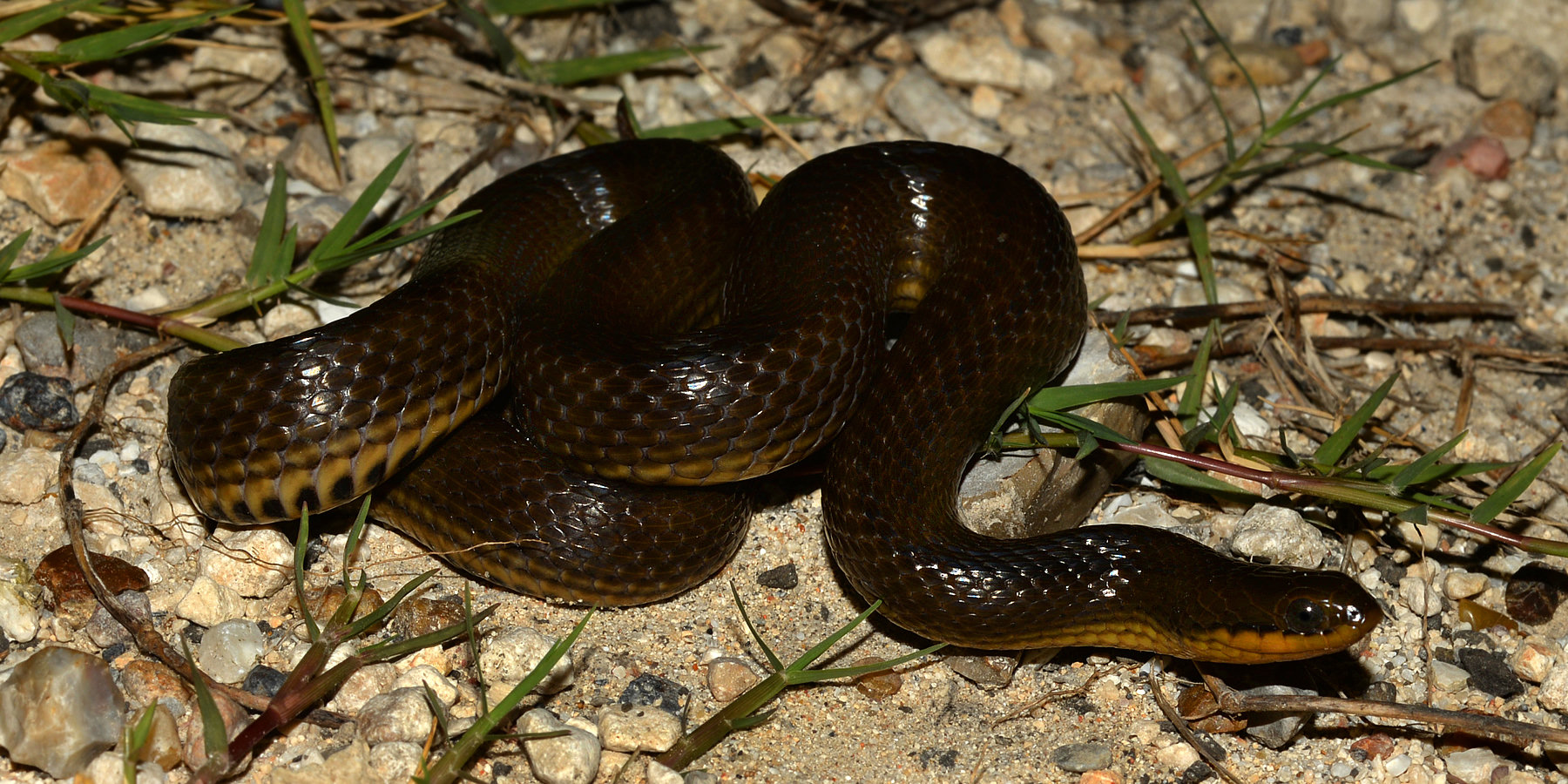
Photo William L. Farr (opens in a new tab) / Wikimedia Commons, CC BY-SA 4.0 (opens in a new tab)
At a glance
- Size
- Usually 35 to 60 cm long
- Habitat
- Swamps, marshes, ditches and cypress ponds
- Diet
- Crayfish, including hard-shelled ones
- In Georgia
- The Coastal Plain
- Venomous
- No
- Rabies vector
- No
Identification
- Key marks
- Glossy brown with faint dark stripes; belly yellow with two rows of dark spots
- Told apart from
- Striped swampsnake, which has yellow stripes along the sides
- Where to look
- Rarely seen; under debris near water
Behaviour
Unusually, it has hinged teeth that help it grip and swallow hard-shelled crayfish. It is secretive and spends most of its time in burrows and under cover.
Why they matter
It is one of several southeastern snakes that specialise in crayfish, a sign of healthy wetlands.
Reproduction and lifecycle
Young — Born live, usually 6 to 14
Size at birth — About 15 to 20 cm
Maturity — In two to three years
Breeding — Every year
Lifespan — Several years
Diet — Crayfish from birth
Living around people
- It is harmless and rarely met.
Misconceptions
- Wetland snakes are all dangerous. This one is harmless.
Related species
Seasonal activity
When this species is breeding, and when there are nests on the ground. Mowing during the shaded months is how most nests are found.
| Jan | Feb | Mar | Apr | May | Jun | Jul | Aug | Sep | Oct | Nov | Dec | |
|---|---|---|---|---|---|---|---|---|---|---|---|---|
| Breeding | Jan: no | Feb: no | Mar: no | Apr: no | May: no | Jun: no | Jul: no | Aug: no | Sep: no | Oct: no | Nov: no | Dec: no |
| Active nests | Jan: no | Feb: no | Mar: no | Apr: no | May: no | Jun: no | Jul: no | Aug: no | Sep: no | Oct: no | Nov: no | Dec: no |
| Notes | Sheltering | Active on warm days | Active | Active | Mating | Active | Young born | Young born | Active | Active | Sheltering | Sheltering |
Where it lives
Recorded in 9 states and provinces. Each one links to the other animals there, and to the rehabilitators licensed for them.
If you found one
Answer a few questions and you will get a specific answer for what you are looking at.
I found an animal