
Species
Queensnake
Regina septemvittata
A slim, striped water snake of rocky streams that eats almost nothing but freshly moulted crayfish.
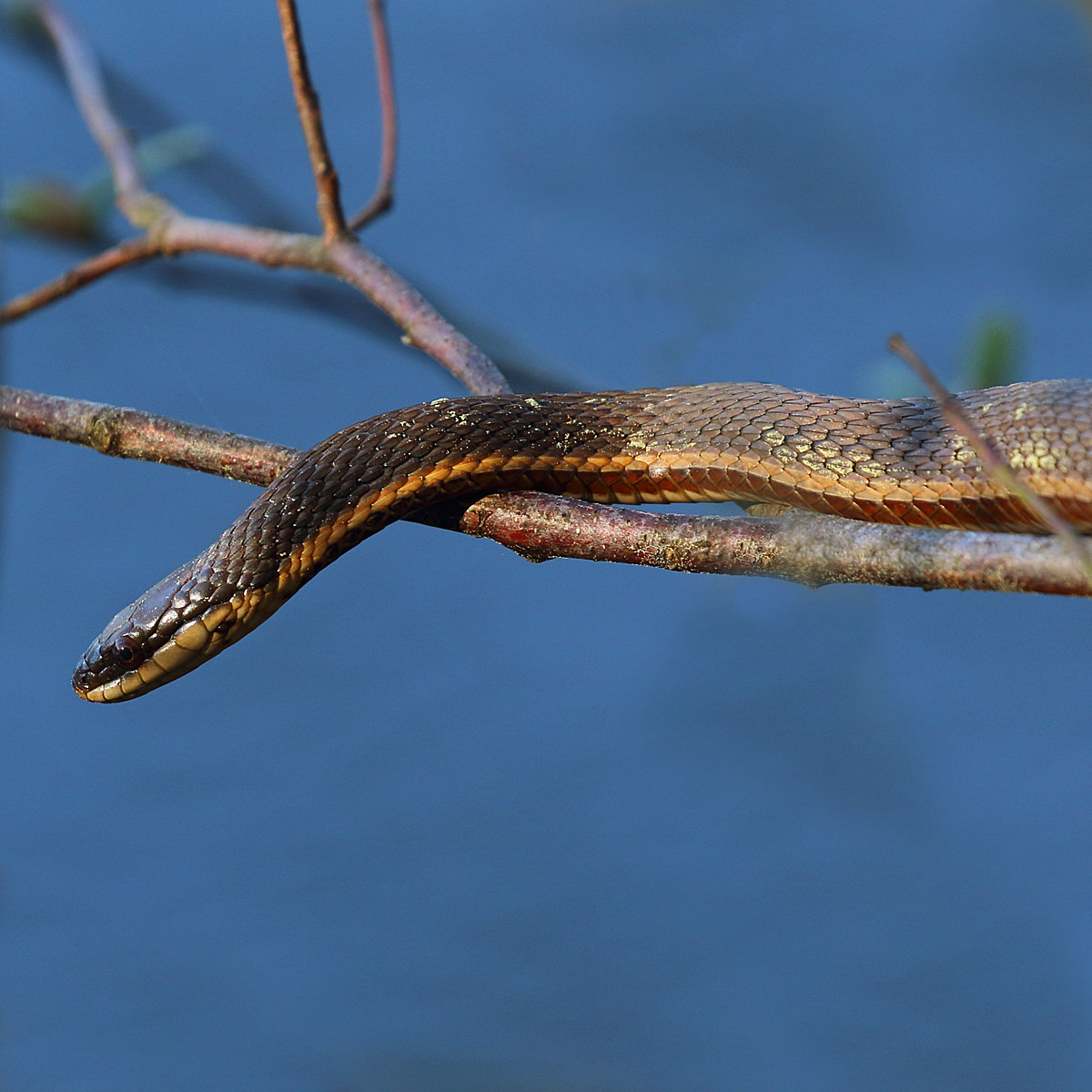
Photo Dan Vickers (opens in a new tab) / iNaturalist, CC BY 4.0 (opens in a new tab)
At a glance
- Size
- Usually 38 to 61 cm long
- Habitat
- Clear, rocky streams with plenty of crayfish
- Diet
- Crayfish, especially soft ones that have just shed
- In Georgia
- The mountains and Piedmont
- Venomous
- No
- Rabies vector
- No
Identification
- Key marks
- Olive-brown with a yellow stripe low on each side; belly yellow with four brown stripes
- Told apart from
- Garter and ribbon snakes, which have a stripe down the middle of the back
- Where to look
- Under rocks in streams and basking on branches over water
Behaviour
Queensnakes hunt crayfish under stream rocks, taking them just after they have moulted, while their shells are soft and their claws harmless.
Why they matter
They need clean water and healthy crayfish populations, so their presence says a lot about a stream's health.
Reproduction and lifecycle
Young — Born live, usually 5 to 20
Size at birth — About 18 to 23 cm
Maturity — In two to three years
Breeding — Every year
Lifespan — Several years
Diet — Crayfish from birth
Living around people
- It is harmless; keeping silt out of streams keeps its crayfish.
Misconceptions
- Water snakes eat all the fish. Queensnakes eat crayfish, not fish.
Related species
Seasonal activity
When this species is breeding, and when there are nests on the ground. Mowing during the shaded months is how most nests are found.
| Jan | Feb | Mar | Apr | May | Jun | Jul | Aug | Sep | Oct | Nov | Dec | |
|---|---|---|---|---|---|---|---|---|---|---|---|---|
| Breeding | Jan: no | Feb: no | Mar: no | Apr: no | May: no | Jun: no | Jul: no | Aug: no | Sep: no | Oct: no | Nov: no | Dec: no |
| Active nests | Jan: no | Feb: no | Mar: no | Apr: no | May: no | Jun: no | Jul: no | Aug: no | Sep: no | Oct: no | Nov: no | Dec: no |
| Notes | Sheltering | Sheltering | Emerging | Mating | Active | Active | Active | Young born | Young born | Active | Sheltering | Sheltering |
Where it lives
Recorded in 19 states and provinces. Each one links to the other animals there, and to the rehabilitators licensed for them.
United States
Canada
If you found one
Answer a few questions and you will get a specific answer for what you are looking at.
I found an animal