
Species
Purple gallinule
Porphyrio martinica
A jewel-coloured marsh bird that walks across lily pads on enormous yellow feet.
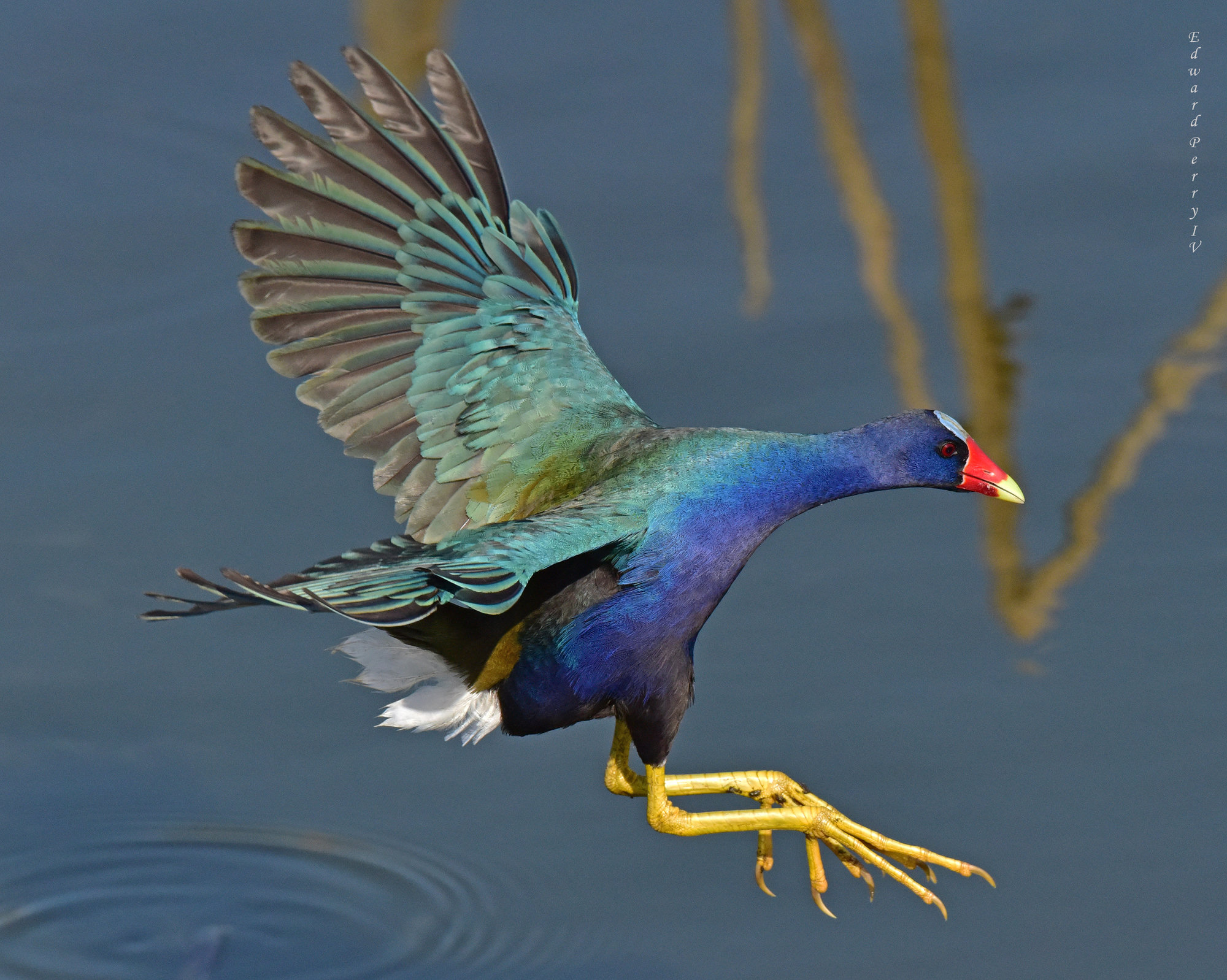
Photo Edward Perry IV (opens in a new tab) / iNaturalist, CC BY-NC 4.0 (opens in a new tab)
At a glance
- Size
- About 30 to 36 cm long
- Weight
- About 200 to 300 g
- Habitat
- Freshwater marshes and ponds with lily pads and floating plants
- Diet
- Seeds, fruit, leaves, insects, frogs and snails
- In Georgia
- A summer resident in the south and on the coast; rare in winter
- Voice
- Clucks and hen-like cackles
- Rabies vector
- No
Identification
- Key marks
- Purple-blue head and body; green back; red bill with a yellow tip; pale blue forehead shield; long yellow legs and toes
- Told apart from
- Common gallinule, which is dark grey with a red shield
- Where to look
- Walking over lily pads in southern marshes, April to September
Behaviour
Purple gallinules walk on floating plants, climb into shrubs to feed on fruit and flowers, and use their long toes to flip lily pads over for insects and snails beneath.
Why they matter
With its long toes spreading its weight, the purple gallinule can use floating plant mats most birds cannot stand on. It is a regular sight in Georgia's southern marshes in summer and a sign of healthy, plant-rich wetlands.
Reproduction and lifecycle
Nest — A platform of plants in marsh vegetation over water
Eggs — Usually 6 to 8
Incubation — About 22 to 25 days
Chicks — Leave the nest soon after hatching; older siblings sometimes help feed them
Flight — At about nine weeks
Lifespan — A few years
Living around people
- Purple gallinules sometimes wander far off course on migration and turn up in odd places, exhausted; they need a rehabilitator rather than release on the spot.
Misconceptions
- A bird this colourful must be an escaped pet. Purple gallinules are native wild birds of southern marshes.
Related species
Seasonal activity
When this species is breeding, and when there are nests on the ground. Mowing during the shaded months is how most nests are found.
| Jan | Feb | Mar | Apr | May | Jun | Jul | Aug | Sep | Oct | Nov | Dec | |
|---|---|---|---|---|---|---|---|---|---|---|---|---|
| Breeding | Jan: no | Feb: no | Mar: no | Apr: no | May: no | Jun: no | Jul: no | Aug: no | Sep: no | Oct: no | Nov: no | Dec: no |
| Active nests | Jan: no | Feb: no | Mar: no | Apr: no | May: no | Jun: no | Jul: no | Aug: no | Sep: no | Oct: no | Nov: no | Dec: no |
| Notes | Mostly south of Georgia | Few present | Arriving | Arriving; pairs forming | Nesting | Nesting | Chicks | Young independent | Migrating south | Last birds | Few present | Few present |
Where it lives
Recorded in 29 states and provinces. Each one links to the other animals there, and to the rehabilitators licensed for them.
United States
If you found one
Answer a few questions and you will get a specific answer for what you are looking at.
I found an animal