
Species
Plain-bellied watersnake
Nerodia erythrogaster
A dark watersnake with a plain red or yellow belly that wanders far from water in wet weather.
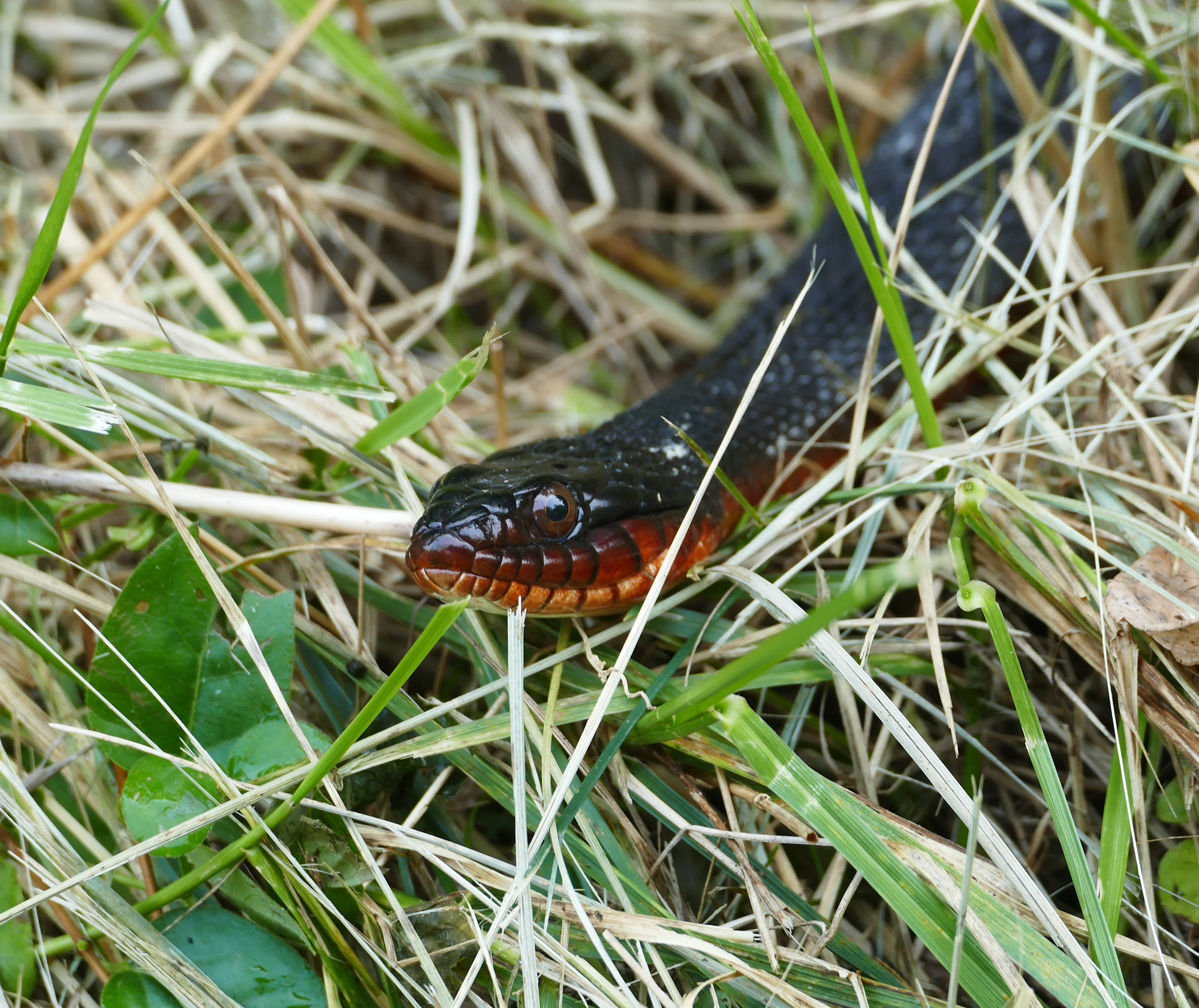
Photo Wendy McCrady (opens in a new tab) / iNaturalist, CC BY 4.0 (opens in a new tab)
At a glance
- Size
- Usually 75 to 120 cm long
- Habitat
- Swamps, river bottoms, ponds and wet woods
- Diet
- Frogs, toads, fish and salamanders
- In Georgia
- Statewide except the mountains
- Venomous
- No
- Rabies vector
- No
Identification
- Key marks
- Plain dark brown to grey back; unmarked red, orange or yellow belly
- Told apart from
- Cottonmouths, which have vertical pupils and a broad head with a dark eye stripe
- Where to look
- In wet woods and at wetland edges, sometimes far from water
Behaviour
Plain-bellied watersnakes range more widely on land than other watersnakes, crossing woods between wetlands. They eat more frogs than fish.
Why they matter
They are predators of frogs and fish in bottomland swamps, and food for herons, hawks and kingsnakes.
Reproduction and lifecycle
Young — Born live, usually 5 to 30
Size at birth — About 20 to 27 cm, blotched
Maturity — In two to three years
Breeding — Every year
Lifespan — About 10 years
Diet shift — Young eat tadpoles and small fish
Living around people
- It is harmless; leave it be.
Misconceptions
- A snake far from water cannot be a watersnake. This one travels overland often.
Related species
Seasonal activity
When this species is breeding, and when there are nests on the ground. Mowing during the shaded months is how most nests are found.
| Jan | Feb | Mar | Apr | May | Jun | Jul | Aug | Sep | Oct | Nov | Dec | |
|---|---|---|---|---|---|---|---|---|---|---|---|---|
| Breeding | Jan: no | Feb: no | Mar: no | Apr: no | May: no | Jun: no | Jul: no | Aug: no | Sep: no | Oct: no | Nov: no | Dec: no |
| Active nests | Jan: no | Feb: no | Mar: no | Apr: no | May: no | Jun: no | Jul: no | Aug: no | Sep: no | Oct: no | Nov: no | Dec: no |
| Notes | Sheltering | Sheltering | Emerging | Mating | Active | Active | Active | Young born | Young born | Active | Sheltering | Sheltering |
Where it lives
Recorded in 21 states and provinces. Each one links to the other animals there, and to the rehabilitators licensed for them.
United States
Mexico
If you found one
Answer a few questions and you will get a specific answer for what you are looking at.
I found an animal