
Species
Pectoral sandpiper
Calidris melanotos
A streaky-breasted sandpiper of wet fields, whose males inflate their chests to display on the Arctic tundra.
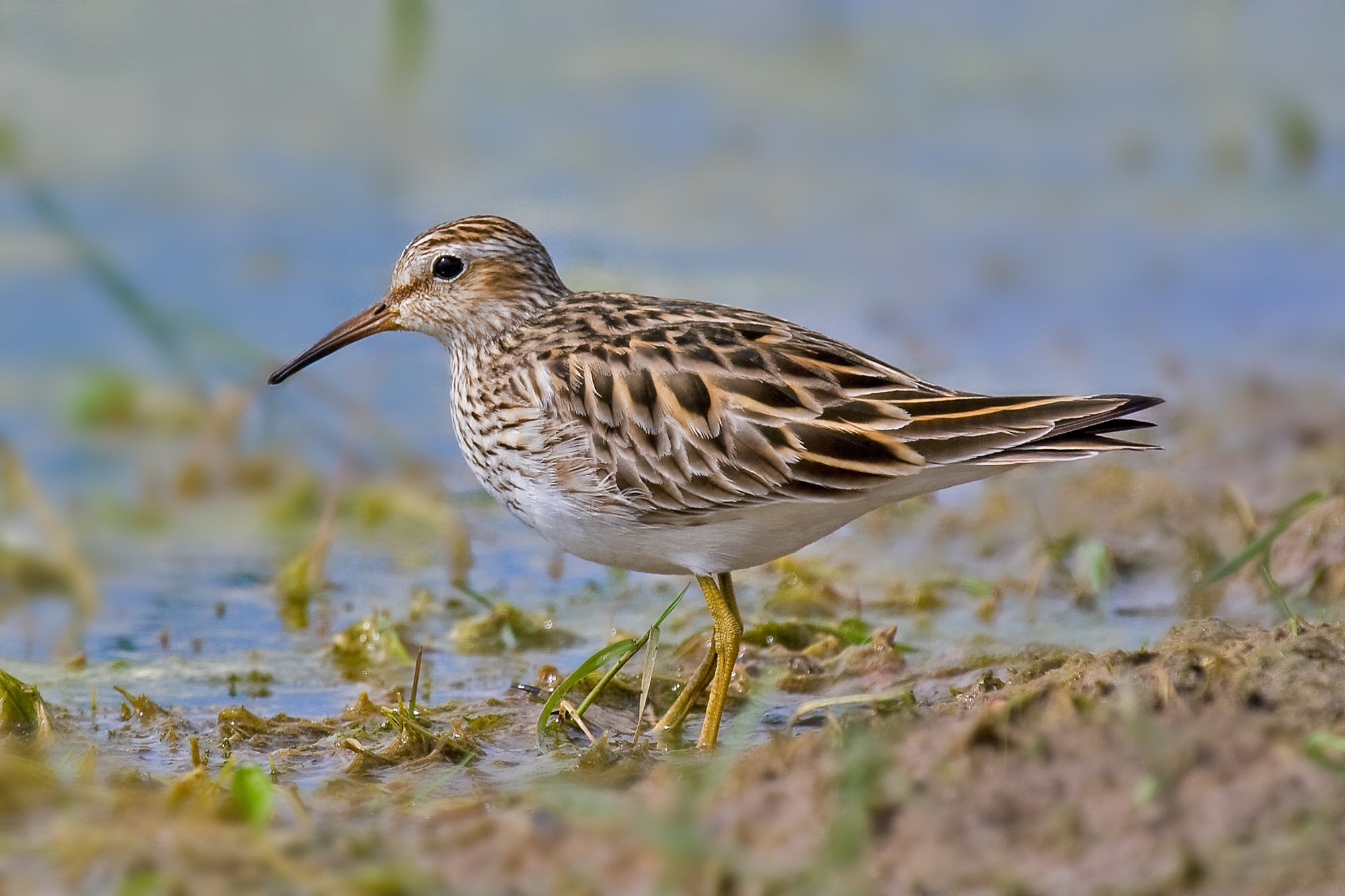
Photo Andreas Trepte (opens in a new tab) / Wikimedia Commons, CC BY-SA 2.5 (opens in a new tab)
At a glance
- Size
- About 19 to 23 cm long
- Weight
- About 50 to 120 g
- Habitat
- Wet fields, flooded pastures and grassy pond edges
- Diet
- Insects, spiders and small crustaceans
- In Georgia
- A common migrant, especially in autumn
- Voice
- A rough, rolling "krrrk"
- Rabies vector
- No
Identification
- Key marks
- Heavily streaked breast ending sharply against a white belly; yellowish legs; slightly drooping bill
- Told apart from
- Least sandpiper, which is much smaller
- Told apart from
- Buff-breasted sandpiper, which has a plain buff breast
- Where to look
- Flooded fields and grassy edges of ponds
Behaviour
Male pectoral sandpipers inflate air sacs in their chests during display flights over the tundra, producing a deep hooting. Males fly from territory to territory during the breeding season, trying to mate with as many females as possible.
Why they matter
Pectoral sandpipers migrate from the Arctic to South America through the middle of the continent, and flooded fields and pond edges in Georgia are part of that network of stopovers. Tracking has shown males travelling thousands of kilometres around the Arctic in a single breeding season.
Reproduction and lifecycle
Nest — A scrape in grass on tundra
Eggs — Usually four
Incubation — About 21 to 23 days, by the female alone
Chicks — Leave the nest within a day
Flight — At about three weeks
Lifespan — Several years
Living around people
- Flooded fields and muddy pond edges in late summer give them places to refuel.
Misconceptions
- All grassy-field sandpipers are snipe. Pectoral sandpipers are often called "grass snipe" but are not snipe.
Related species
Seasonal activity
When this species is breeding, and when there are nests on the ground. Mowing during the shaded months is how most nests are found.
| Jan | Feb | Mar | Apr | May | Jun | Jul | Aug | Sep | Oct | Nov | Dec | |
|---|---|---|---|---|---|---|---|---|---|---|---|---|
| Breeding | Jan: no | Feb: no | Mar: no | Apr: no | May: no | Jun: no | Jul: no | Aug: no | Sep: no | Oct: no | Nov: no | Dec: no |
| Active nests | Jan: no | Feb: no | Mar: no | Apr: no | May: no | Jun: no | Jul: no | Aug: no | Sep: no | Oct: no | Nov: no | Dec: no |
| Notes | In South America | In South America | Migrants passing north | Migrants passing | Arriving in the Arctic | Nesting | Males leaving first | Migrants in Georgia | Migrants | Last migrants | In South America | In South America |
Where it lives
Recorded in 78 states and provinces. Each one links to the other animals there, and to the rehabilitators licensed for them.
United States
- Alabamapassing through
- Alaskabreeding
- Arizonapassing through
- Arkansaspassing through
- Californiapassing through
- Coloradopassing through
- Connecticutpassing through
- Delawarepassing through
- District of Columbiapassing through
- Floridapassing through
- Georgiapassing through
- Idahopassing through
- Illinoispassing through
- Indianapassing through
- Iowapassing through
- Kansaspassing through
- Kentuckypassing through
- Louisianapassing through
- Mainepassing through
- Marylandpassing through
- Massachusettspassing through
- Michiganpassing through
- Minnesotapassing through
- Mississippipassing through
- Missouripassing through
- Montanapassing through
- Nebraskapassing through
- Nevadapassing through
- New Hampshirepassing through
- New Jerseypassing through
- New Mexicopassing through
- New Yorkpassing through
- North Carolinapassing through
- North Dakotapassing through
- Ohiopassing through
- Oklahomapassing through
- Oregonpassing through
- Pennsylvaniapassing through
- Rhode Islandpassing through
- South Carolinapassing through
- South Dakotapassing through
- Tennesseepassing through
- Texaspassing through
- Utahpassing through
- Vermontpassing through
- Virginiapassing through
- Washingtonpassing through
- West Virginiapassing through
- Wisconsinpassing through
- Wyomingpassing through
Canada
- Albertapassing through
- British Columbiapassing through
- Manitobabreeding
- New Brunswickpassing through
- Newfoundland and Labradorpassing through
- Northwest Territoriesbreeding
- Nova Scotiapassing through
- Nunavutbreeding
- Ontariopassing through
- Prince Edward Islandpassing through
- Quebecpassing through
- Saskatchewanpassing through
- Yukonbreeding
Mexico
- Baja Californiapassing through
- Baja California Surpassing through
- Campechepassing through
- Coahuilapassing through
- Durangopassing through
- Mexico Citypassing through
- Nuevo Leonpassing through
- Queretaropassing through
- Quintana Roopassing through
- State of Mexicopassing through
- Tabascopassing through
- Tamaulipaspassing through
- Tlaxcalapassing through
- Veracruzpassing through
- Yucatanpassing through
If you found one
Answer a few questions and you will get a specific answer for what you are looking at.
I found an animal