
Species
Northern slimy salamander
Plethodon glutinosus
A glossy black woodland salamander flecked with silver, whose skin gives off a glue that is almost impossible to wash off.
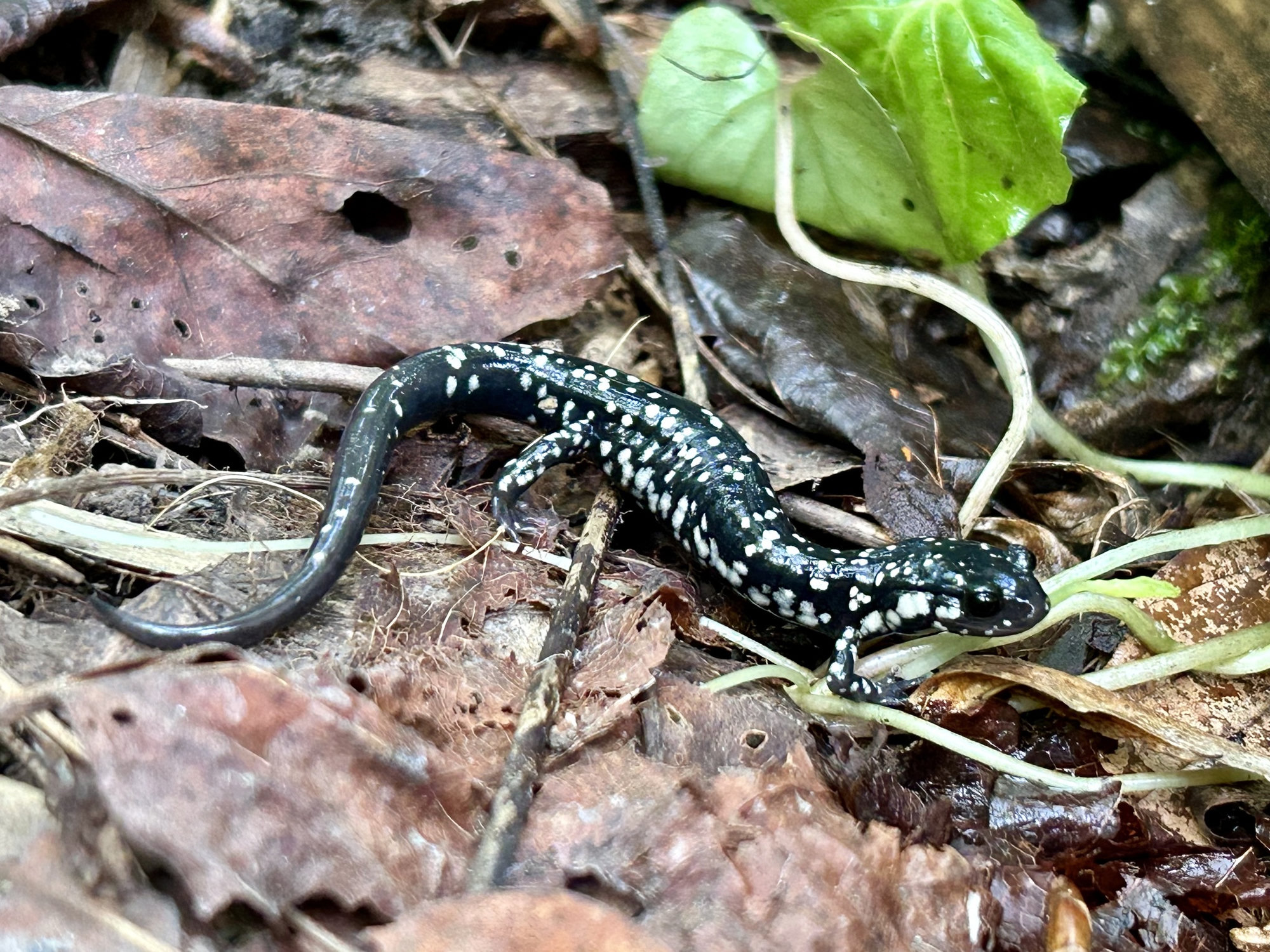
Photo Unknown photographer (opens in a new tab) / iNaturalist, CC0 1.0 (opens in a new tab)
At a glance
- Size
- Usually 11 to 17 cm long; up to about 20 cm
- Habitat
- Moist forests, ravines and rocky hillsides
- Diet
- Ants, beetles, worms and other small invertebrates
- In Georgia
- North Georgia, especially the Ridge and Valley and Cumberland Plateau
- Rabies vector
- No
Identification
- Key marks
- Shiny black with scattered white or silvery flecks; long, rounded tail
- Told apart from
- Other slimy salamanders, which look almost identical and are best told apart by where they live
- Where to look
- Under logs and rocks in damp woods; on the forest floor on wet nights
Behaviour
Slimy salamanders have no lungs and breathe through their moist skin. When grabbed they release a thick, sticky slime that gums up a predator's mouth. They come to the surface on wet nights to hunt and retreat underground in dry weather.
Why they matter
Lungless salamanders are among the most numerous animals with backbones in eastern forests, and they eat huge numbers of the small invertebrates that break down leaf litter. They are food for snakes, birds and small mammals.
Reproduction and lifecycle
Eggs — A small clutch laid in a damp crevice or rotting log, guarded by the female
Hatching — As tiny copies of the adults; there is no aquatic larva
Young — Stay close to the nest site at first
Maturity — At three to five years
Lifespan — Over 20 years
Breathing — Through the skin; no lungs
Living around people
- Leave logs and rocks where they lie, or put them back exactly as they were.
- The slime is harmless but hard to wash off; there is no need to handle them.
- Leaf litter and fallen wood left in a garden give them shelter.
Misconceptions
- Slimy means sick. The slime is a healthy defence.
Related species
Seasonal activity
When this species is breeding, and when there are nests on the ground. Mowing during the shaded months is how most nests are found.
| Jan | Feb | Mar | Apr | May | Jun | Jul | Aug | Sep | Oct | Nov | Dec | |
|---|---|---|---|---|---|---|---|---|---|---|---|---|
| Breeding | Jan: no | Feb: no | Mar: no | Apr: no | May: no | Jun: no | Jul: no | Aug: no | Sep: no | Oct: no | Nov: no | Dec: no |
| Active nests | Jan: no | Feb: no | Mar: no | Apr: no | May: no | Jun: no | Jul: no | Aug: no | Sep: no | Oct: no | Nov: no | Dec: no |
| Notes | Underground in cold weather | Active on mild wet nights | Active on wet nights | Active | Active | Laying eggs underground | Underground in dry weather | Underground in dry weather | Young hatching | Active on wet nights | Active on wet nights | Underground in cold weather |
Where it lives
Recorded in 13 states and provinces. Each one links to the other animals there, and to the rehabilitators licensed for them.
If you found one
Answer a few questions and you will get a specific answer for what you are looking at.
I found an animal